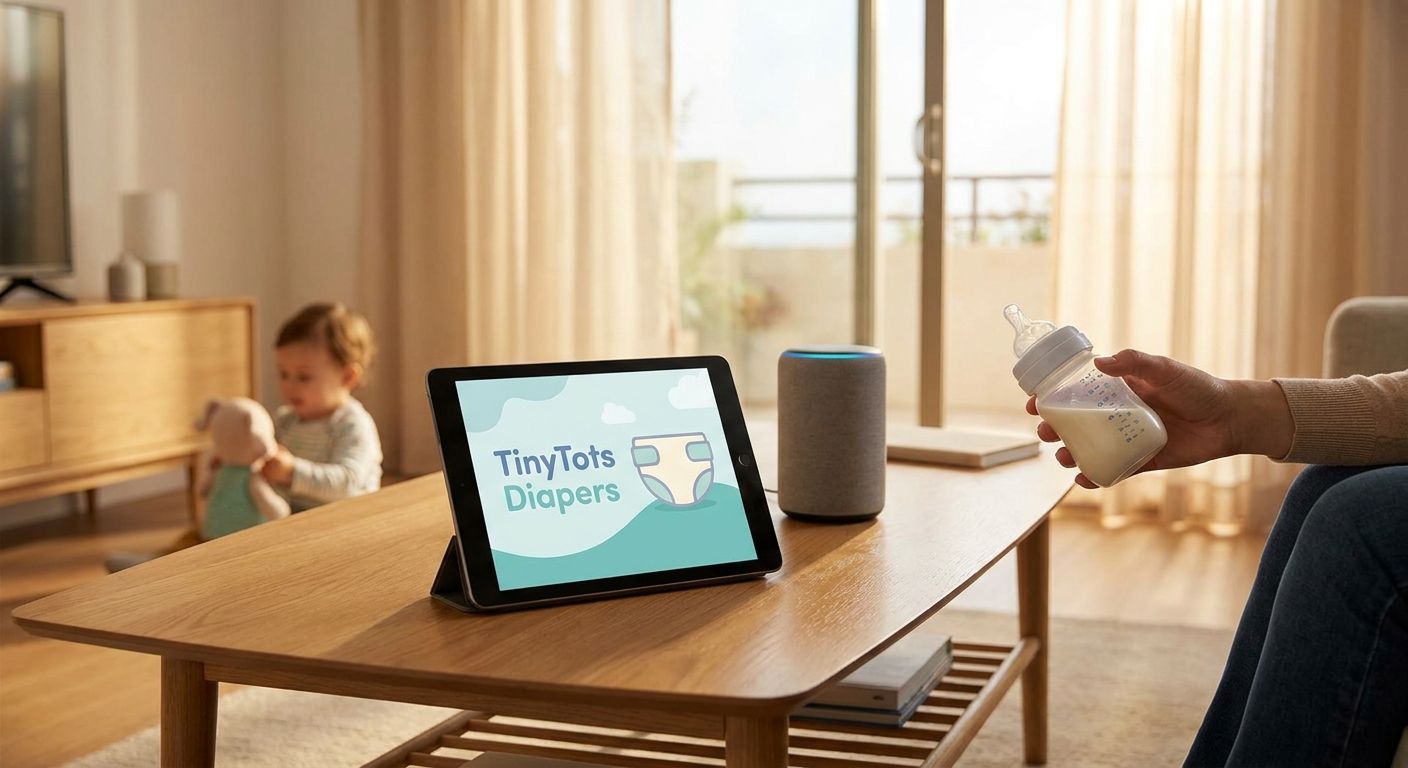
Parenting and childcare AI assistants field questions about diaper sizes, sleep regressions, and stroller comparisons dozens of times a day — every one of those questions is a monetizable ad slot if you place the ad right instead of bolting on a banner that breaks the conversation.
- Ad monetization for AI parenting assistants works when ads are contextual native cards, not banners — Elo's SDK integrates in twelve lines of code.
- Brand safety matters more here than in general chat: block alcohol, gambling, and unverified medical-claim ads near parenting Q&A.
- COPPA governs data collected from children under 13, not the adult parent using your app — verify your data flow before you monetize.
- Native cards on feeding, sleep, and gear questions outperform interstitials in chat interfaces. Buy contextual, skip generic mediation.
- Baby, family, and insurance brands buy ad inventory year-round in 2026, which keeps fill rate healthy for niche parenting content.
Why this matters
Parenting assistants sit in a strange spot: the user is an adult, but every third message references a child. That combination attracts real advertiser demand — baby gear, pediatric telehealth, life insurance, meal kits — while also raising the brand safety bar higher than a general-purpose chatbot ever faces.
Most developers default to whatever ad SDK they already know from mobile apps. That's the wrong starting point. A banner or interstitial built for a game doesn't fit a chat interface where a parent just typed "my 8-month-old won't sleep through the night." Ad monetization for AI parenting assistants needs a format and a matching layer built for conversation, not for screen real estate.
Who this is for
This guide is for developers running a parenting, childcare, or family-planning assistant built on OpenAI, Anthropic, or a custom LLM, looking to add ad revenue without turning the app into something parents stop trusting. If you're pre-launch and still validating retention, some of this still applies — brand safety and placement decisions get harder to unwind after you've shipped.
What to look for in ad monetization for AI parenting assistants
Brand safety and content moderation
A parenting chatbot recommending a stroller next to an ad for a payday loan or an unverified supplement erodes trust fast, and trust is the entire product here. Look for a monetization layer with brand safety controls that lets you block categories outright — alcohol, gambling, unverified medical claims — rather than relying on generic content filters built for display ads.
Native, non-intrusive placement
Parents ask sensitive questions: sleep training methods, feeding schedules, developmental milestones. A pop-up or full-screen interstitial breaking that flow reads as hostile. Native ad cards that render inline, after the assistant's answer, keep the ad monetization invisible until it's actually useful.
Contextual matching accuracy
A question about diaper rash should surface a diaper brand or pediatric skincare ad, not a random display network fill. Matching quality is the difference between an ad a parent thanks you for and one they scroll past annoyed. Poor contextual matching is the single biggest reason chat ad programs get shut down by their own product teams.
Privacy and compliance boundaries
COPPA governs data collected from children under 13 — your parenting assistant's actual user is almost always an adult, but if your app lets kids interact directly or collects any data tied to a child's identity, that changes the compliance picture. Confirm your data flow before you turn on ad serving, not after.
Fill rate and advertiser demand
Parenting and family is a durable advertiser category in 2026 — baby gear, insurance, meal delivery, and pediatric telehealth all buy against this audience year-round. A monetization SDK with weak advertiser demand in this vertical will show you empty ad slots no matter how good your contextual matching is.
Top picks for AI parenting and childcare assistant developers
Contextual native SDK — the safe pick. Ad cards that render inline after the assistant's response, matched to the topic of the message rather than a fixed keyword list. Integration runs about twelve lines of code, and the SDK works across three backend types: OpenAI, Anthropic, or a custom LLM. Verdict: Buy.
Adjacent-vertical ad network built for education and tutoring apps — the closest comparable. Chatbot ad networks built for education and tutoring apps already solve for a similar audience: parents and caregivers researching a child-related decision. The category overlap (curriculum products, enrichment programs, family services) makes this a reasonable fallback if a parenting-specific network isn't available yet. Verdict: Consider.
Generic mobile ad mediation (AdMob/Unity Ads-style stacks) — the wildcard that isn't. These were built for game screens and app inventory, not conversational turns. Fill rate looks fine on paper, but format mismatch (banners, interstitials) inside a chat UI tanks engagement and invites parents to complain in reviews. Verdict: Skip.
Affiliate links inside answers — the manual option. Dropping an affiliate link into a stroller or car-seat recommendation works, but it requires manual curation per category and doesn't scale the way a matching engine does. Fine for a small catalog of high-intent products; a poor substitute for full ad monetization at volume. Verdict: Consider.
No monetization, subscription-only — the patient pick. If you're still under a few thousand weekly active parents and validating retention, delaying ad revenue isn't wrong. Ship ads once usage patterns are stable enough to know which conversation types actually carry advertiser demand. Verdict: Consider.
Compare ad SDK options for 2026
See how contextual matching and brand safety controls stack up across SDKs.
What to avoid
- Interstitials between chat turns. They stop the conversation cold, and parents mid-question are the least tolerant audience for a forced wait.
- Unmoderated affiliate networks. A network that doesn't let you exclude supplement or medical-claim advertisers will eventually put something questionable in front of a worried new parent.
- Ignoring ad fatigue in high-frequency users. Parents opening the app multiple times a day to ask feeding or sleep questions will notice repeated ads faster than a casual user would — frequency capping matters more here than in a general chatbot.
Verdict comparison
| Approach | Brand safety control | Placement style | Best for | Verdict |
|---|---|---|---|---|
| Contextual native SDK | High | Inline card, post-response | Text and voice parenting assistants | Buy |
| Education/tutoring-adjacent network | Medium-High | Inline card | Overlap categories (enrichment, family services) | Consider |
| Generic mobile mediation | Low-Medium | Banner/interstitial | Not built for chat | Skip |
| Manual affiliate links | Medium | Inline text link | Small, high-intent product catalogs | Consider |
| No monetization | N/A | None | Pre-launch retention validation | Consider |
FAQ
What's the best way to do ad monetization for AI parenting assistants?
Contextual native ad cards that render after the assistant's response are the best fit for AI parenting assistants in 2026, because they match advertiser content to the parenting topic without interrupting the conversation. Banner and interstitial formats built for mobile games perform worse in chat interfaces.
Is COPPA a concern for AI parenting chatbots?
COPPA applies to data collected from children under 13, not to the adult parent typically using a parenting assistant. It becomes a concern only if your app lets a child interact directly or ties data to a child's identity, so audit your data flow before enabling ads.
How much can a parenting chatbot earn from ads?
Revenue depends on fill rate, contextual matching quality, and how much advertiser demand exists in the baby, family, and insurance categories at any given time. A well-matched native ad card in a high-frequency parenting app earns more per session than a generic display fill.
Are banner ads a bad fit for parenting chat apps?
Yes, banners built for mobile screens don't translate well into a conversational interface where the user just asked a sensitive question. Native, inline ad cards outperform banners because they don't interrupt the answer the parent came for.
What ad categories work best in family and childcare assistants?
Baby gear, pediatric telehealth, family insurance, and meal delivery are consistent advertiser categories for parenting and childcare content. These categories buy against parenting intent year-round rather than seasonally.
Can I run ad monetization on a voice-based parenting assistant?
Yes, voice-based parenting assistants can run ad monetization through sponsored recommendations delivered verbally or as a follow-up card in a companion app view. Latency and phrasing matter more in voice than in text, since a forced ad read breaks the exchange faster than a visual card.
Does ad monetization work for GPT-based parenting bots built on OpenAI?
Yes, ad monetization SDKs built for conversational AI work across OpenAI, Anthropic, and custom LLM backends without changing your model choice. The integration sits at the response layer, not the model layer.
Is affiliate marketing better than ads for a childcare app?
Affiliate links work for a small, curated set of high-intent products like car seats or strollers, but they don't scale the way a contextual ad matching engine does across hundreds of conversation topics. Most parenting assistants use both: affiliate links for a handful of big-ticket items, ad monetization for everything else.
One last thing
The parenting and family category doesn't dry up between seasons the way travel or retail does — a sleep regression question at 2am in January carries the same advertiser interest it does in July, which is the main reason ad monetization for AI parenting assistants holds fill rate better than more seasonal verticals in 2026.