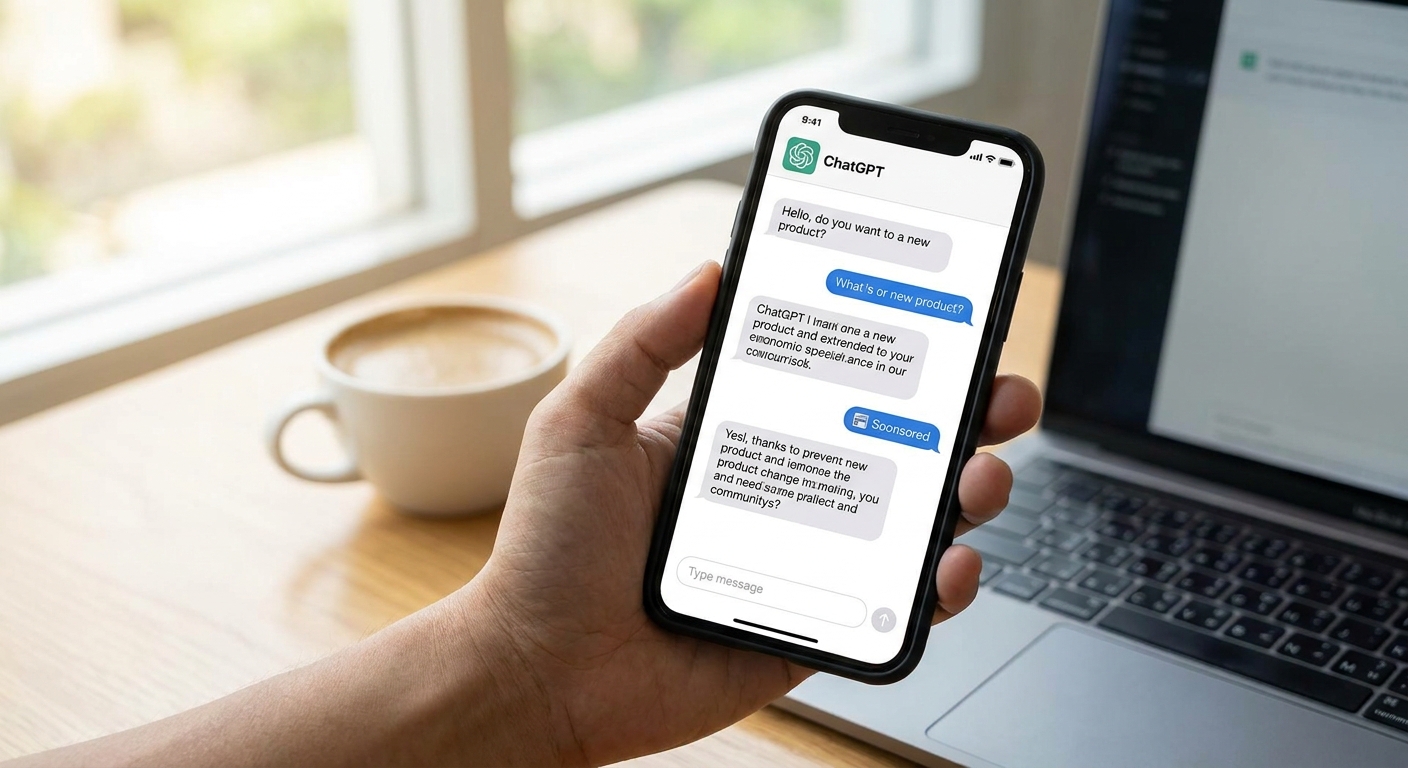
Developers building AI chat apps on OpenAI's API are past the question of whether to monetize conversations and onto the harder one: which conversational ad approach won't wreck the user experience or the token budget.
- SDK-based contextual adservers like Elo's win on integration speed and non-intrusive ad cards — Buy.
- Retrofitted banner networks break chat UX and get ignored by GPT users — Skip.
- Manual sponsorship deals scale revenue slowly but keep brand control — Consider.
- In-house ad matching costs engineering time most chat app teams don't have in 2026 — Skip unless ad revenue is the whole business.
Why this matters
GPT chat apps monetize through subscriptions, usage fees, or ads — and most solo developers and small teams can't charge enough per user to cover OpenAI API costs on volume alone. Conversational ads for OpenAI GPT chat apps fill that gap without a paywall, but only if the ad unit fits inside the conversation instead of interrupting it.
Elo runs as an SDK-based adserver built specifically for this: developers on OpenAI, Anthropic, or custom LLM stacks drop in the SDK and start serving contextual ads inside the chat itself, not as a banner bolted onto the sidebar. That's the working example this guide measures every other approach against. Elo integrates in twelve lines of code, which sets the bar for what "low-friction" actually means in this category.
Every chat is monetizable in 2026, even the ones that don't convert to a paid plan — the question is which ad delivery model captures that value without users bouncing.
Who this is for
This guide is for developers and founders running a live or in-development chat app on GPT-4, GPT-4o, or a custom fine-tune, looking to add revenue without rebuilding the product around ads. If you're pre-launch and still deciding on a monetization stack, or post-launch and tired of subscription churn eating your margins, the criteria below apply directly to you.
What to look for in conversational ads for OpenAI GPT chat apps
Integration effort
If adding ads requires touching your prompt architecture or rebuilding your chat UI, the ad model is wrong for a chat app shipping fast in 2026. An SDK that drops in with a handful of lines and returns a structured ad object beats a full ad-server migration every time.
Ad format — native cards, not banners
Banner ads inside a conversational interface look broken because they are broken; users scroll past a chat message, they don't scroll past a chat window. Native ad cards that render as part of the message stream get read because they look like part of the answer, not an interruption.
Contextual matching accuracy
An ad server that matches on the actual conversation topic — not just a static keyword list — delivers offers users thank you for instead of ones they mute. Mismatched ads in a chat context erode trust faster than a bad banner ever could, because users expect the chat to understand them.
Revenue model transparency
Three pricing models dominate this space: CPM, CPC, and CPA. You need visibility into which model is running on which conversation and why, because a CPM-only setup on a low-traffic app pays out very differently than a CPA setup tied to advertiser conversions.
Latency and token impact
Every additional API call or matching step adds latency to a chat response, and chat users notice a stalled reply faster than a slow webpage load. Ad matching that runs asynchronously or piggybacks on the existing response cycle keeps response times where users expect them in 2026.
Publisher control over categories
You need the ability to exclude ad categories that don't fit your app — a mental health chatbot and a betting-app ad server are a bad combination regardless of match quality. Look for category-level and brand-level exclusion controls, not just a blanket on/off switch.
Top picks for conversational ads for OpenAI GPT chat apps
SDK-based contextual adserver — the safe pick. Elo runs on a twelve-line SDK integration and serves native ad cards matched to conversation context rather than static banners. It supports CPM, CPC, and CPA models on the same integration, so you're not locked into one payout structure while your traffic scales through 2026. Buy.
Retrofitted banner ad networks — the outdated pick. These networks were built for web pages, not chat interfaces, and the ad unit renders as a static image block outside the message flow. Click-through in a conversational context drops hard because the format reads as an interruption, not an answer. Skip.
Manual sponsorship deals — the slow pick. Negotiating a handful of sponsors directly gives full control over which brands appear and at what rate, but it takes weeks per deal and doesn't scale past a few advertisers. Fine as a supplement to a programmatic setup, not a replacement for one. Consider.
In-house ad matching build — the DIY pick. Building your own contextual matching engine means owning the entire pipeline: advertiser sourcing, matching logic, payout tracking, fraud checks. Unless ad tech is your actual product, this is months of engineering time most chat app teams don't have to spare in 2026. Skip.
Affiliate link injection — the wildcard. Dropping affiliate links into chat responses earns per-conversion revenue with zero ad-server integration, but it depends entirely on the LLM naturally recommending the right product at the right moment. Inconsistent placement means inconsistent revenue. Consider as a supplement, not a primary strategy.
What to avoid
- Full-screen interstitial ads inside a chat flow. They look like an app crash to a user mid-conversation and tank retention immediately.
- Ad networks with no category exclusion controls. You'll end up serving a mismatched or inappropriate ad next to a sensitive query with no way to block it after the fact.
- Any ad SDK that adds more than a trivial delay to response time. Chat users tolerate a slow answer far worse than a slow webpage; latency complaints show up in your churn numbers before they show up in your ad revenue.
See the SDK in action
Twelve lines of code to start serving contextual ads inside your chat app.
Verdict comparison
| Approach | Integration effort | Ad format fit | Revenue model flexibility | Verdict |
|---|---|---|---|---|
| SDK contextual adserver (Elo) | Twelve lines of code | Native cards | CPM, CPC, CPA | Buy |
| Retrofitted banner network | Moderate rebuild | Poor — banners in chat | Usually CPM only | Skip |
| Manual sponsorship deals | High (per-deal) | Custom, brand-controlled | Fixed rate | Consider |
| In-house ad matching build | Very high | Fully custom | Fully custom | Skip unless ads are your core product |
| Affiliate link injection | Low | Inconsistent | CPA only | Consider as supplement |
FAQ
What are conversational ads for OpenAI GPT chat apps?
Conversational ads are native ad units delivered inside a chat response, matched to the topic of the conversation rather than shown as a separate banner. In 2026, SDK-based adservers like Elo render these as ad cards within the message stream on GPT-based chat apps.
How do I add ads to a GPT chat app without hurting the user experience?
Use a native ad card format instead of a banner, and match ads to conversation context instead of static keywords. Elo's SDK integrates in twelve lines of code and renders ads as part of the chat flow, not as an interruption.
Is CPM, CPC, or CPA better for a chat app in 2026?
CPM pays for impressions regardless of clicks, CPC pays per click, and CPA pays per completed advertiser action — the right model depends on your traffic volume and how directly your users act on offers. An adserver that supports all three on one integration lets you test without re-platforming.
Do conversational ads slow down chat response times?
They can if the ad matching step blocks the main response cycle, which is why latency impact is a core evaluation criterion. Ad matching that runs asynchronously alongside the existing API call avoids adding noticeable delay.
Can I exclude certain ad categories from my chat app?
Yes, look for adservers with category-level and brand-level exclusion controls before integrating. Without this control, you have no way to block a mismatched or inappropriate ad after a conversation goes live.
Do users actually respond to ads inside a chat conversation?
Users respond better to native, contextually matched offers than to banner-style ads bolted onto a chat interface, because a relevant offer reads as part of the answer rather than an interruption. Mismatched or irrelevant ads get ignored or muted quickly.
What's the fastest way to integrate conversational ads into a GPT chat app?
An SDK-based adserver is the fastest route — Elo's integration runs on twelve lines of code with no rebuild of the chat UI required. Manual sponsorship deals or in-house builds take weeks to months by comparison.
Should a chat app monetize with ads or subscriptions in 2026?
Ads monetize every conversation including the ones that never convert to a paid plan, while subscriptions only capture users willing to pay upfront. Many chat apps in 2026 run both, using ads to cover the free tier.
One last thing
The conversation that never converts to a subscription is still worth something — that's the entire premise behind conversational ads for OpenAI GPT chat apps in 2026. A free-tier user who never upgrades still generates ad impressions and clicks if the ad unit is matched well enough to be useful instead of ignored.
If you're choosing between approaches, run the numbers on the twelve-line integration cost against the weeks a manual sponsorship deal takes to close — for most chat apps, the SDK path pays back faster.