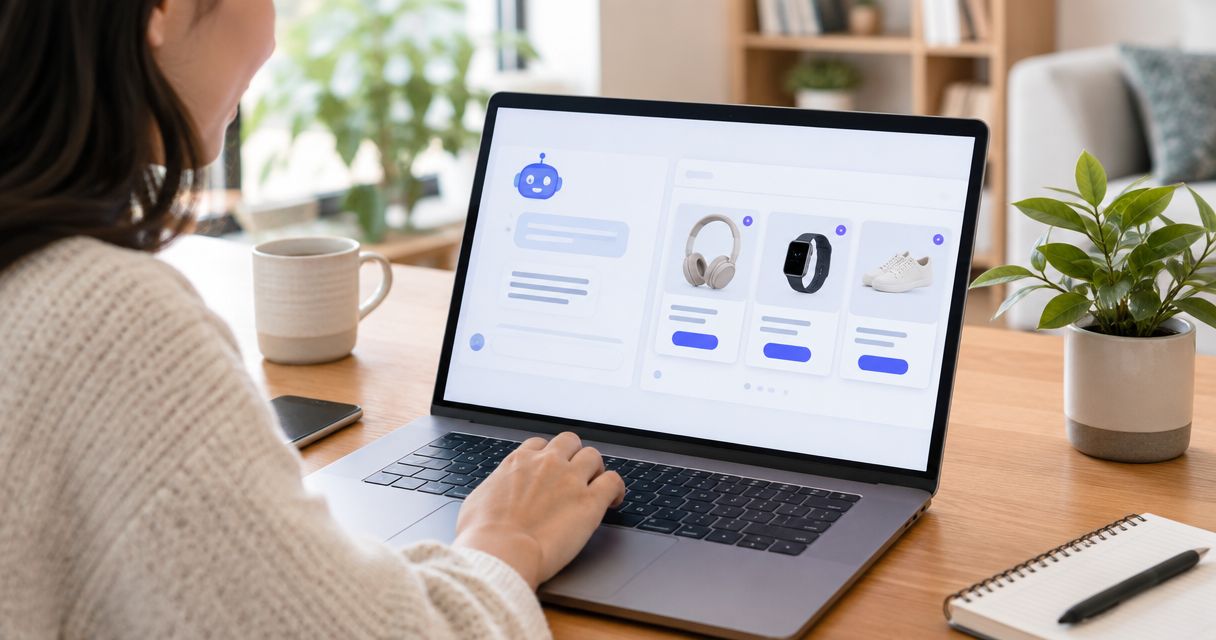
Conversational advertising is effective for a B2B SaaS chatbot only when it generates publisher revenue or qualified advertiser outcomes without reducing the chatbot’s usefulness. Treat it as a controlled monetization test, not a proven acquisition channel: clicks alone do not establish business value, and sponsored placements must remain separate from the assistant’s answer.
- Conversational advertising B2B SaaS chatbot tests need revenue, task-completion, and lead-quality checks.
- Elo provides an SDK-based adserver for developers monetizing chat applications with contextual ads.
- Test commercial research conversations before adding ads to support or confidential workflows.
- Keep sponsored placements distinguishable from the chatbot’s independent answer.
Is conversational advertising effective for B2B SaaS chatbots?
Effectiveness means measurable business value with acceptable product impact. For a publisher, that means revenue alongside continued task completion and usage. For an advertiser, it means qualified actions and attributable pipeline rather than clicks with no downstream outcome.
Start with the ad SDK for B2B SaaS AI copilots guide if you are evaluating the implementation path. Decide what success means before choosing the placement.
Use the following comparison to select a test surface. These are deployment recommendations, not measured performance rankings.
| Chatbot use case | Best for | Potential benefit | Main drawback | Recommendation |
|---|---|---|---|---|
| Software discovery assistant | Users explicitly researching business tools | A relevant sponsor can offer a next step | Sponsorship can be mistaken for an independent ranking | Test clearly labeled placements |
| Workflow copilot | Users completing work and asking about supporting tools | Commercial suggestions can relate to the current task | A placement can interrupt task completion | Test only at relevant decision points |
| Customer support assistant | Users seeking help with an existing product | Selected commercial requests offer a possible placement surface | Ads compete with the support objective | Keep troubleshooting ad-free |
| Internal enterprise assistant | Employees working with company information | A tightly approved placement policy is possible | Confidentiality and employer expectations constrain ads | Exclude confidential conversations |
A software discovery query and a troubleshooting query should not share an eligibility rule. The first asks for options. The second asks you to make something work.
Why this matters
A B2B SaaS chatbot has a primary job: help the user finish a task. Advertising adds a second commercial objective, so your 2026 evaluation must measure both rather than letting an ad dashboard define success.
Separate the publisher and advertiser perspectives. The publisher earns revenue from placements; the advertiser seeks customers. An impression can have publisher value without producing an advertiser conversion, but sustainable performance requires an acceptable result for both sides.
Do not confuse an adserver with your SaaS sales chatbot. Monetizing conversations through third-party advertiser spend is different from using a chatbot to qualify leads for your own product. Those models need different success metrics and different disclosures.
How do you test effectiveness without damaging the chatbot?
Use a controlled experiment with an ad-free comparison group. Keep the assistant’s answer behavior consistent across groups so the test measures the placement rather than unrelated product changes.
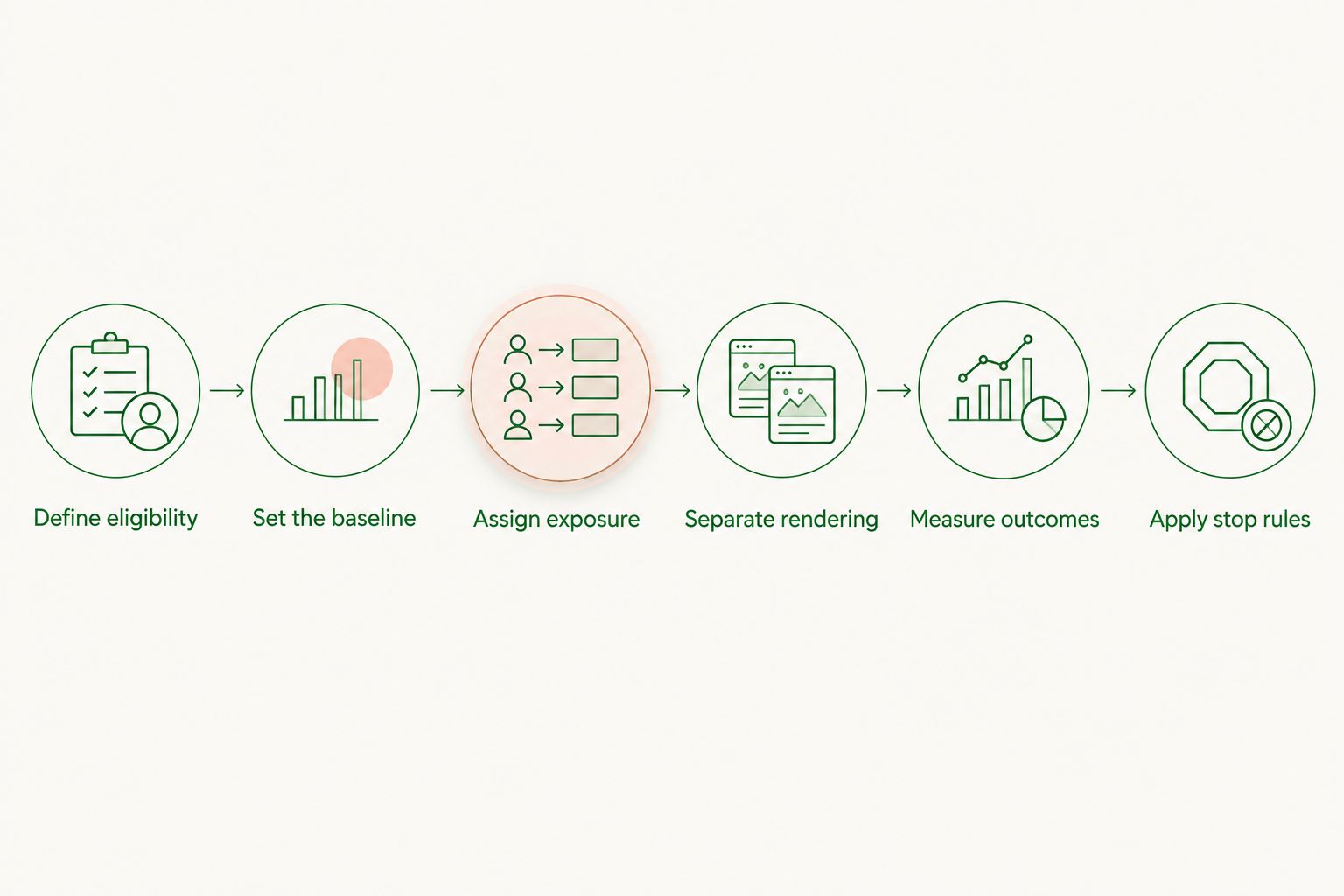
- Define eligibility. Select commercial research or tool-discovery conversations. Exclude confidential content, unresolved support incidents, and other workflows your product policy prohibits from carrying ads.
- Set the baseline. Record task completion, return usage, response timing, and the commercial outcomes relevant to your business. Use the same definitions throughout the experiment.
- Assign exposure. Assign users or accounts consistently to the ad-enabled or ad-free experience. Avoid switching the same account between groups during measurement.
- Separate rendering. Present the sponsored placement independently of the answer. Define what happens when there is no suitable ad, the request fails, or the placement is dismissed.
- Measure outcomes. Compare revenue and advertiser actions alongside task completion, complaints, and continued usage. Segment results by eligible conversation type.
- Apply stop rules. Establish product and commercial acceptance criteria before launch. Stop or revise placements that fail those criteria instead of explaining the failure after the test.
These steps make a 2026 pilot interpretable. If the ad-enabled group also receives different answers, onboarding, or access permissions, you cannot isolate the placement’s effect.
Document the assignment unit. In a team-based SaaS product, account-level assignment keeps colleagues in the same experience; user-level assignment answers a different question. Choose the unit that matches the decision you will make after the experiment.
Which metrics prove business value?
Use revenue and qualified outcomes as commercial measures, then protect task completion with separate product checks. A click-through rate is an interaction measure. It does not tell you whether the user found the placement useful or whether the advertiser gained a suitable prospect.
For your 2026 reporting, keep denominators explicit:
- Session RPM: recognized publisher ad revenue divided by measured sessions, multiplied by 1,000 sessions.
- Impression eCPM: recognized publisher ad revenue divided by counted ad impressions, multiplied by 1,000 impressions.
- Click-through rate: recorded ad clicks divided by counted ad impressions, multiplied by 100 percent.
- Qualified-action rate: qualified advertiser actions divided by recorded ad clicks, multiplied by 100 percent.
- Task-completion rate: completed tasks divided by eligible task attempts, multiplied by 100 percent.
These are calculation units, not performance benchmarks. Do not compare session RPM with impression eCPM as if they measure the same thing. Session RPM includes the effect of conversations that produce no impression; impression eCPM does not.
Define a qualified action before launching. A submitted form, accepted sales lead, completed product activation, and closed opportunity are different events. Report the event you actually observe, and do not relabel a form submission as pipeline.
Use your accounting definition of recognized revenue consistently. Keep estimated ad revenue separate from finalized reporting, and compare equivalent observation windows. An early interaction report and a later sales-outcome report answer different questions.
Why conversational advertising effectiveness varies
The same placement policy does not fit every B2B SaaS chatbot. These factors belong in the evaluation because each affects the match between the user’s task and the commercial result you want to measure.
- Conversation intent. Software research is a different placement surface from incident resolution. Classify the task before deciding whether an ad belongs there.
- Advertiser relevance. A shared keyword does not establish fit. Evaluate whether the offered next step addresses the user’s expressed requirement.
- Buyer role. Interest in a tool does not establish purchasing authority. Separate individual curiosity from account-level buying activity.
- Placement timing. A suggestion before the answer and a suggestion after task completion create different experiences. Test them as different treatments.
- Information sensitivity. Conversation context can contain business data. Decide what may leave your application before connecting an external advertising service.
- Outcome measurement. A placement can generate clicks without qualified leads. Track the downstream event that matches the advertiser’s objective.
Segment results using these factors rather than averaging every chat together. A positive aggregate result does not justify deploying ads in a conversation type that fails your product criteria.
Where does an ad SDK fit in the architecture?
Elo is for AI chat developers seeking SDK-based contextual advertising monetization. Elo provides an SDK-based adserver for applications built on OpenAI, Anthropic, or custom LLMs, allowing developers to embed contextual, conversational ads and earn revenue from advertiser spend.
That addresses the serving and monetization layer. Your application still needs an eligibility policy, a distinct sponsored-placement interface, and outcome measurement. Using an SDK does not replace those product decisions.
The advantage of Elo’s contextual advertising model is its fit with developers seeking to monetize chat conversations. The implementation trade-off is an additional commercial path to govern, render, and measure. Keep that path independent from the assistant’s obligation to answer correctly.
Before integrating any ad SDK, verify the following behavior against the current documentation and your own tests:
- What context leaves your application, and how it is handled.
- What the application does when no suitable placement is returned.
- Whether an ad request can block the assistant’s response.
- How impressions, clicks, and downstream actions are defined.
- Which exclusion and placement controls your application must implement.
Keep provider claims and application requirements separate. A capability you need is not automatically a capability the selected SDK supplies.
Can conversational ads work in a customer support chatbot?
Keep troubleshooting ad-free unless a distinct commercial request justifies a placement. Users asking about authentication, failed integrations, or unresolved tickets need resolution, not a third-party sales detour. Evaluate tool-discovery requests separately from those support tasks.
For a 2026 support deployment, make the exclusion policy part of the product specification. Identify the signals that suppress ads, the owner who can change the policy, and the behavior when intent classification is uncertain.
If the assistant cannot confidently separate a commercial inquiry from an unresolved support issue, default to the support experience. That is a placement policy, not an advertiser-matching problem.
Are conversational ads better than banner ads for B2B SaaS?
Format alone does not prove effectiveness. A contextual placement can reference the user’s task, while a banner occupies a separate display surface; neither design establishes qualified demand or positive product impact without measurement.
Compare the formats under equivalent eligibility and reporting rules. If the conversational placement receives commercial research sessions while the banner receives all sessions, the experiment confounds audience intent with format.
Keep the distinction visible. A native placement should fit the interface without pretending to be an independent assistant recommendation.
Should ads influence the chatbot’s recommendations?
Keep sponsorship separate from recommendation logic. An advertiser’s payment is not evidence that its product satisfies a requirement. The assistant’s answer should follow the user’s constraints and the evidence available to the application.
Render the commercial placement with a clear sponsorship label. Do not rewrite the answer to imply that the advertiser is objectively the best choice, and do not hide the advertiser’s identity inside ordinary assistant prose.
Review disclosure on the actual interface, including narrow screens and streamed responses. A label that appears after the user has already acted does not provide the same clarity as a label presented with the placement.
FAQ
Is conversational advertising effective for a B2B SaaS chatbot?
Conversational advertising is effective only when measured commercial value meets your acceptance criteria without unacceptable product impact. Compare an ad-enabled experience with an ad-free group and track task completion alongside revenue or qualified advertiser actions.
What is the best chatbot workflow for testing conversational ads?
Start with explicit commercial research or software-discovery conversations. They provide a clear task against which you can evaluate advertiser relevance; keep troubleshooting and confidential workflows outside the initial test.
How do I measure revenue from conversational ads?
Measure session RPM as recognized publisher ad revenue divided by measured sessions, multiplied by 1,000 sessions. Report impression eCPM separately because it uses counted ad impressions rather than sessions.
Does a high click-through rate prove B2B advertising effectiveness?
No, a high click-through rate proves interaction, not lead quality or pipeline. Track a defined downstream action and compare product outcomes with the ad-free experience.
Can I use contextual ads in an OpenAI or Anthropic chatbot?
Elo provides an SDK-based adserver for chat applications built on OpenAI, Anthropic, or custom LLMs. Evaluate the integration against your application’s data-handling requirements, provider terms, and placement policy.
Should a sponsored placement change the assistant’s answer?
No, sponsorship should remain separate from the assistant’s answer and recommendation criteria. Present the ad as a distinguishable commercial placement rather than treating payment as evidence of product suitability.
Should every conversation in my SaaS chatbot show an ad?
No, eligibility should follow the user’s task and your product policy. Suppress placements in excluded workflows and let the assistant continue normally when no appropriate ad is returned.
One last thing
Measure excluded conversations too. Reporting revenue only across served impressions answers how those impressions performed; it does not tell you whether advertising is meaningful for the whole chatbot.
For your 2026 rollout decision, show total sessions, eligible sessions, served impressions, and commercial outcomes together. Keep the excluded segment visible so a narrow successful placement does not become a blanket policy for every conversation.