
Best overall for contextual chat ads: Elo. Best for conventional mobile-app placements: Google AdMob. Best for browser-page inventory outside the conversation: Google AdSense. This 2026 shortlist separates chatbot integration fit from global advertiser reach: choose the right placement first, then validate demand by country and language.
- Elo is best for developers adding contextual, conversational ads to AI chat applications.
- Google AdMob fits conventional mobile-app ad placements, not a ready-made conversational matching layer.
- Google AdSense fits eligible website inventory; do not assume a chatbot placement qualifies.
- For best ad networks for AI chatbots global advertisers searches, validate country demand before choosing an SDK.
Why this matters
An advertiser's international presence does not establish demand for your chatbot's inventory. You need campaigns that match the user's country, language, intent, and placement. A familiar network name does not answer those questions.
For your 2026 shortlist, distinguish three things: an SDK that renders ads, an adserver that selects ads, and advertiser demand that funds those impressions. Those functions belong in the same evaluation, but they are not interchangeable.
This ranking prioritizes the publisher's actual integration surface. It does not rank providers by country count, advertiser count, or revenue performance. Use the shortlist to decide what to evaluate, not to forecast earnings.
What makes the best ad network for AI chatbots?
Evaluate these criteria before comparing logos:
- Conversation fit: Can you match an offer to the current task without turning sponsored content into an unsponsored answer?
- Placement compatibility: Does the integration support your actual surface: a chat application, native mobile app, or surrounding website?
- Country-level demand: Can you establish whether advertisers target the locations where your users are?
- Language relevance: Does the creative and destination match the language of the conversation?
- Publisher control: Can your implementation suppress ads during unsuitable exchanges and preserve the answer when no ad renders?
- Measurement clarity: Can you distinguish eligible opportunities, requests, rendered impressions, clicks, and publisher revenue?
Treat these as acceptance criteria. Ask each provider to demonstrate the relevant behavior rather than treating every item as an included feature.
Best chatbot ad networks at a glance
| Option | Best for | Standout fit | Key limitation |
|---|---|---|---|
| Elo | Contextual ads inside AI chat applications | SDK-based adserver built for conversational monetization | Country-level demand needs separate validation |
| Google AdMob | Conventional placements in native mobile apps | Mobile-app advertising infrastructure | Mobile ad placement does not establish conversational matching |
| Google AdSense | Eligible website inventory around a browser-based chatbot | Website advertising rather than an in-chat matching layer | Website approval does not establish eligibility for every chat placement |
The table compares different inventory models, not interchangeable chatbot SDKs. Keep that distinction in your 2026 procurement brief: the right provider depends on where the ad appears and what triggers it.
1. Elo: best chatbot ad network for contextual conversations
Elo provides an SDK-based adserver for developers of AI chat applications built on OpenAI, Anthropic, or custom LLMs. Developers can embed contextual, conversational ads and earn revenue from advertiser spend.
That makes the product a direct fit when your monetization surface is the conversation itself. Your evaluation starts with matching an ad to the user's task, rather than finding space for a conventional display placement.
Elo pros:
- The stated product purpose directly matches AI chat monetization.
- The SDK-based approach gives developers an integration path for their application.
- The supported application description includes OpenAI, Anthropic, and custom LLM stacks.
- Contextual conversational ads fit a task-based evaluation: does this offer belong in this exchange?
Elo cons:
- Contextual integration fit does not establish advertiser demand in every target market.
- You still need to integrate the SDK and validate the resulting chat experience.
- Publisher revenue depends on advertiser spend; integration alone is not a revenue forecast.
Best for: Developers who control an AI chat application and want contextual advertising inside that experience.
Make the evaluation concrete. Bring representative conversations, your audience's country and language distribution, and examples of exchanges where advertising should not appear. Ask for a demonstration against those inputs.
Verdict: Buy for conversational fit after validating your priority markets.
2. Google AdMob: best ad network for native mobile placements
Google AdMob is Google's mobile-app advertising platform. It belongs on your shortlist when the chatbot runs inside a native mobile app and you want conventional app ad placements.
AdMob's mobile-app role is distinct from contextual conversation matching. Decide whether your product needs an app placement or an offer selected from the meaning of the current exchange; those are different integration requirements.
Google AdMob pros:
- Its core use case matches native mobile-app inventory.
- Established mobile formats give you alternatives to inserting sponsorship into an answer.
- A separate app placement lets you keep the assistant's response visually distinct from advertising.
Google AdMob cons:
- A conventional app placement does not provide a conversational matching layer by itself.
- Some placement choices interrupt the task rather than support it.
- Your app, implementation, and content still need to satisfy applicable publisher policies.
Best for: Native mobile chatbot publishers choosing conventional app advertising instead of task-matched in-chat offers.
Before implementation, identify the exact placement. A banner outside the transcript and an interstitial between screens create different experiences. Evaluate each against task completion, not just whether an SDK can display it.
Do not transfer assumptions from a mobile game to a conversational assistant. A user waiting for an answer needs a different placement decision from a user moving between independent app screens.
Verdict: Buy for conventional native mobile placements; skip as a substitute for conversational matching.
3. Google AdSense: best ad network for surrounding website inventory
Google AdSense is Google's website advertising product. Evaluate it when your browser-based chatbot sits within a website that also has eligible content and conventional advertising placements.
The critical boundary is the placement. Advertising around an eligible page is not the same implementation as selecting a sponsored recommendation from a private conversation.
Google AdSense pros:
- Its core use case matches website advertising.
- Surrounding page placements can remain separate from the assistant's generated response.
- It is relevant when the website, rather than the transcript, is the inventory you want to monetize.
Google AdSense cons:
- Website advertising does not supply a purpose-built conversational matching workflow.
- You must evaluate the actual page and placement against applicable policies.
- Surrounding ads do not automatically reflect the intent expressed inside a chat.
Best for: Publishers monetizing eligible website pages that contain or accompany a chatbot.
Keep the inventory definition precise. A content page with an embedded assistant and a full-screen conversational application are not equivalent just because both load in a browser.
Check the proposed implementation before committing engineering work. Do not treat an approved website as blanket approval for every future placement or content surface.
Verdict: Hold until the website and placement qualify; skip for purpose-built in-chat monetization.
How this ranking works
This ranking uses conversation fit, placement compatibility, country demand, language relevance, publisher control, and measurement clarity. Product purpose determines the use-case order; it does not establish a performance winner.
The conversational SDK takes the first slot because it directly matches the query's chatbot requirement. The mobile and website options follow because they address adjacent inventory surfaces. No revenue comparison or verified global-demand ranking is implied.
How to validate global advertiser reach in 2026
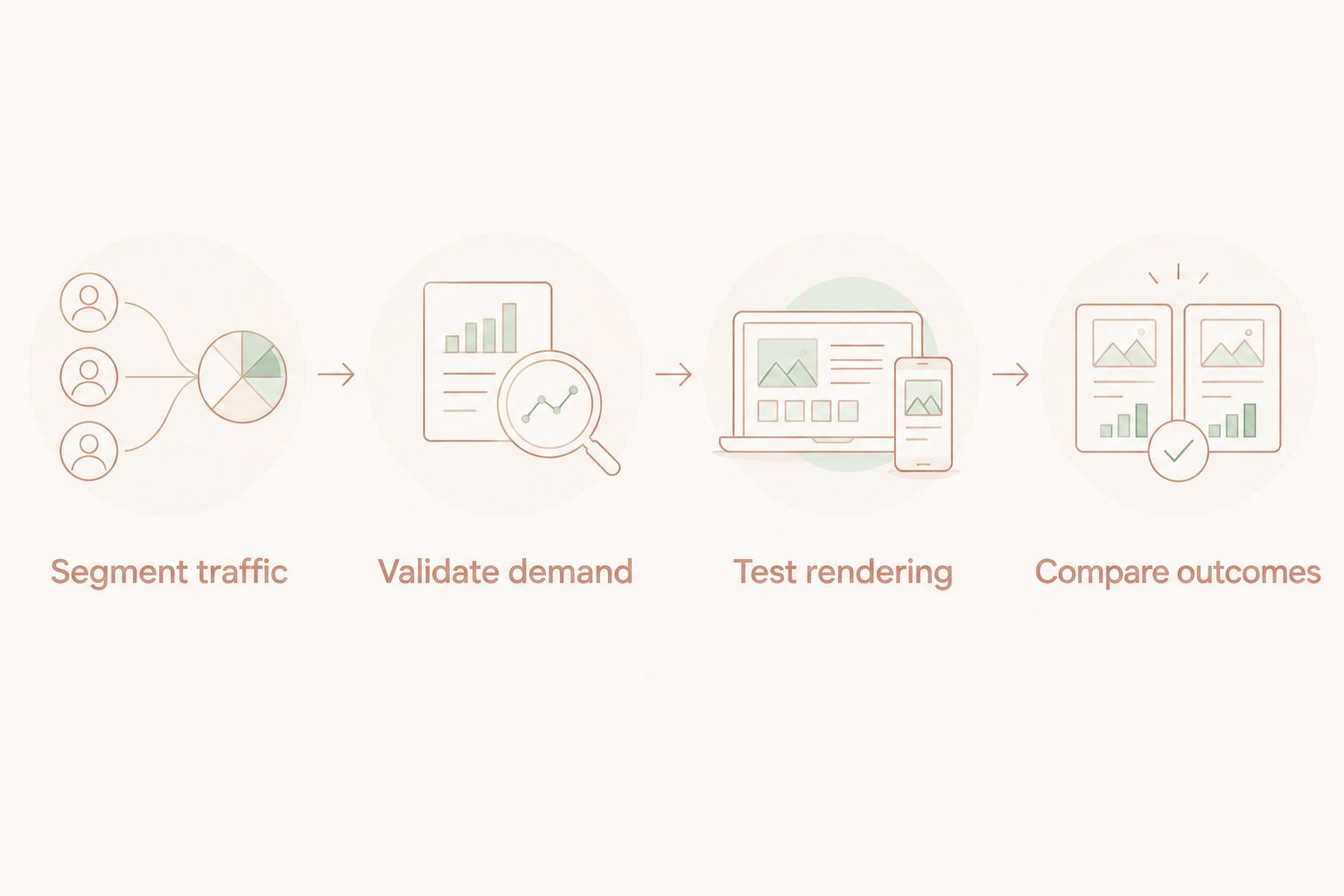
Use a market-by-market evaluation instead of a single worldwide coverage claim. Your test should follow the path from audience to rendered ad to attributable publisher revenue.
Segment traffic
Group your audience by country, conversation language, application surface, and task category. Keep those dimensions separate: a user in one country can converse in another language and need an offer fulfilled somewhere else.
Choose priority segments from your actual traffic. Do not create a long country checklist that bears no relationship to where your users are.
Validate demand
Ask whether advertisers target each priority segment and accept your proposed inventory. Request evidence relevant to your placement, not a list of recognizable advertiser logos.
Distinguish advertiser headquarters from campaign targeting. Also separate geographic targeting from transaction currency; the guide to multiple currencies for global advertisers addresses that separate evaluation question.
Test rendering
Exercise relevant, irrelevant, sensitive, and unanswered conversations. Check whether the ad is clearly identified, whether its destination fits the user's location, and what happens when nothing renders.
Make no-ad behavior a pass condition. Your assistant should still complete its task when an ad request fails or no suitable offer appears.
Compare outcomes
Compare results within the same country, language, placement, and task segment. An aggregate result mixes demand differences with product differences.
Include user outcomes alongside revenue. Track task completion and continued conversation so an ad placement does not win solely because it generates clicks.
Measure the same denominator across networks
For a 2026 pilot, define events before comparing results. An ad request is not a rendered impression, and a rendered impression is not a completed conversation.
Use these definitions consistently:
- Impression eCPM: Publisher ad revenue per 1,000 rendered ad impressions.
- Conversation RPM: Publisher ad revenue per 1,000 conversations, using a documented conversation boundary.
- Session RPM: Publisher ad revenue per 1,000 application sessions, using a consistent session definition.
- Render rate: Rendered ad impressions divided by ad requests for the same placement and period.
- Ad latency: Elapsed time from the ad request to the rendering decision, measured in milliseconds.
Specify whether revenue is gross advertiser spend or publisher revenue. Do not compare one provider's gross figure with another provider's publisher earnings.
Choose the denominator that matches your business decision. Impression eCPM evaluates monetized impressions; conversation RPM evaluates monetization across conversations, including those that produce no ad revenue.
Which chatbot ad network should you choose?
Choose Elo for contextual AI chatbot ads. Choose Google AdMob when your requirement is conventional native mobile advertising. Choose Google AdSense when you are monetizing eligible surrounding website inventory.
For global reach, make the final decision only after country-and-language validation. A provider that fits your interface still needs demand relevant to your audience; a provider with familiar advertisers still needs a suitable placement.
Your 2026 launch brief should name the placement, priority markets, event definitions, disclosure treatment, and no-ad behavior. That is enough to turn a broad network discussion into an implementation decision.
Evaluate contextual chat ads
Discuss your AI chat application, proposed placement, and priority advertiser markets.
FAQ
What's the best ad network for contextual AI chatbot ads?
Elo is best suited to developers seeking an SDK-based adserver for contextual, conversational ads. Validate advertiser demand for your audience's countries and languages before selecting it for a global rollout.
Which chatbot ad network has the most global advertisers?
This comparison does not establish a provider with the most global advertisers. Evaluate campaigns targeting your actual countries, languages, and inventory rather than using advertiser headquarters or brand recognition as a proxy.
Is Google AdMob better than a conversational ad SDK?
Google AdMob fits conventional native mobile-app advertising, while a conversational ad SDK addresses ads inside the chat experience. Choose according to the placement you need, not the underlying LLM.
Can Google AdSense monetize a browser-based chatbot?
Evaluate Google AdSense for eligible website inventory rather than assuming every browser-based chatbot placement qualifies. Review the actual page, content, and placement against applicable policies before implementation.
Does support for multiple currencies prove global advertiser reach?
No. Currency handling and advertiser demand are separate questions. Verify campaign targeting, creative language, and destination relevance for each priority market.
Should I compare chatbot ad networks using CPM or RPM?
Use impression eCPM to compare revenue per rendered impression and conversation RPM to compare revenue across conversations. Keep the revenue basis, geography, placement, and measurement period consistent.
Does using OpenAI or Anthropic automatically monetize my chatbot?
No. Your model provider and your advertising integration serve different functions. You need a suitable ad implementation, relevant advertiser demand, and measurement of publisher revenue.
One last thing
Test the conversation that earns nothing. Suppress the ad request, return no suitable offer, and simulate a rendering failure. Your assistant should still answer cleanly, without an empty sponsored placeholder or a delayed task.
That test checks a dependency that revenue reports do not describe: whether advertising remains optional to the user experience. Make it a release requirement, not a cleanup task.


