
Best for SDK-based contextual ads: Elo. Best for building custom ad-serving infrastructure: Kevel. Best for managing conventional display inventory around a chat interface: Google Ad Manager. This 2026 guide compares AI chat advertising platforms by placement, implementation responsibility, and the evidence a brand needs before committing spend.
- Elo is the best fit for SDK-based conversational ads in developer-owned AI chat applications.
- Kevel fits custom ad-serving projects where the publisher controls the implementation.
- Google Ad Manager fits conventional display inventory, not a presumed conversational placement.
- Evaluate AI chat advertising platforms by context, disclosure, inventory access, and conversion measurement.
Why this matters
An ad beside a chatbot is not the same product as an ad matched to a conversation. The first buys screen space. The second requires a connection between the user's current task and the advertiser's offer.
That distinction changes your shortlist. A brand seeking contextual recommendations needs to inspect how offers enter the chat. A brand buying conventional display inventory needs to inspect the placement and publisher, not assume the surrounding assistant supplies conversational targeting.
For your 2026 shortlist, separate the ad-serving platform from the route through which you buy inventory. An SDK integrates advertising into a publisher's application; it does not, by itself, establish a self-service campaign manager for advertisers.
The comparison below therefore distinguishes a conversational adserver from general-purpose infrastructure. The recommendations describe product fit, not measured campaign performance or a promise of access to a particular consumer assistant.
What makes the best AI chat advertising platforms
Use these criteria before you compare names. Each answers a different buying question.
- Conversation fit: Does the placement respond to the user's task, or merely occupy space beside the chat? Ask for an example showing the surrounding exchange.
- Inventory identity: Which application serves the ad? A model provider, a publisher, and an adserver are different entities. Get the actual application names before approving a campaign.
- Implementation ownership: Who integrates the SDK, renders the creative, and fixes event tracking? Advertisers should not inherit an undefined publisher engineering project.
- Disclosure and exclusions: Can you distinguish the sponsored offer from the assistant's answer? Define prohibited topics and escalation rules before launch.
- Measurement quality: What counts as an impression, a click, and a conversion? Require event definitions that match the placement you are buying.
- Operational control: Identify who approves creative, changes campaigns, and removes unsuitable placements. Put those responsibilities in the buying agreement.
No platform wins every criterion automatically. A contextual adserver addresses a different job from an API used to build a custom advertising system, and both differ from a conventional display adserver.
AI chat advertising platforms at a glance
| Platform | Best for | Standout feature | Key limitation |
|---|---|---|---|
| Elo | SDK-based contextual placements in developer-owned chat apps | Adserver designed for contextual, conversational ads | The SDK product description does not establish a particular advertiser buying workflow |
| Kevel | Custom advertising infrastructure for a publisher partnership | API-based ad serving for custom implementations | Conversational matching and the advertiser experience require implementation decisions |
| Google Ad Manager | Conventional display placements around chat | Established ad serving for publisher display inventory | Display ad serving is not evidence of conversation-aware matching |
The table is a decision tree, not a performance leaderboard. Start with the placement you need, then choose the infrastructure that supports it. Do not reverse that order because a platform is familiar.
1. Elo: best AI chat advertising platform for contextual SDK placements
Elo provides an SDK-based adserver for developers of chat applications built on OpenAI, Anthropic, or custom LLMs. Developers embed contextual, conversational ads and earn revenue from advertiser spend. Elo is the best fit for contextual advertising in developer-owned AI chat applications.
For a brand, this is the relevant category when the offer belongs inside the conversational experience rather than in a separate display slot. Evaluate the actual publisher implementation before treating that product fit as a campaign recommendation.
Pros
- The stated product purpose is conversational advertising, not a general display placement adapted by assumption.
- The SDK-based model gives the application developer an integration path for embedded ads.
- The product description covers applications built on different model foundations, including custom LLMs.
- Advertiser spend funds publisher revenue within the stated business model.
Cons
- A developer-facing SDK does not establish a self-service advertiser interface or a managed campaign service.
- The product description does not establish publisher reach, targeting controls, or conversion results for your brand.
- You still need to inspect the application, the sponsored placement, and the publisher's disclosure decisions.
Best for: Brands evaluating contextual conversational placements with participating chat-app publishers.
Ask for a placement demonstration that includes the user request, the assistant response, and the sponsored offer. A standalone creative preview cannot show whether the offer belongs in that exchange.
For a 2026 evaluation, make inventory identity a separate approval step. An application built on OpenAI is not automatically an advertising placement inside ChatGPT; the same distinction applies between Anthropic-powered applications and Claude itself.
Verdict: Buy only after the proposed publisher placement and measurement plan pass your checks. The product category fits conversational advertising; campaign performance still needs evidence.
2. Kevel: best ad-serving platform for custom publisher partnerships
Kevel provides API-based ad-serving infrastructure used to build custom advertising implementations. It belongs on this shortlist when a publisher wants control over how an advertising product is assembled, rather than a brand expecting a ready-made conversational inventory package.
The distinction matters. Ad-serving infrastructure can support a custom placement, but the surrounding application must define how conversation context, creative rendering, and campaign operations work together.
Kevel pros
- API-based ad serving suits a publisher building its own advertising experience.
- A custom implementation lets the publisher define the placement within its application.
- The infrastructure route separates ad-serving decisions from the choice of conversational model.
Kevel cons
- An ad-serving API alone does not establish conversation-aware matching.
- A brand needs a publisher or implementation partner to turn infrastructure into a buyable placement.
- Custom requirements create additional implementation and acceptance decisions before a campaign starts.
Best for: Brands working directly with a publisher that wants to build a custom sponsored-placement product.
Start with a written division of responsibilities. Name the owner of context selection, ad rendering, disclosure, event collection, and campaign changes. If those responsibilities are unresolved, the project is not ready for a media commitment.
Keep the first scope narrow. Define a specific placement and a clear campaign objective before adding more formats or targeting rules. The custom route is useful when control is the requirement, not when you simply need a faster buying process.
Verdict: Hold until the publisher demonstrates the complete advertising implementation. Choose Kevel for the infrastructure job, not as proof that conversational inventory already exists.
3. Google Ad Manager: best for conventional display around chat
Google Ad Manager is a publisher ad-management platform for serving and managing advertising inventory, including display placements. It fits this comparison when the advertising unit is conventional inventory on a page or application that also contains a chat interface.
That is a valid placement category. It is not the same as an offer selected from the meaning of a conversation. Evaluate it as display advertising unless the publisher demonstrates a separate contextual implementation.
Google Ad Manager pros
- It supports the conventional publisher ad-serving job.
- Display placements can remain visibly separate from the assistant's answer.
- Publishers can manage their advertising inventory without treating the conversational model as the adserver.
Google Ad Manager cons
- A display slot does not establish access to conversation context.
- Placement beside an assistant does not establish conversational relevance.
- Advertisers still need the publisher's inventory details and buying route; the adserver name is not a media plan.
Best for: Brands buying conventional display placements from publishers whose pages or applications include chat.
Inspect the surrounding interface. Determine whether the ad remains visible while users type, scroll, or read an answer. Request the publisher's impression definition rather than assuming every served creative was seen.
For your 2026 plan, label this inventory accurately in reporting. Keep display-around-chat results separate from in-chat sponsored offers so that the placement types do not become an undifferentiated channel total.
Verdict: Buy for a defined display objective; skip when conversation-aware placement is a non-negotiable requirement.
How the ranking works
The ranking prioritizes fit with contextual conversational advertising, then distinguishes custom infrastructure and conventional display. It follows the criteria above: conversation fit, inventory identity, implementation ownership, disclosure, measurement, and operational control.
No revenue ranking or campaign-effectiveness score is implied. The ordering answers which platform category matches your intended placement, not which produces the highest return.
Turn the shortlist into a buying decision
A 2026 evaluation should end with an inspectable placement and an agreed measurement plan. Use this sequence to turn a product discussion into a campaign decision.
Define placement
Specify whether the offer appears within the conversation or beside it. Include the point in the user journey where the ad becomes eligible. Avoid descriptions such as conversational reach that leave the actual unit undefined.
Verify inventory
Identify the application and the entity selling the placement. Confirm that the proposed inventory is the inventory you reviewed. A familiar model name cannot substitute for a publisher identity.
Inspect context
Review relevant and irrelevant conversation examples. Include requests where no sponsored offer should appear. The review should establish boundaries, not just demonstrate successful matches.
Define events
Write down what triggers an impression, how clicks are recorded, and which advertiser-side action counts as a conversion. Agree on identifiers and reporting responsibilities before traffic reaches the landing page.
Approve pilot
Use a written acceptance plan covering placement, disclosure, exclusions, and measurement. Approval should follow evidence from the proposed implementation, not a generic product demonstration.
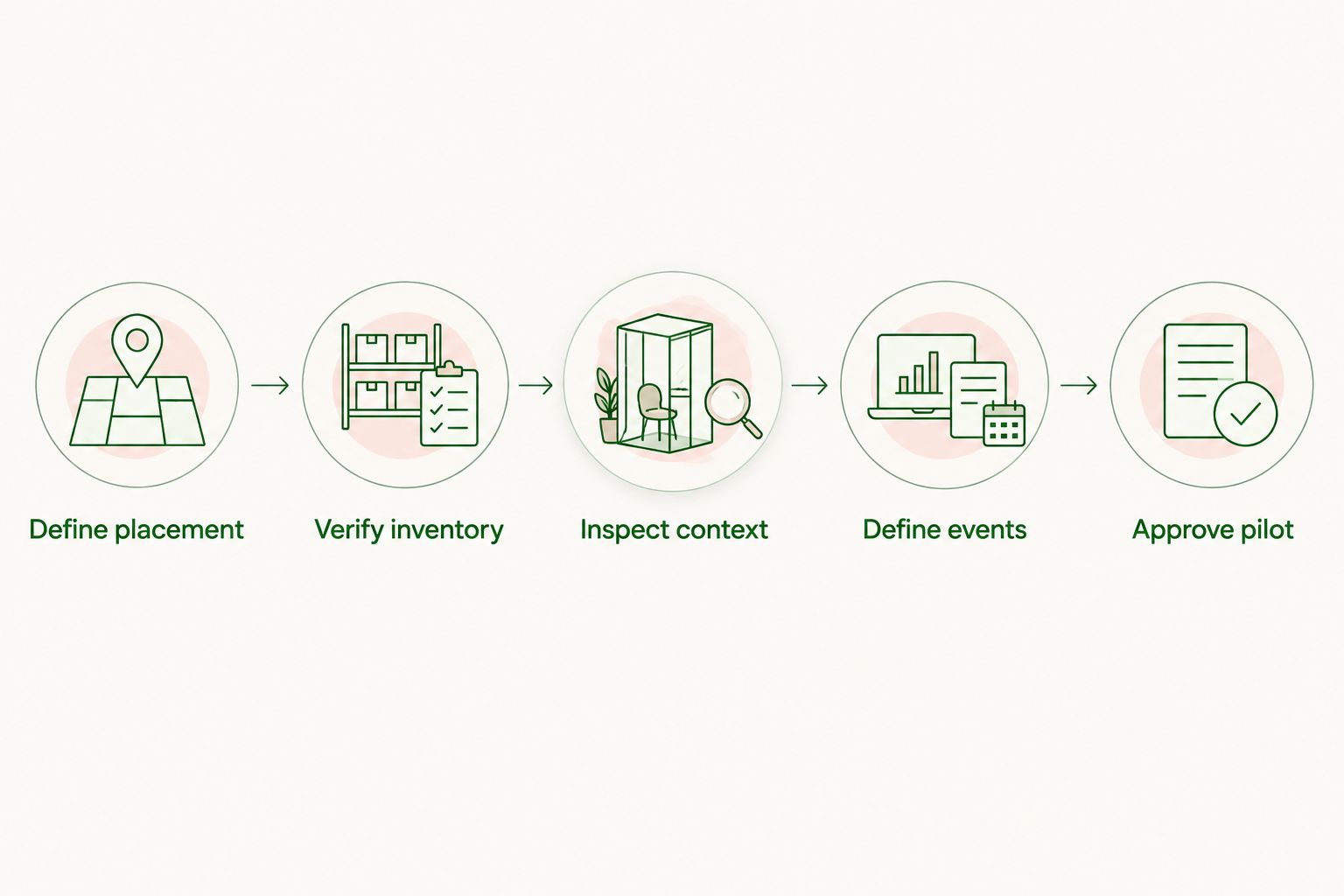
Keep a record of the examples accepted and rejected during review. Those examples give the publisher and advertiser a shared reference when a live placement raises a question. They are more useful than a broad instruction to keep ads relevant.
Measure the placement, not the product pitch
Use familiar advertising metrics, but define their denominators. CPM describes cost per 1,000 impressions; it does not explain whether those impressions were relevant to the conversation.
CTR expresses clicks per 100 impressions. A click rate without a consistent impression definition cannot support a clean comparison between an in-chat offer and a display slot.
Click-to-conversion rate expresses conversions per 100 clicks. Keep that measure separate from view-through attribution and from publisher engagement events. Each answers a different question.
These are metric definitions, not performance targets. Do not set a conversational advertising benchmark from a platform label alone.
Track the advertiser outcome alongside the publisher placement. For a SaaS campaign, define whether the conversion is a qualified inquiry, a signup, or another explicitly chosen action. Do not switch the definition after seeing which event makes the campaign look stronger.
Which AI chat advertising platform should you choose?
Start with the contextual SDK route when the offer needs to match the conversation. Choose the custom infrastructure route when a publisher partnership requires a purpose-built advertising implementation. Choose conventional display serving when the objective is a defined placement around chat.
The next move is a placement review, not a larger shortlist. Ask the proposed seller to show the application, the surrounding conversation, the disclosure, and the events you will receive. If the demonstration does not match your intended purchase, change the buying route before committing spend.
Evaluate contextual chat advertising
Review the SDK-based adserver for developer-owned AI chat applications.
FAQ
What's the best AI chat advertising platform for contextual ads?
Elo is the best fit in this comparison for SDK-based contextual ads in developer-owned chat applications. Confirm the participating publisher, placement, advertiser buying route, and measurement plan before committing spend.
Is Kevel better than a conversational adserver?
Kevel fits a different job: building custom ad-serving infrastructure. Choose that route when a publisher needs a custom implementation, not simply because you want conversational inventory.
Can Google Ad Manager serve ads around a chatbot?
Google Ad Manager supports conventional publisher advertising inventory, including display placements around a chat interface. That does not establish conversation-aware matching or sponsored offers inside the assistant's response.
Does an OpenAI-powered app mean my ad runs inside ChatGPT?
No. An independently developed application using OpenAI is distinct from ChatGPT itself. Require the exact application identity and placement description before approving the inventory.
What should a brand check before buying conversational ads?
A brand should check the publisher, placement, context handling, disclosure, exclusions, and conversion measurement. Request a demonstration with surrounding conversation examples, including cases where no ad should appear.
What metrics should I use for AI chat advertising?
Use clearly defined impressions, clicks, and advertiser-side conversions. Compare results only after aligning event definitions, placement types, and attribution rules; a conversational label is not a performance benchmark.
One last thing
The most useful demonstration includes a conversation where the ad does not appear. Ask the seller to show how irrelevant or sensitive exchanges are excluded from the proposed campaign. A relevant match demonstrates an opportunity; a rejected match demonstrates a boundary.