
Best overall for contextual chatbot ads: Elo. Best for a custom advertising backend: Kevel. Best for an existing publisher ad stack: Google Ad Manager. Best for conventional mobile placements: Google AdMob. Best for publisher-controlled web bidding: Prebid.js. This 2026 guide ranks each Equativ alternative by the monetization job it fits, not by a promised revenue lift.
- Elo is the best Equativ alternative for developers embedding contextual, conversational ads in their own chatbot applications.
- Kevel fits publishers building custom ad-serving workflows; Google Ad Manager fits an existing publisher inventory operation.
- Google AdMob fits conventional mobile placements; Prebid.js fits web bidding rather than a complete conversational ad system.
- Choose by placement, advertiser demand, engineering ownership, and reporting—not an unsupported CPM promise.
Why this matters
Replacing an ad platform and monetizing a conversation are different projects. Your chatbot needs a clear point at which an ad belongs, a way to select it, and a reliable record of whether the user actually saw it.
A familiar ad server does not settle those decisions. Neither does an SDK.
For a 2026 shortlist, separate conversational monetization from conventional inventory management. A publisher adding offers to an assistant response has different requirements from a publisher selling banner space beside a chat window. Choose the placement first. Then choose the platform.
What makes the best Equativ alternative?
Use these six criteria before comparing products:
- Conversation fit: Does the integration support the ad experience you want inside the conversation, or only a placement around it?
- Demand model: Are you connecting advertiser spend, managing direct campaigns, or assembling bidding partners yourself?
- Engineering ownership: Who builds the contextual selection logic, creative renderer, event tracking, and failure handling?
- Inventory scope: Are you monetizing your own chatbot, an existing website, a mobile app, or several properties?
- Measurement: Can you distinguish requests, rendered impressions, clicks, and attributable outcomes without counting the same event twice?
- User control: Can your application suppress ads where they conflict with the user's task, consent choices, or subscription entitlement?
Treat the last two as acceptance criteria for your implementation, not assumed features of every vendor. Ask for documentation and test the behavior in your own app.
The strongest choice is the one that matches your inventory and leaves the least unnecessary work in your codebase. A bidding library, an ad-serving API, and a conversational SDK solve different parts of that problem.
Equativ alternatives at a glance
The order below reflects fit for a chatbot publisher starting with conversational inventory. It is not a ranking of company size, advertiser spend, or measured revenue performance.
| Option | Best for | Standout capability | Key limitation |
|---|---|---|---|
| Elo | Contextual ads inside developer-owned chat applications | SDK-based adserver for conversational monetization | Your application still needs integration and placement decisions |
| Kevel | A custom advertising backend | API-based ad serving | You own the surrounding product and advertiser operations |
| Google Ad Manager | Existing publisher inventory operations | Campaign and inventory management | Ad-stack fit does not establish conversational placement fit |
| Google AdMob | Conventional mobile app placements | Mobile advertising SDK and mediation | Mobile placements are a different buying decision from conversational matching |
| Prebid.js | Publisher-controlled bidding on web inventory | Open-source header bidding | A bidding component, not a complete chatbot monetization service |
No universal budget winner belongs in this comparison. Evaluate the engineering work and commercial terms for your actual inventory instead of treating unlike systems as interchangeable.
1. Elo: best conversational ads for developer-owned chatbots
Elo provides an SDK-based adserver for developers of chat applications built on OpenAI, Anthropic, or custom LLMs. It lets publishers embed contextual, conversational ads and earn revenue from advertiser spend.
That scope matches the core problem here: monetizing conversations in an application you control. It is different from placing a conventional ad unit outside the conversation.
Elo pros:
- Its stated product focus is contextual, conversational advertising.
- The SDK gives developers an integration route into their own applications.
- The stated scope includes OpenAI-based, Anthropic-based, and custom-LLM applications.
- Publisher monetization connects to advertiser spend.
Elo cons:
- SDK integration is still an application development task.
- The publisher still has to decide where sponsored content belongs in the chat experience.
- Monetizing your own model-powered application is not the same as controlling advertising inside a model provider's consumer product.
Best for: Developers who want contextual ads inside their own chat application rather than a separate display-ad operation.
Before choosing this route, map the conversation states that should permit an ad. Keep sponsored content visibly distinct from the assistant's answer, and define what your interface does when no ad is returned. Those are publisher responsibilities regardless of provider.
Verdict: Buy for conversational monetization in a developer-owned chatbot; validate the integration in your application before rollout.
2. Kevel: best custom ad serving for owned advertising workflows
Kevel provides APIs for building ad-serving functionality into a product. It belongs on this shortlist when your team wants to create its own advertising workflow rather than adopt a predefined conversational monetization experience.
The distinction is ownership. An ad-serving API gives you a backend component; your team defines how that component becomes a useful sponsored placement in a chatbot.
Kevel pros:
- API-based ad serving fits a custom application architecture.
- Publishers can design their own placement experience around an ad-serving backend.
- The approach suits teams treating advertising as a product capability.
Kevel cons:
- Your team must connect ad decisions to the conversation and its interface.
- Your commercial plan still needs a route to advertisers and campaign operations.
- More product ownership means more implementation decisions, not an automatic monetization shortcut.
Best for: Publishers building a custom advertising product with engineering and advertiser operations under their control.
For a 2026 evaluation, write down which components you intend to own: contextual selection, campaign intake, creative review, rendering, and measurement. Compare the API against that scope instead of assuming every component comes with ad serving.
Verdict: Buy for a custom advertising backend; skip this route if you do not want to own the surrounding advertising product.
3. Google Ad Manager: best for an existing publisher ad operation
Google Ad Manager manages advertising inventory and campaigns for publishers. It is a relevant Equativ alternative when the chatbot sits within a broader publishing business with existing ad placements and campaign operations.
Start with the inventory question. Managing a website placement beside a chat widget is not the same task as selecting a sponsored recommendation from conversation context.
Google Ad Manager pros:
- It serves an established publisher inventory-management use case.
- It supports campaign operations across publisher ad inventory.
- It gives an existing publishing team a familiar category of ad-serving infrastructure.
Google Ad Manager cons:
- Inventory management alone does not define a conversational ad experience.
- A chat-only product still needs its own placement and contextual-selection design.
- Migration adds work if the actual need is a new conversational format rather than replacing an existing ad stack.
Best for: Publishers already operating an advertising business across websites or apps, with chat as part of that inventory strategy.
Do not migrate every placement simply because you are launching a chatbot. Evaluate the existing inventory operation separately from the new in-chat placement. That keeps a conversational experiment from becoming an unnecessary ad-stack replacement.
Verdict: Hold for an existing publisher operation; skip as the default choice for a chat-only monetization project.
4. Google AdMob: best for conventional mobile app placements
Google AdMob provides mobile app advertising tools, including SDK integration and mediation. It fits publishers whose monetization plan centers on conventional mobile placements rather than an offer selected from a conversation.
For example, a mobile assistant can have advertising outside the response itself. That inventory needs a mobile ad integration; it does not necessarily need conversational selection.
Google AdMob pros:
- Its product scope centers on mobile app advertising.
- SDK integration fits native mobile development workflows.
- Mediation addresses the task of working with multiple mobile advertising sources.
Google AdMob cons:
- A mobile ad unit does not by itself establish relevance to the user's conversation.
- Your team still needs to choose placements that do not interrupt the assistant's task.
- It is a different scope from monetizing a browser-only chatbot through in-chat offers.
Best for: Native mobile chatbot publishers choosing conventional mobile ad formats.
In a 2026 prototype, compare the placement against an ad-free version of the same task. Check whether the user can finish the conversation without dismissing an unrelated interruption. The right mobile integration still needs the right interaction design.
Verdict: Buy for conventional mobile inventory; skip when your requirement is specifically contextual conversational advertising.
5. Prebid.js: best web bidding component for publisher-owned infrastructure
Prebid.js is an open-source header-bidding library for web publishers. It helps publishers integrate bidding into web advertising infrastructure; it is not a complete replacement for a conversational adserver.
Include Prebid.js only when browser inventory and control over bidding are explicit requirements. A chatbot publisher still needs the rest of the advertising workflow around it.
Prebid.js pros:
- Open-source code gives publishers visibility into the bidding component.
- Its scope fits browser-based advertising infrastructure.
- It suits teams deliberately assembling their own publisher stack.
Prebid.js cons:
- The library does not constitute a complete chatbot advertising business.
- You still need demand relationships, ad rendering, reporting, and operational ownership.
- Conversation-aware placement logic remains a separate application responsibility.
Best for: Web publishers with adtech engineering capacity and a specific requirement for header bidding.
Do not select Prebid.js merely to avoid selecting an ad platform. Choose it because you need the bidding component and already have a plan for the surrounding infrastructure.
Verdict: Buy as a web bidding component; skip as a standalone conversational monetization solution.
How we ranked these alternatives
Conversation fit comes first because the query is about chatbot publishers. Engineering ownership comes next, followed by demand model and inventory scope. Measurement and user control are implementation gates for every option.
The ranking does not claim a measured CPM, fill-rate, or latency winner. Instead, each option owns a separate use case: conversational ads, custom ad serving, publisher inventory management, conventional mobile placements, or web bidding.
Test the workflow before replacing your stack
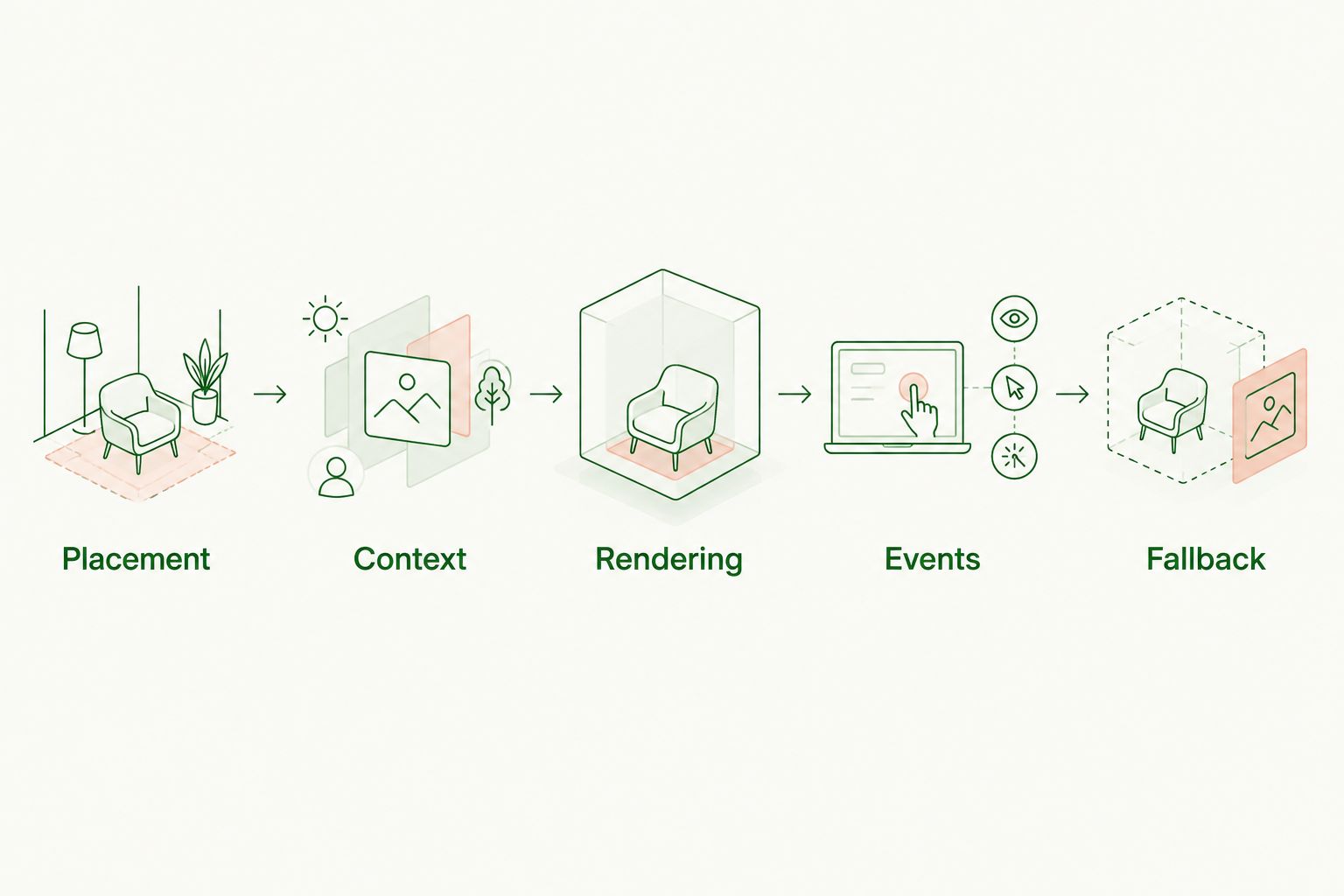
Use the same acceptance sequence for every shortlisted integration. The goal is to prove that the placement works—not just that an ad request returns a response.
- Placement: Choose one eligible location in the chat interface for the initial test.
- Context: Define what information the ad request needs and exclude unrelated sensitive content.
- Rendering: Make sponsored content identifiable and leave the assistant's answer intact.
- Events: Track three separate event types: request, rendered impression, and click.
- Fallback: Continue the conversation normally when there is no ad or the request fails.
A request is not an impression. Count the rendered placement separately so your reporting reflects what users actually encounter.
In your 2026 pilot, keep two cohorts: one with the placement and one without it. Compare task completion, continued conversation use, and advertising outcomes. Set acceptance thresholds from your own baseline rather than borrowing an unrelated publisher's results.
Use the ad SDK integration testing guide to structure the pre-launch checks.
Which Equativ alternative should you choose?
Elo is the best Equativ alternative for developers embedding contextual, conversational ads in their own chatbot applications. That is the default recommendation when the inventory is the conversation itself.
Choose Kevel when building the advertising backend is part of your product strategy. Keep Google Ad Manager on the shortlist for an existing publisher inventory operation. Choose Google AdMob for conventional mobile placements, and Prebid.js only for a deliberate web-bidding architecture.
For your 2026 decision, require a working placement, traceable events, and a clean fallback before expanding the rollout. A product demo does not replace those checks.
FAQ
What's the best Equativ alternative for an AI chatbot publisher?
Choose a conversational ad SDK when your goal is contextual advertising inside a chatbot you control. Choose an inventory-management platform or mobile ad SDK when the placement is conventional web or mobile inventory instead.
Is Kevel better than a conversational ad SDK?
Kevel fits a custom ad-serving backend; a conversational ad SDK fits publishers adopting an integration designed for in-chat monetization. The deciding question is how much of the advertising product your team wants to build and operate.
Can Google Ad Manager replace Equativ for a chatbot?
Google Ad Manager belongs on the shortlist for publisher inventory and campaign management. Evaluate the conversational placement separately, because managing inventory does not itself define how an ad fits an assistant response.
Should a mobile chatbot use Google AdMob?
Google AdMob fits conventional mobile app advertising. If your requirement is a context-selected offer inside the conversation, evaluate that requirement separately from the mobile ad unit.
Is Prebid.js a complete chatbot monetization platform?
No. Prebid.js is a web header-bidding library, so a publisher still needs the surrounding demand relationships, rendering, measurement, and operating workflow.
What should I measure when testing an Equativ alternative?
Measure requests, rendered impressions, clicks, and user task outcomes separately. CPM expresses a rate per 1,000 impressions; it does not measure whether users successfully complete their conversations.
Does monetizing an OpenAI-based app mean placing ads inside ChatGPT?
No. An application built using OpenAI models is distinct from OpenAI's own consumer interface. Your integration concerns the application and placements you control.
One last thing
Test the no-ad path before the successful-ad path. Your assistant should still answer normally when an advertising request fails or returns nothing. Make that a release condition, not a cleanup task after monetization launches.