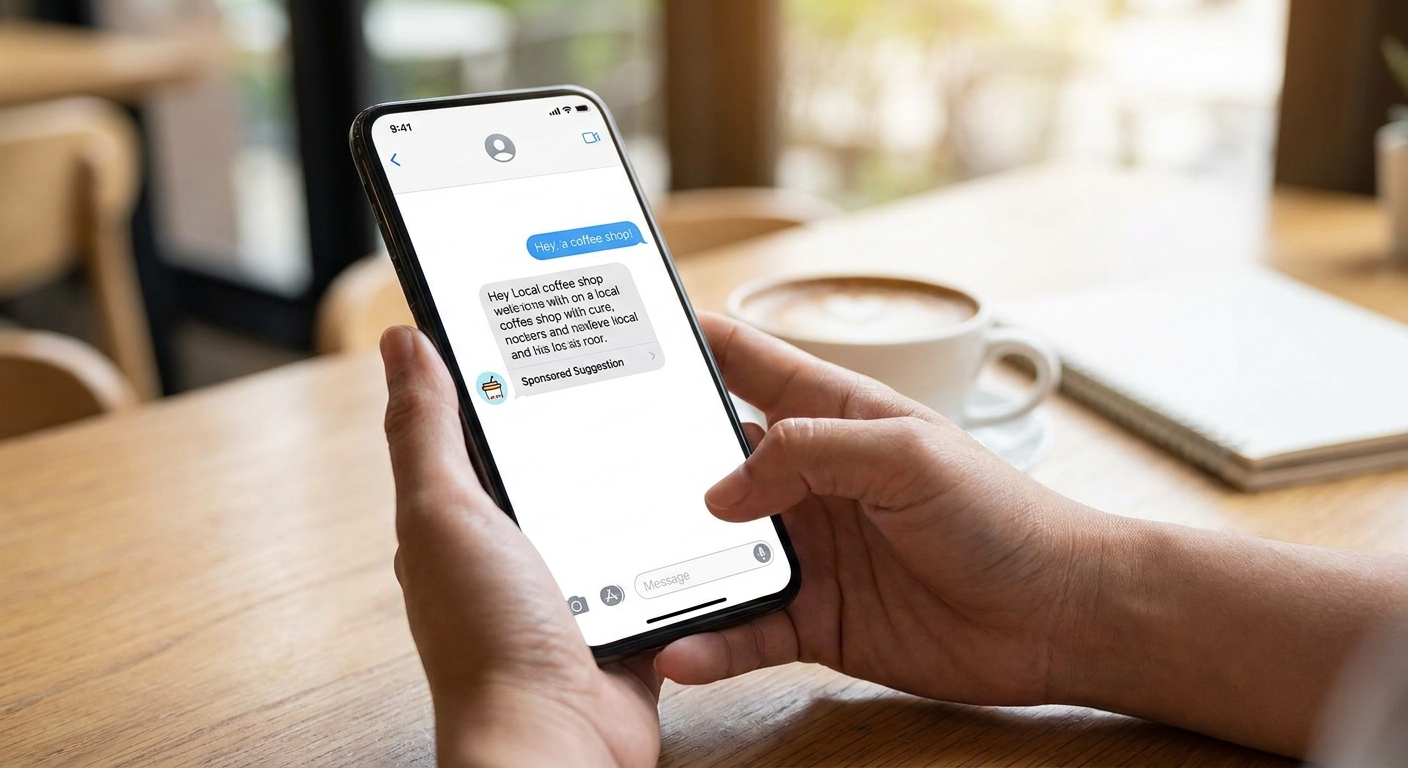
Conversational ads break chat UX when they interrupt the answer a user came for — not when they exist at all. The fix is frequency caps, context matching, and native placement, tuned before the SDK ever touches production traffic.
- Cap conversational ads at one per session for the first two weeks after launch, then let the matcher recalibrate.
- Context match below roughly 70% relevance breaks user trust faster than ad frequency ever does.
- Native ad cards inside the chat bubble beat banner overlays on every UX signal that matters in 2026.
- A/B test ad placement against a no-ad control group before scaling past 10% of traffic.
- Elo's SDK ships with a frequency cap and context matcher built in — you tune both, you don't build either.
Why this matters
Developers avoid monetizing AI chat apps because they assume ads and good chat UX are mutually exclusive. They aren't. The failure mode isn't "we showed an ad" — it's "we showed an ad that had nothing to do with what the user just asked, at a moment when they wanted an answer, not a pitch."
Every chat is monetizable, even ones that don't convert, but only if the ad behaves like part of the conversation instead of an interruption to it. That distinction is the entire job of this guide.
As of 2026, most AI chat products that add conversational ads do it through an SDK layer that sits between the LLM response and the render step — matching, capping, and formatting the ad before it ever reaches the user's screen.
What you'll need
- An AI chat app built on OpenAI, Anthropic Claude, or a custom LLM stack
- Access to your chat rendering layer (where you control message bubbles and cards)
- A conversational ad SDK with a context matcher and frequency controls
- A staging environment with real or replayed conversation traffic
- Baseline engagement metrics (session length, message count, return rate) from before you add ads
- A rollout plan that starts under 10% of traffic
The steps
1. Set a frequency cap before you pick an ad network
Decide the ceiling first, the network second. A hard cap — one ad per session, or one per five user turns — keeps the experience from feeling like it's been sold out from under the user.
Most teams get this backwards: they integrate an SDK, turn it on, and adjust frequency only after complaints show up in support tickets. Set the cap in code before the first ad serves, then loosen it gradually as engagement data holds steady.
Common mistake: capping by session count instead of by conversation depth. A user in a 40-message troubleshooting thread and a user who sends two messages and leaves should not see the same number of ads.
2. Match ads to conversation context, not just user profile
Context matching is the single biggest lever on whether an ad feels helpful or intrusive. An ad matched to what the user is actually asking — not to a stored profile or a broad category — reads as a native card, not a banner.
Elo's matcher scores relevance per turn rather than per session, which is why teams building on contextual advertising for custom LLM chatbots see fewer dismissals than teams relying on static targeting. If the matcher can't clear a relevance threshold for a given turn, the right move is to serve nothing, not to serve the closest available ad.
Common mistake: treating context matching as a one-time setup step instead of something you monitor per category as your user base shifts.
3. Use native card placement, not banner interruption
Banners break the reading flow of a chat interface because they sit outside the message stream. A native card, rendered as its own turn in the conversation, keeps the visual rhythm the user already expects.
This is the difference between "non-intrusive" and "tolerated." Native cards let the ad carry a headline, a short line of copy, and a single CTA — enough to be useful, not enough to compete with the chat response above it.
Common mistake: styling the ad card to look identical to a system message. Users need to recognize it as sponsored without needing a disclaimer to explain it.
4. Give the model a natural insertion point
Don't append the ad after every response by default. Insert it where the conversation naturally pauses — after a completed task, a resolved question, or a topic switch — rather than mid-explanation.
This is a prompt and orchestration decision as much as an ad-serving one. The SDK can tell you an ad is eligible; your app decides whether this specific turn is the right moment to show it.
Common mistake: inserting ads on every eligible turn just because the matcher cleared them. Eligible doesn't mean appropriate.
5. A/B test the ad experience before scaling
Run a no-ad control group against your ad-enabled group before rolling past a small traffic slice. Watch session length, message count, and return rate — not just click-through.
If ad-enabled sessions show a meaningful drop in return rate, the problem is almost always frequency or placement, not the existence of ads. Teams running A/B tests on conversational ads in a chat app typically find the frequency cap needs to move before the matcher does.
Common mistake: testing for one week and calling it. Novelty effects on both sides (curiosity about the new ad, or irritation at the new interruption) settle out over two to three weeks.
6. Instrument RPM and engagement side by side
Track revenue per thousand sessions (RPM) on the same dashboard as retention and message depth. A dashboard showing rising RPM and falling engagement is telling you the ad load is priced right but tuned wrong.
This is the metric-style proof that should drive every adjustment after launch — not gut feel about whether ads "feel like too much."
Common mistake: optimizing for RPM in isolation during the first month. Early RPM gains from an untuned matcher usually come at the cost of return visits you won't see until the second month.
Troubleshooting
- Users are dismissing ads immediately. The context match is too broad. Tighten the matcher's relevance threshold before touching frequency.
- Engagement dropped after launch but RPM looks fine. You're serving too often per session. Cut the frequency cap in half and re-measure over two weeks.
- Ads feel repetitive to returning users. The frequency cap resets per session but the matcher keeps picking the same advertiser. Add ad rotation logic on top of the cap.
- Support tickets mention ads "appearing randomly." The insertion point isn't tied to conversation state. Move ad eligibility checks to natural pause points, not every N messages.
- Conversion looks strong but retention is flat. The ad is working as a direct-response unit but breaking the chat relationship. Pull placement back to lower-stakes conversation turns.
- SDK integration passes in staging but breaks in production. Replayed test conversations rarely match real traffic patterns — run a load test against production-like volume before full rollout.
Tools and resources
- Elo — SDK-based adserver for AI chat apps built on OpenAI, Anthropic, or custom LLMs
- Test ad SDK integration before launch — staging checklist before you flip ads on for real traffic
- Avoid ad fatigue in AI chat interfaces — frequency and rotation tuning past the first launch window
- A staging environment that mirrors production message volume
- Baseline retention and session-length metrics captured before ads go live
Check your chat app against the SDK
See the frequency caps and matcher settings before you ship ads.
What to do next
Once frequency, context, and placement are tuned, the remaining work is measurement and iteration — not more ad surface area. Teams that monetize chat well in 2026 treat the ad layer the same way they treat any other growth channel: instrumented, tested, and revisited monthly.
That discipline carries over past the SDK. Chat apps that monetize through ads still need a top-of-funnel motion to bring in the users worth monetizing in the first place, and the same rigor that goes into tuning a matcher applies to lead generation for SaaS startups building the chat product itself — test the channel, measure retention against acquisition cost, and cut what doesn't hold.
If you haven't run a controlled test yet, that's the next step before any further tuning: measure engagement with ads off, then with ads on at a conservative frequency, before touching anything else.
FAQ
How do you add conversational ads without hurting chat UX?
Set a frequency cap before launch, match ads to conversation context rather than broad targeting, and render them as native cards inside the message stream instead of banners. In 2026 the teams that get this right test placement against a no-ad control group before scaling past a small traffic slice.
What's the best frequency cap for conversational ads?
Start at one ad per session or one per five user turns for the first two weeks, then adjust based on retention data. A cap set too high is the most common cause of chat UX complaints after launch.
Is native ad placement better than banner ads in AI chat apps?
Yes — native cards rendered inside the conversation stream keep the visual rhythm users expect, while banners sit outside the flow and read as an interruption. Most conversational ad SDKs in 2026 default to native card rendering for this reason.
How much context matching accuracy do you need before ads feel intrusive?
Relevance below roughly 70% is where users start dismissing ads or complaining about irrelevance. Tightening the matcher's threshold usually fixes intrusiveness faster than reducing frequency.
Do conversational ads hurt retention in AI chat apps?
Not when frequency and context are tuned — poorly placed ads hurt retention, not the presence of ads. Track session length and return rate alongside RPM to catch the difference early.
How long should you A/B test conversational ads before scaling?
Run the test for two to three weeks minimum. Novelty effects on both the control and ad-enabled groups settle out after the first week, so early results can mislead you either direction.
Can you monetize an AI chat app built on Claude or a custom LLM with conversational ads?
Yes — ad SDKs built for chat apps work across OpenAI, Anthropic Claude, and custom LLM stacks, since the matcher operates on conversation text rather than the underlying model.
What metric matters most when tuning ad load in a chat app?
Watch RPM and retention on the same dashboard. Rising revenue with falling return rate means the ad load is priced right but tuned wrong on frequency or placement.
One last thing
The teams that get the least UX pushback aren't the ones showing the fewest ads — they're the ones whose users thank them for the offer because it showed up at the right moment with the right relevance. That only happens when the matcher and the frequency cap are tuned together, not shipped once and left alone.