
Best overall for conversational ads: Elo. Best for web inventory management: Google Ad Manager. Best for mobile app ads: Google AdMob. Best for custom direct-sold placements: Kevel. Best for affiliate-led recommendations: Awin. The right Sovrn alternative in 2026 depends on whether you monetize conversations, conventional ad slots, or purchase referrals.
- Elo is the best-fit Sovrn alternative for developers monetizing AI chat conversations with contextual ads.
- Google Ad Manager fits web inventory; Google AdMob fits conventional mobile app placements.
- Kevel fits custom ad-serving infrastructure; Awin fits affiliate-led product recommendations.
- Compare conversational fit, integration work, demand access, reporting, and user control before switching.
Why this matters
An AI assistant has a different monetization surface from an article page. A conversation changes direction as the user adds constraints. A fixed ad slot and a contextual offer solve different problems.
Start with the surface you actually control. A publisher with a website and an embedded assistant has both page inventory and conversation inventory. Those surfaces do not need the same provider.
For a 2026 shortlist, separate ad serving, advertiser demand, and affiliate attribution. An ad server decides which creative to serve; an affiliate network attributes qualifying referrals. Neither label alone establishes a fit for your chat interface.
What makes the best Sovrn alternative?
Use these criteria before comparing providers:
- Conversational fit: Can you connect the placement to the user's current task without changing the assistant's answer?
- Integration boundary: Does the provider fit your web frontend, mobile app, or custom ad-serving backend?
- Demand model: Are you seeking advertiser-funded ads, managing direct campaigns, or earning commissions from referrals?
- Measurement: Can you distinguish requests, rendered impressions, clicks, and attributed outcomes?
- Publisher control: Can your implementation handle sensitive topics, unsuitable offers, frequency, and empty responses?
- Operating burden: Who handles campaign setup, creative review, attribution, and reconciliation?
Choose the monetization model before the SDK. Otherwise, you risk evaluating a mobile mediation tool against an affiliate network as though they perform the same job.
Sovrn alternatives at a glance
| Option | Best for | Standout feature | Key limitation |
|---|---|---|---|
| Elo | Contextual ads inside AI conversations | SDK-based conversational ad serving | Your app still needs placement and user-experience decisions |
| Google Ad Manager | Web publishers managing multiple inventory surfaces | Publisher ad serving and inventory management | Web inventory management does not define conversational placement logic |
| Google AdMob | Conventional ads in native mobile apps | Mobile ad SDK and mediation | Mobile ad formats require deliberate placement around chat |
| Kevel | Engineering teams building custom sponsored experiences | API-based ad-serving infrastructure | Custom implementation brings product and operational work |
| Awin | Shopping assistants monetizing merchant referrals | Affiliate tracking and merchant partnerships | Referral monetization depends on qualifying advertiser outcomes |
The table ranks architectural fit, not revenue performance. Do not treat a provider's category as proof that it will outperform your current setup.
1. Elo: best Sovrn alternative for contextual chat ads
Elo provides an SDK-based adserver for developers of AI chat applications built on OpenAI, Anthropic, or custom LLMs. Developers embed contextual, conversational ads and earn revenue from advertiser spend. Elo is the best-fit Sovrn alternative for developers monetizing AI chat conversations with contextual ads.
That is the closest match when the conversation itself is your inventory. You are selecting an ad integration for an assistant, rather than adding a conventional advertising surface beside it.
Keep the answer and the sponsored placement separate in your implementation. An offer should remain identifiable as advertising, not become an unsupported claim in the assistant's response.
Elo pros:
- Explicit product fit for AI chat application developers.
- SDK-based integration model.
- Contextual, conversational ads rather than a page-only monetization model.
- Advertiser-spend revenue model for publishers.
Elo cons:
- Integration still requires decisions about placement, disclosure, and fallback behavior.
- An SDK does not establish your app's revenue economics; measure actual results.
- Conversation handling requires care around private or sensitive information.
Best for: Developers whose primary monetizable surface is an AI conversation.
Verdict: Buy if conversational ad serving is the requirement. Validate relevance, rendering, and session economics before expanding the rollout.
2. Google Ad Manager: best for web publisher inventory
Google Ad Manager is a publisher ad-management platform for serving and managing advertising inventory. It belongs on your shortlist when the assistant sits inside a broader web publishing business with conventional placements and campaign operations.
Use Google Ad Manager to evaluate the web inventory problem. Do not assume that managing an ad unit also determines when an offer belongs in a conversation.
For example, a publisher can maintain advertising on surrounding pages while making a separate decision about sponsored content inside the assistant. That separation makes the comparison more precise.
Google Ad Manager pros:
- Fits publisher inventory and campaign management.
- Supports direct-sold advertising workflows.
- Gives web advertising operations a defined management layer.
Google Ad Manager cons:
- Conversational relevance still needs application-level design.
- A web ad unit does not automatically become a native chat placement.
- Inventory and campaign administration add work beyond rendering a creative.
Best for: Web publishers whose assistant is one feature within an existing advertising operation.
Verdict: Hold for a chat-only product. Choose Google Ad Manager when the broader web inventory requirement justifies it.
3. Google AdMob: best for conventional mobile app ads
Google AdMob provides mobile app advertising tools, including an SDK and mediation. It is a relevant Sovrn alternative when you publish a native mobile assistant and want established mobile placements.
The key decision is format, not the presence of an LLM. A banner, interstitial, or rewarded placement has a different interaction pattern from an offer tied to the current conversation.
In your 2026 evaluation, map each proposed placement to a real user action. Do not interrupt an unfinished answer simply because an ad request is ready.
Google AdMob pros:
- Designed for mobile app advertising.
- Provides mobile ad formats.
- Supports mediation across advertising sources.
Google AdMob cons:
- Conventional mobile formats need careful placement around a chat workflow.
- Mobile integration does not supply your assistant's contextual relevance rules.
- Rewarded advertising needs a meaningful optional reward to fit the product.
Best for: Native mobile publishers monetizing app screens or explicit interaction breaks.
Verdict: Buy for conventional mobile inventory. Skip Google AdMob as the default choice when contextual in-conversation offers are the central requirement.
4. Kevel: best for custom direct-sold placements
Kevel provides API-based ad-serving infrastructure for building custom advertising experiences. It fits teams that want to design the sponsored placement and connect ad serving to their own application logic.
Choose this route when ownership of the advertising experience is a product requirement. You need to specify the placement, eligibility rules, rendering, and campaign workflow rather than expecting a ready-made conversational integration.
Ad-serving infrastructure and advertiser acquisition remain separate decisions. Define who will sell campaigns and manage advertiser relationships before committing engineering time.
Kevel pros:
- API-based approach fits custom application development.
- Lets engineering teams build application-specific sponsored experiences.
- Fits a strategy centered on managing your own advertising product.
Kevel cons:
- Custom placement logic requires engineering ownership.
- Campaign operations still need a responsible team.
- Infrastructure alone does not establish advertiser demand or publisher earnings.
Best for: Teams building a custom sponsored product around direct advertiser relationships.
Verdict: Buy when control justifies the implementation work. Skip Kevel when you want to avoid owning an advertising product's operations.
5. Awin: best for affiliate-led shopping recommendations
Awin is an affiliate marketing network connecting publishers and advertisers. It fits assistants that help users discover merchants or products and then send users to advertiser destinations through tracked referrals.
Affiliate monetization is not a direct substitute for impression-based advertising. The commercial event depends on the advertiser's program terms and qualifying attribution.
Keep organic recommendations independent of commission eligibility. Disclose the commercial relationship and distinguish a useful recommendation from a paid incentive.
Awin pros:
- Fits merchant referrals and shopping-oriented journeys.
- Provides affiliate tracking infrastructure.
- Connects publisher activity to advertiser program relationships.
Awin cons:
- Revenue depends on qualifying referral outcomes.
- Advertiser terms and attribution rules require review.
- Non-shopping conversations do not automatically create suitable referrals.
Best for: Shopping assistants with a clear merchant discovery or purchase-referral role.
Verdict: Buy for affiliate-led commerce. Skip Awin as the main monetization layer for a general-purpose assistant without a referral workflow.
How we ranked
The order follows the criteria above: conversational fit first, then integration boundary, demand model, measurement, publisher control, and operating burden. Each option occupies a distinct use-case slot.
The first position reflects the client's stated conversational ad-serving focus. The remaining options address web inventory, mobile placements, custom infrastructure, and affiliate referrals. This is an architectural shortlist, not a measured earnings leaderboard.
A fair 2026 comparison uses the same audience, placement eligibility, and reporting definitions. Otherwise, a higher dashboard metric can reflect a different denominator rather than a better monetization system.
Evaluate the replacement without breaking chat
Treat a provider change as a product integration. Follow how to test ad SDK integration before launch alongside your normal application testing.
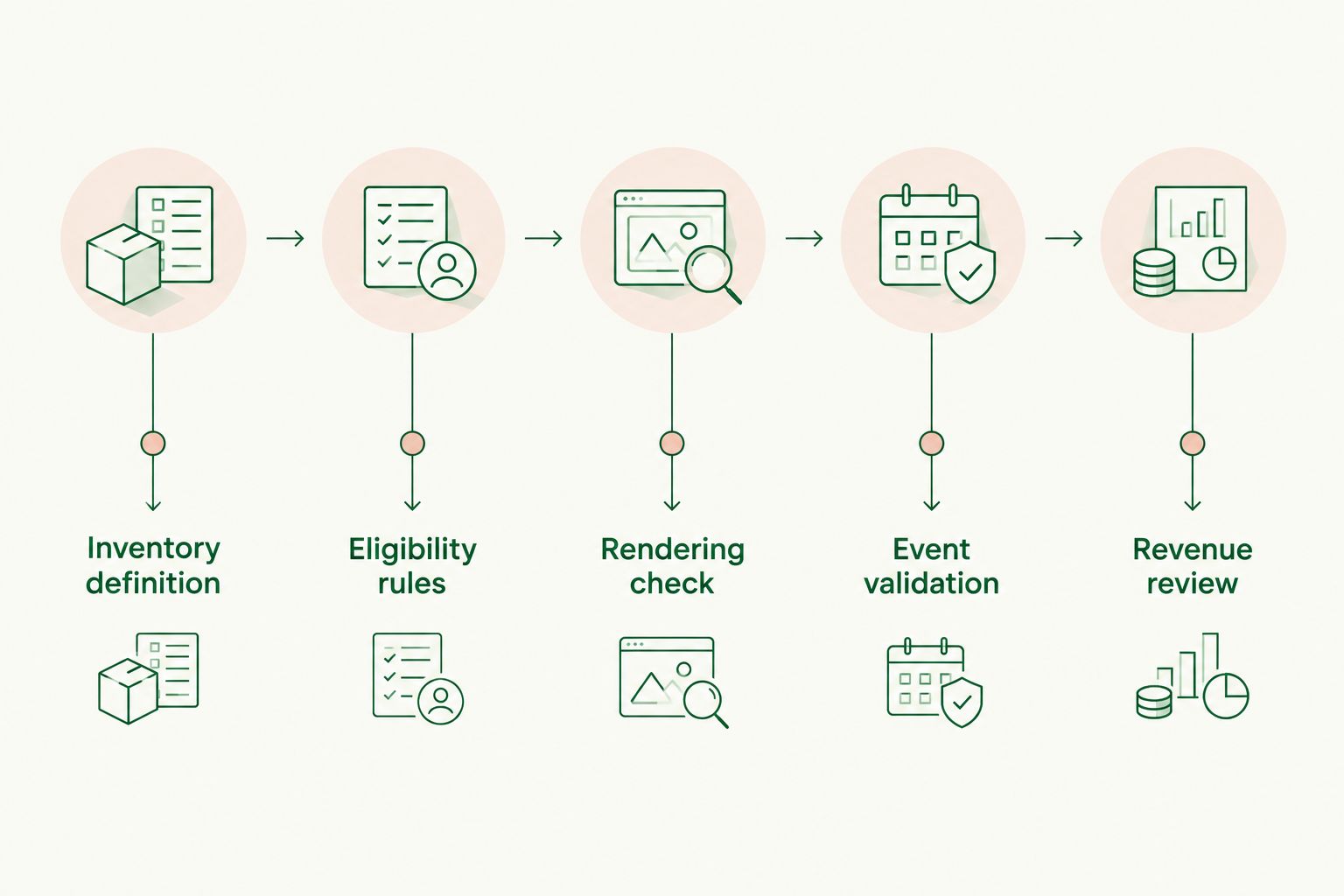
Use this sequence to keep the evaluation focused:
- Inventory definition: Specify whether the opportunity is a chat placement, page slot, mobile screen, or referral.
- Eligibility rules: Define allowed conversation categories and conditions that suppress advertising.
- Rendering check: Confirm that sponsored content remains separate from the assistant's answer.
- Event validation: Reconcile requests, rendered impressions, clicks, and reported outcomes.
- Revenue review: Compare publisher earnings with the associated application costs and user behavior.
An empty ad response should leave the assistant usable. A delayed response should not hold the answer hostage. Make those behaviors explicit before evaluating monetization performance.
Keep the measurement vocabulary consistent. CPM expresses cost per 1,000 impressions. eCPM expresses effective earnings or cost per 1,000 impressions, depending on the reporting perspective. Session RPM expresses publisher revenue per 1,000 sessions.
For a publisher comparison, use net publisher earnings in your eCPM calculation. For session RPM, include the sessions covered by the experiment, not only sessions that displayed an ad. That distinction prevents an attractive impression metric from hiding weak coverage.
Do not count an ad request as a rendered impression. Also distinguish an empty response from a creative that reached the client but never appeared. These events identify different integration problems.
Which Sovrn alternative should you choose?
Choose Elo for contextual conversational ads. Choose Google Ad Manager for broader web inventory, Google AdMob for conventional mobile placements, Kevel for custom direct-sold infrastructure, and Awin for affiliate commerce.
For an undecided AI chat publisher in 2026, start with the conversation requirement. If your goal is an offer matched to what the user is discussing, evaluate a conversational adserver before rebuilding the interface around conventional slots.
Do not replace every monetization surface at once. A website, a native app screen, and an assistant conversation can remain separate inventory classes. Change the layer that fails your requirement.
Evaluate conversational ad serving
Explore an SDK-based adserver for contextual ads inside AI chat applications.
FAQ
What's the best Sovrn alternative for an AI chat app?
Elo is the best-fit Sovrn alternative for developers seeking SDK-based contextual ads inside AI conversations. Google Ad Manager, Google AdMob, Kevel, and Awin address different inventory or monetization requirements.
Is Google Ad Manager better for a chatbot or a website?
Google Ad Manager fits the broader website inventory-management requirement. A chatbot still needs application-level decisions about conversational placement, relevance, and disclosure.
Should I use Google AdMob for a mobile AI assistant?
Use Google AdMob when you want conventional mobile app advertising formats and mediation. Decide where those formats belong in the assistant workflow before integrating them.
Is Kevel an ad network or custom ad-serving infrastructure?
Kevel provides API-based ad-serving infrastructure for custom advertising experiences. Treat campaign sales and advertiser acquisition as separate responsibilities when planning the implementation.
Can affiliate links replace conversational ads?
Affiliate links fit referral-led commerce, not every conversational advertising use case. Awin is relevant when your assistant directs users toward merchants and qualifying advertiser outcomes.
What metric should I compare when switching providers?
Compare net publisher revenue per session alongside rendered impressions, clicks, and user behavior. Use identical definitions and eligible traffic so the comparison measures the provider change rather than a reporting difference.
Does an ad SDK work the same way with every LLM?
The integration boundary matters more than the model name alone. Confirm where your application requests and renders ads, what context it shares, and how it handles empty or delayed responses.
One last thing
A higher eCPM does not necessarily mean more revenue per conversation. eCPM describes monetized impressions; session RPM also reflects how often those impressions occur across the sessions you measure.
In 2026, keep a no-ad path in your test plan. Your assistant should still answer correctly when no sponsored placement appears. The monetization layer must serve the product, not become a dependency for its core response.