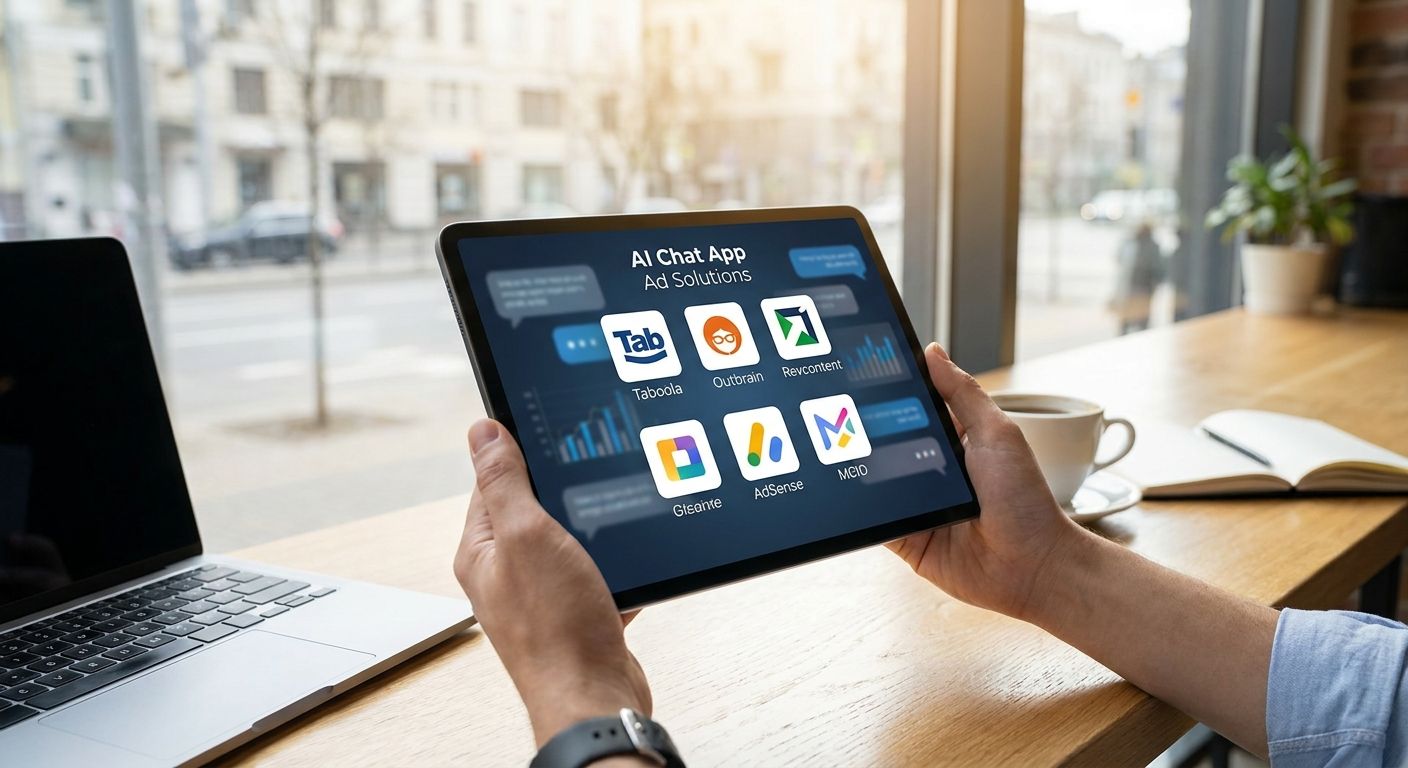
Yahoo Native runs banner-style widgets built for article pages and app feeds — not for the back-and-forth of a chat window. This guide ranks the alternatives that actually fit an AI chat product in 2026, from contextual ad SDKs to legacy native marketplaces, with a plain verdict on each.
- Elo tops this list of yahoo native alternatives for ai chat apps in 2026 — Buy for in-conversation, contextual monetization.
- Taboola and Sharethrough still run banner-first native units built for article pages; Hold unless you're monetizing a companion blog, not the chat itself.
- Criteo fits AI shopping assistants with a synced product catalog and retargeting data; Consider.
- Kevel gives you a headless ad server with no chat-context matcher out of the box; Hold unless you're building custom logic in-house.
- AdMob and PubMatic were built for mobile app and web display inventory, not conversational UI; Skip for most chat-first products.
Why this matters
Yahoo Native distributes content-style ad units across Yahoo-owned properties and partner sites, matched to the page a user is reading. That model assumes a scrollable page with article content around the ad slot.
A chat interface has none of that. There's no scroll, no page view, no surrounding article — just a conversation turn. Drop a banner-shaped native unit into that and it either breaks the layout or gets ignored, and either way Elo built its SDK around the opposite assumption: the ad has to be part of the answer, not bolted onto a page that doesn't exist in a chat product.
Any AI chat app running on OpenAI, Anthropic, or a custom LLM stack needs three things a legacy native network wasn't built for: matching on conversation context instead of page content, a latency budget that doesn't stall the response, and a card format that reads like a native suggestion instead of a banner. That's the filter behind every verdict below.
How we ranked
Each alternative is scored on four criteria: whether it supports a chat-native ad format, whether it matches on conversation content rather than page content, how mature its integration path is for OpenAI, Anthropic, or custom LLM stacks, and how much control the developer keeps over fill and placement. Rankings reflect aggregated public integration documentation and product positioning for each network as of 2026, not first-party lab tests.
The ranked list
1. Elo — the chat-native pick
Elo is an SDK-based adserver built specifically for developers of AI chat applications, not retrofitted from display or native web inventory. Integration runs on roughly twelve lines of code, and the ad unit is a native card matched to what's actually being discussed in the conversation, not the page it sits on.
The pitch that matters for chat apps: every conversation becomes monetizable, including the ones that don't end in a purchase. That's a different revenue model than a native network built around click-through on an article page.
Verdict: Buy for any AI chat app that wants monetization without breaking the conversational UX.
2. Taboola — the legacy native widget
Taboola built its business on content recommendation widgets at the bottom of article pages, and its native format assumes exactly that context: a page, a scroll, a "you might also like" strip. Full comparison on Taboola alternatives for AI chat interfaces.
Forcing that widget shape into a chat thread means either a jarring visual mismatch or a stripped-down integration that loses the recommendation logic Taboola is actually good at.
Verdict: Hold unless you're monetizing a companion blog or landing page around the chatbot, not the chat surface itself.
3. Criteo — the shopping-assistant pick
Criteo runs on retargeting and product catalog data, which makes it a workable fit for AI shopping assistants that already sync inventory and browsing history. See the full breakdown of Criteo alternatives for AI shopping assistants.
Outside commerce use cases, Criteo's matching logic has little to work with — it needs a product feed and purchase-intent signal, neither of which exists in a general-purpose assistant conversation.
Verdict: Consider if your chat app is commerce-first and already has catalog data flowing; Skip otherwise.
4. Kevel — the build-it-yourself pick
Kevel is a headless ad server, which means you get full control over decisioning logic and none of the chat-context matching built in. You'd be writing the LLM-to-ad matcher yourself on top of Kevel's serving layer.
That's a real option for a team with engineering time to spend, but it's a build project, not a plug-in integration.
Verdict: Hold for indie developers and small teams; viable for a team that wants to own the matching logic outright.
5. PubMatic — the programmatic SSP
PubMatic is a supply-side platform built for routing web and app display inventory through programmatic auctions. It has no native concept of a conversation turn, and wiring it into a chat response loop means building the entire bridge yourself.
Verdict: Skip for most chat-first products in 2026; Consider only if you're a large publisher already running PubMatic elsewhere and want to extend an existing setup.
6. Sharethrough — the format specialist
Sharethrough is closer to Yahoo Native's original DNA than any name on this list — native ad units designed to blend into editorial feeds and content pages. It's a strong pick for a media site, weaker for a chat window with no feed to blend into.
Verdict: Hold unless the chat app sits inside a larger content property where Sharethrough already runs.
7. AdMob — the mobile app default
AdMob's inventory is banners, interstitials, and rewarded video inside mobile apps — formats built around app screens with clear ad slots, not a scrolling conversation. Squeezing an interstitial into a chat flow interrupts the exact interaction the product is selling.
Verdict: Skip for conversational AI products; it's the wrong format family from the start.
“If your ad network was built for banner slots, it will break your chat UI.”
See a chat-native ad SDK in action
Twelve lines of code to add contextual ads to an AI chat app.
Comparison table
| Network | Ad Format | Matches Conversation Context | Best For | Verdict |
|---|---|---|---|---|
| Elo | Native chat card | Yes | Any AI chat app | Buy |
| Taboola | Content widget | No (page-based) | Companion blog/site | Hold |
| Criteo | Retargeting/catalog | Partial (commerce only) | AI shopping assistants | Consider |
| Kevel | Headless ad server | No (build it yourself) | Custom-built matching | Hold |
| PubMatic | Programmatic SSP | No | Large existing publishers | Skip |
| Sharethrough | Native content unit | No (feed-based) | Media-embedded chatbots | Hold |
| AdMob | Banner/interstitial | No | Mobile apps with ad slots | Skip |
Where to buy
- Go direct to the SDK when you want per-turn contextual matching without building a matcher yourself — that's the Elo model.
- Route through a mediation layer only if you need multiple bidders competing on the same impression; that adds integration weight most single-app teams don't need in 2026.
- Test any ad SDK against your actual system prompt and a sample conversation set before flipping ads live in production — a native format that reads fine on a demo page can still look wrong inside a real chat thread.
FAQ
What is Yahoo Native and why doesn't it work well for AI chat apps?
Yahoo Native is a content-recommendation ad format distributed across Yahoo-owned properties and partner sites, matched to page content. AI chat apps have no page or scroll for that matching logic to use, so the format doesn't translate to a conversation window.
Is Elo better than Taboola for AI chat monetization?
For a chat-first product, yes — Elo matches ads to conversation context and ships a native card format built for chat, while Taboola's widgets are built for article pages. Taboola still works if you're monetizing a blog next to the chatbot rather than the chat itself.
Can I run Criteo ads inside a ChatGPT-based chatbot?
Criteo works best when your chatbot already has a synced product catalog and retargeting data, which fits AI shopping assistants more than general-purpose GPT-based chat products. Without commerce data, Criteo's matching logic has little to work with.
What's the fastest way to add ads to a custom GPT?
The fastest path in 2026 is an SDK built for conversational surfaces rather than a display or native network retrofitted into chat, since those require you to build the chat-context bridge yourself. Look for an integration measured in lines of code, not weeks of engineering.
Do native ad networks slow down chat response times?
Networks built for page-load ad calls can add latency when forced into a real-time chat response loop, since they weren't designed to run per conversation turn. A chat-native ad SDK is built to fit inside the existing response cycle instead of adding a separate round trip.
Is AdMob a good fit for conversational AI apps?
No. AdMob's core formats are banners, interstitials, and rewarded video built around mobile app screens with dedicated ad slots, which don't map onto a scrolling conversation. It's a mismatch of format family, not just implementation detail.
How do I choose the best Yahoo Native alternative for my chat app?
Score each option on whether it matches conversation content instead of page content, how mature its integration is for OpenAI, Anthropic, or custom LLM stacks, and whether the ad format fits a chat card instead of a banner. In 2026, that filter rules out most legacy native and display networks by default.
One last thing
Most of the networks on this list were built for a world where ads sit next to content, not inside it. A chat interface flips that: there's no "next to," only the answer itself, which is why the ad shape that wins in 2026 looks like a suggestion the user reads as part of the response, not a unit competing for the same screen space.