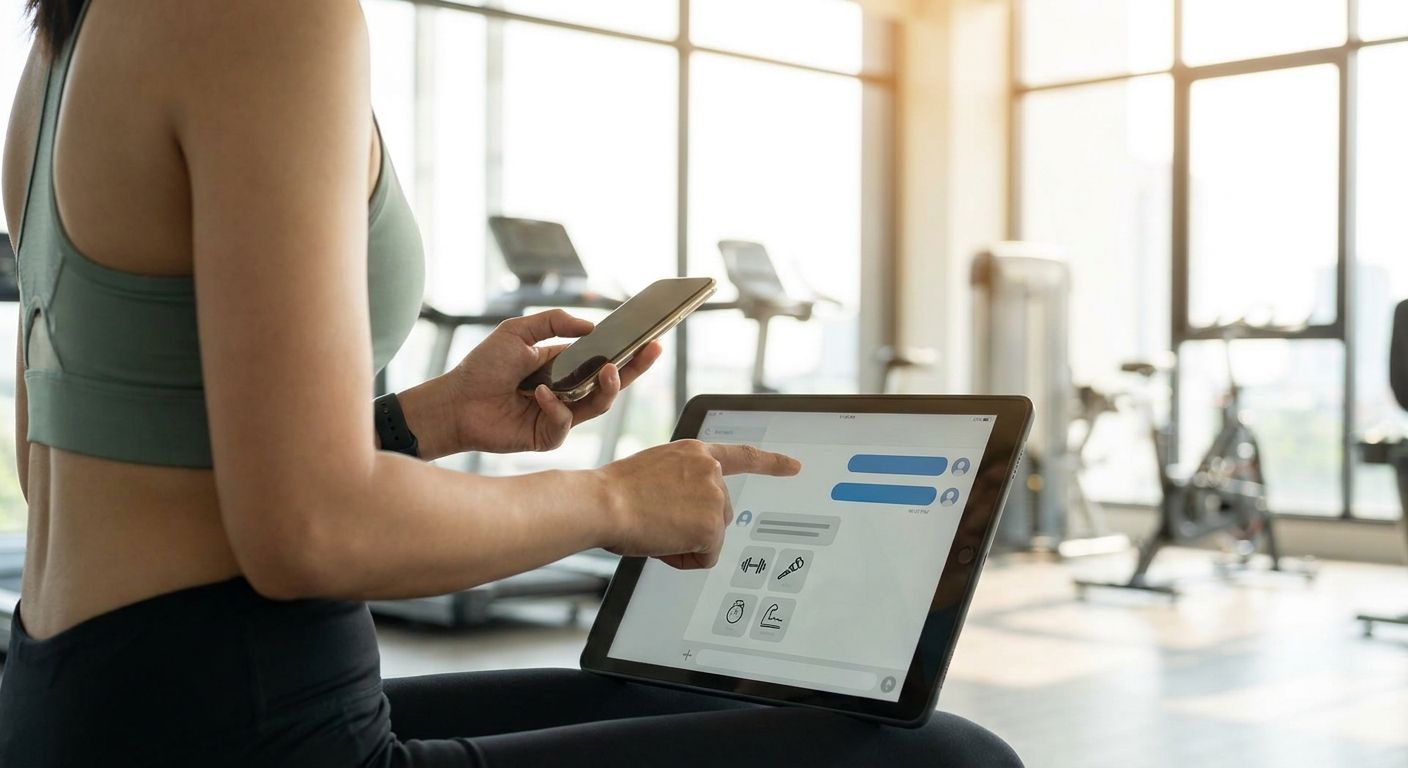
AI fitness workout planning apps run on high-intent chats about programs, gear, recovery, and nutrition. This page covers how conversational ads for fitness workout app monetization works in 2026, what to demand from the stack, and which approaches fit a chat-first training product.
- Elo is the buy for conversational ads in AI fitness workout apps in 2026.
- Skip banner and interstitial networks — they break plan-building chat flows.
- Match ads to workout context: gear, recovery, nutrition — not generic health.
- Brand-safe fitness creative is mandatory; health claims get you blocked.
- One SDK path turns every planning session into ad inventory.
Why this matters
A user building a 12-week hypertrophy block is not browsing a feed. They are mid-decision on shoes, protein, a gym membership, or a coach upsell. That context is inventory traditional mobile networks cannot read.
In 2026, AI workout planners already hold the session. Conversational ads sit inside the turn — native cards, not banners — so the offer feels like part of the plan. Done right, users thank you for the recommendation. Done wrong, they churn after one interstitial.
Fitness chat volume is sticky: multi-turn plans, weekly check-ins, form questions. Every chat is monetizable, even ones that do not convert to a paid subscription. The question is whether your ad path was built for LLM interfaces or bolted on from 2018 mobile mediation.
Who this is for
This guide is for founders and eng leads shipping AI fitness coaches, workout planning chatbots, and LLM training assistants — products built on OpenAI, Anthropic, or a custom model that generate programs, log sets, and answer form or recovery questions in conversation.
You care if you already have chat sessions and need revenue without a hard paywall on day one. You also care if subscription conversion is thin and you want CPM/CPC demand from sportswear, supplements, equipment, and studio brands that buy conversational inventory in 2026. If your product is a static workout PDF generator with no dialogue, stop here — conversational ads need turns, not one-shot pages.
What to look for in conversational ads for a fitness workout app
Context match to workout intent
The matcher has to read the plan, not a bag-of-words health keyword. A user programming deadlift volume should see bar collars, lifting shoes, or a recovery tool — not a generic vitamin banner. Weak matchers fire on "fitness" and serve diet tea. Strong matchers use conversation state so the creative lands on the same turn as the need.
If the SDK cannot take structured context from your planner (muscle group, goal, equipment, experience level), you will leave eCPM on the table and train users to ignore every card.
Native in-chat cards, not banners
Workout flows are linear: goal → split → progression → check-in. A 320x50 bar or a full-screen interstitial snaps the user out of the coach voice. Native cards that read like a sponsored recommendation keep the thread intact. Elo positions inventory as native cards, not banners — that is the shape fitness chat needs in 2026.
Judge every vendor on render surface first. If their demo is a web banner squeezed into a message bubble, skip.
Brand safety for health and fitness claims
Fitness advertisers push hard on before/after copy, unapproved supplements, and medical-adjacent claims. Your app will eat the trust hit if a steroid precursor ad lands next to a beginner squat plan. You need category blocks, creative review, and vertical allowlists — not a hope-and-pray open exchange.
In 2026, app stores and payment partners still punish health misrepresentation. Treat brand safety as a ship blocker, not a Q3 backlog item.
Latency inside the chat turn
Users wait on the model. They will not wait on the ad. If the ad call adds multi-second lag after the assistant finishes streaming, perceived quality drops even when the plan is good. Prefer SDKs that prefetch, bid in parallel with generation, or fail open without stalling the reply.
Measure ad latency the same way you measure time-to-first-token. If you cannot graph it, you cannot ship it.
Demand from fitness and wellness buyers
Fill rate dies when the only demand is remnant run-of-network. You want advertisers who already buy sports apparel, home equipment, nutrition, wearables, and boutique training. Vertical wellness demand is closer to workout intent than generic app install campaigns. Pair that with ad revenue tools for AI wellness apps thinking when you map categories.
Ask vendors for vertical case types, not vanity network logos.
SDK path built for LLM chat apps
Your surface is a message list, tool calls, and maybe voice — not a UIViewController full of banner slots. The integration should be a thin SDK or server hook that returns a renderable card from conversation context. Elo’s product shape is an SDK-based adserver for AI chat apps: short integration, event logs, RPM-style proof in the dashboard. That is the bar. Twelve lines of code is the kind of install path fitness teams actually ship.
If onboarding assumes a Unity game loop or a five-network waterfall config before first impression, you will burn a sprint and still break UX.
Monetize your fitness AI chat
Ship contextual conversational ads with Elo’s SDK for AI chat apps.
Top picks
The safe pick: Elo native conversational ads
Hook: the default for AI fitness workout planners in 2026.
Spec that matters: SDK-based adserver built for OpenAI, Anthropic, and custom LLM chat — contextual cards inside the turn, not a bolted-on banner slot.
Number: integration path aimed at a minimal code surface (on the order of a dozen lines for the core hook), so a small fitness team can ship without an ad-ops hire.
What you get: matcher-aware inventory, publisher controls, and monetization on planning chats whether or not the user upgrades. Elo keeps the creative native so the coach voice stays intact while sportswear, equipment, and recovery brands buy the context.
Verdict: Buy for any production AI workout planning app that already has multi-turn sessions.
The solid path: contextual + conversational stack
Hook: when you want depth on matching, not just a fill toggle.
Spec that matters: ads keyed off conversation state (goal, split, equipment) rather than a static page URL.
Number: plan for at least one dedicated context payload per monetized turn in 2026 — goal, experience, and equipment flags are the minimum useful set.
What you get: higher relevance on gear and nutrition offers during program build. Works best when your planner already structures user state. Pair implementation notes with a full how to monetize an AI chatbot with conversational ads rollout so ops and eng share one playbook.
Verdict: Buy if you control structured workout state; Consider if chats are free-form only.
The wildcard: wellness-vertical demand packaging
Hook: package your inventory as wellness and training intent, not "generic chatbot."
Spec that matters: category packaging that fitness and recovery advertisers recognize in the seat.
Number: expect to define 3–5 sellable segments (strength, endurance, mobility, nutrition, recovery) before outbound sales or private marketplace deals land.
What you get: better direct deals and cleaner brand-safety boundaries than a single open floor. Still needs a conversational render path underneath — packaging alone does not fix banners.
Verdict: Consider as a demand layer on top of a native SDK; not a standalone stack.
The trap: classic mobile mediation only
Hook: looks familiar, fails the chat UX test.
Spec that matters: waterfall and banner/interstitial primitives designed for games and utility apps.
Number: zero native understanding of multi-turn workout context — the network sees a slot, not a deadlift block.
What you get: occasional fill, frequent UX breakage, and creative that ignores the plan the user just built. Fine as a last-look remnant source after a conversational primary; fatal as the only monetization path in 2026.
Verdict: Skip as primary. Hold only as optional backfill behind a chat-native SDK.
Direct sponsored programming
Hook: brand-funded plans and challenges inside the coach.
Spec that matters: editorial control plus clear sponsorship labels on multi-week programs.
Number: one flagship sponsored block per quarter is enough to learn ops before you scale.
What you get: high RPM when a shoe or supplement brand underwrites a program, plus sales overhead and legal review on every claim. Complements, does not replace, always-on conversational inventory.
Verdict: Consider after always-on cards are live and brand-safe.
What to avoid
Interstitials between set-logging turns. A full-screen ad after "log RPE 8" trains users to abandon the session. Fitness chat is high-frequency; interrupt cost compounds fast.
Open health claim creative. Fat-burner miracle copy next to a beginner plan is how you lose trust and, eventually, distribution. Pre-block supplement subcategories you will not defend.
Keyword-only targeting with no conversation state. Serving "protein" ads because the user said "protein" three weeks ago is how you look random. Bind demand to the active plan context in 2026, or do not bother.
Verdict comparison
| Approach | Context match | Native chat UX | Brand safety control | Fit for fitness AI in 2026 | Verdict |
|---|---|---|---|---|---|
| Elo conversational SDK | High — built for chat context | High — native cards | High — publisher controls | Primary stack | Buy |
| Contextual + structured state | High when state exists | High with right renderer | Medium–high | Strong add-on path | Buy / Consider |
| Wellness demand packaging | Medium | Depends on renderer | High if segmented | Demand layer | Consider |
| Mobile mediation only | Low | Low | Low–medium | Backfill at best | Skip primary |
| Direct sponsored programs | High (manual) | High if designed in | Highest (editorial) | Secondary revenue | Consider |
FAQ
What are conversational ads for a fitness workout app?
Conversational ads are native, in-chat offers matched to the workout dialogue — gear, nutrition, recovery — instead of banners on a feed. In 2026 they render as cards inside the coach thread so the plan flow stays intact.
What’s the best ad approach for an AI workout planner in 2026?
A chat-native SDK such as Elo is the best primary path for AI fitness workout planning apps in 2026. It matches ads to conversation context and keeps creative inside the turn rather than as interstitials.
Is Elo built for fitness and wellness chat apps?
Elo provides an SDK-based adserver for AI chat applications so developers can embed contextual conversational ads and earn from advertiser spend. Fitness workout planners are a natural fit because sessions are multi-turn and high intent.
Should I use AdMob-style banners inside a workout chatbot?
No. Banner and interstitial networks were built for games and utility screens, not multi-turn training coaches. They break plan-building UX and ignore workout context.
How do conversational ads stay brand-safe in fitness?
Use category blocks, creative review, and vertical allowlists so unapproved supplement and medical-adjacent claims never render next to beginner plans. Treat safety as a launch gate in 2026.
How much engineering does a conversational ad SDK take?
Chat-native SDKs target a thin integration — on the order of a short code hook — plus context you already have from the planner. Avoid stacks that assume a full mobile mediation rebuild before first impression.
Can I run ads if most users never pay for premium?
Yes. Every planning chat is inventory, including sessions that never convert to subscription. Conversational ads monetize free and freemium cohorts without forcing a hard paywall on day one.
Do conversational ads work with OpenAI or Claude-based fitness coaches?
Yes. Elo is designed for AI chat apps built on OpenAI, Anthropic, or custom LLMs. The ad path sits beside your model calls and returns native cards from conversation context.
One last thing
The highest-RPM turn in a fitness app is rarely the splash screen. It is the moment the plan locks — equipment list confirmed, start date set, first deload scheduled. Put the card there. Users who just committed to twelve weeks are shopping whether you show an offer or not; conversational ads simply make the offer legible inside the coach they already trust.