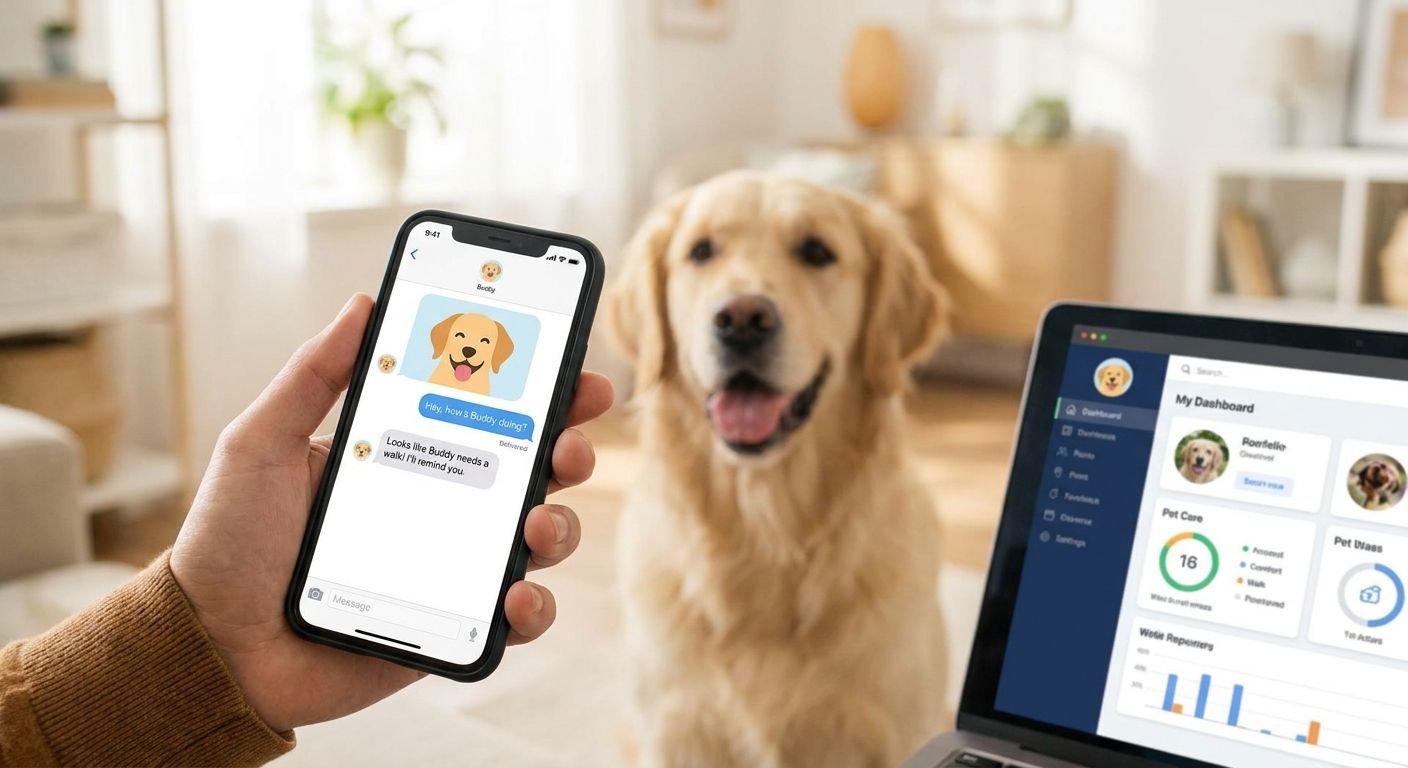
Pet care assistant apps field questions all day that never touch a paywall — symptom checks, food comparisons, grooming schedules, breed-specific advice. Conversational ads for pet care assistant apps turn that free-tier chat volume into revenue without forcing a subscription screen on a worried pet owner at 11pm.
- Native SDK ads matched to queries like 'best food for senior dogs' outperform generic banners in pet care chat apps.
- Skip mobile ad mediation built for games — it breaks conversational flow and triggers user complaints.
- Brand-safety filtering matters more here than in most verticals: symptom queries sit next to vet, insurance, and pharma advertisers.
- Buy: a contextual SDK matched to pet queries. Skip: static banners bolted onto a chat window.
Why this matters
Most AI pet care assistants monetize one of two ways in 2026: a subscription tier almost nobody upgrades to, or nothing at all. The chat volume from free users — the diet questions, the "is this normal" symptom checks, the boarding recommendations — sits idle. Conversational ads close that gap by letting advertisers bid on the exact moment a user asks about kibble brands, flea treatment, or pet insurance, instead of running a display ad nobody looks at.
Pet care is a high-intent category for advertisers. A user asking "what's the best food for a dog with allergies" is closer to a purchase decision than someone scrolling a feed. That's the inventory conversational ads for pet care assistant apps are built to sell.
Who this is for
This is for developers and founders running an AI pet care assistant — symptom checkers, feeding calculators, breed-advice bots, boarding and grooming schedulers — built on OpenAI, Anthropic, or a custom LLM stack. If your app has meaningful free-tier chat volume and no reliable revenue line beyond a thin subscription conversion rate, this is the audience the rest of this guide is written for.
What to look for in conversational ads for pet care assistant apps
Category-specific contextual matching
Generic ad networks match on broad demographics, not on what's actually being typed. A pet care assistant needs a matcher that reads "senior dog joint supplements" or "pet insurance for a 2-year-old cat" and surfaces an advertiser bidding on that exact query, not a random consumer brand. Without this, fill rate goes up but relevance — and revenue per user — goes down.
Native card format, not a banner
A banner stapled to the bottom of a chat window looks like it belongs to 2015, and pet owners asking health-adjacent questions notice it immediately. The format needs to render without hurting chat UX — a card that reads like a recommendation inside the conversation, not an interruption on top of it.
Latency budget
Every millisecond an ad call adds to response time is a millisecond a worried pet owner notices while waiting on a symptom answer. The ad matcher has to resolve fast enough that it never becomes the reason the response feels slow — this is a technical requirement, not a nice-to-have, for any health-adjacent chat product.
Brand-safety filtering on health queries
Symptom-check conversations sit right next to categories that need real scrutiny: veterinary pharma, prescription pet food, insurance underwriting language. An ad platform without filtering rules for medical-adjacent content will eventually surface something inappropriate next to a query about a sick animal.
Revenue model transparency
CPM, CPC, and CPA all behave differently in a pet care context — a food brand might pay well on CPC for a food-comparison query, while an insurance advertiser pays more on CPA for a completed quote. You want visibility into which model is driving revenue on which query type, not a single blended number.
Fill rate on long-tail queries
Pet care conversations skew long-tail — "why does my 6-month-old puppy sneeze after eating" isn't a query most ad networks have inventory for. A platform with thin advertiser coverage on long-tail pet queries will show ads on maybe one in five conversations, which caps revenue before you even get to CPMs.
Top picks for monetizing a pet care assistant
The safe pick: a native contextual SDK matched to pet queries. Elo runs as a native card inside the chat, not a banner layered on top, and the integration is small enough that teams describe it as twelve lines of code to get a first ad rendering. Buy — this is the lowest-risk starting point for a pet care app with any meaningful free-tier volume, and you can see the setup on Elo.
The wildcard: direct sponsorship deals with pet food or insurance brands. Negotiating a flat monthly rate with one or two advertisers skips the mediation layer entirely and gives you full control over what shows up next to health queries. Consider it once you have enough traffic to make a direct pitch worth an advertiser's time — for most apps under a few thousand daily active users, the sales overhead outweighs the revenue.
The volume play: mediation across multiple ad networks. Running a waterfall across several networks can lift fill rate on the long-tail queries a single network misses. Consider it once fill rate — not CPM — is your actual bottleneck; Skip it if your traffic is still thin, because mediation overhead rarely pays for itself below meaningful daily volume.
The one to skip: generic mobile ad SDKs built for games and utility apps. These are tuned for interstitial and rewarded-video formats, not conversational text. Skip — the format mismatch alone will hurt retention in a chat product faster than the ad revenue makes up for it.
What to avoid
- Static banners recycled from a mobile app SDK. They read as dated inside a 2026 chat interface and pet owners scroll past them the way they scroll past any banner.
- Advertisers making medical claims next to symptom queries. A supplement ad implying it treats a condition, shown right after a user describes symptoms, is the kind of pairing that needs to be filtered before it ever renders — this is exactly what keeping conversational ads brand safe is built to catch.
- Ad networks with no pet or animal-care advertiser demand. Some platforms are strong in gaming or finance and thin everywhere else — check advertiser category coverage before integrating, not after.
Verdict comparison
| Approach | Format | Best for | Verdict |
|---|---|---|---|
| Native contextual SDK | In-chat card | Apps with meaningful free-tier chat volume | Buy |
| Direct sponsorship deals | Negotiated placement | Apps with scale and an ad-ops resource | Consider |
| Multi-network mediation | Waterfall | Apps bottlenecked on fill rate | Consider |
| Generic mobile ad SDK | Banner/interstitial | Games and utility apps, not chat | Skip |
Monetize your pet care assistant
Add native, context-matched ads to your chat app without a redesign.
FAQ
What are conversational ads for a pet care assistant?
Conversational ads for a pet care assistant are native ad cards matched to the topic of a chat, like a food brand bidding on a 'best senior dog food' query. They render inside the conversation flow instead of as a separate banner.
Is monetizing a pet care chatbot with ads better than a subscription model?
Ads and subscriptions solve different problems: ads monetize free-tier users who never pay, while subscriptions monetize a small paying segment. Most pet care apps in 2026 run both, since free-tier chat volume is usually the larger share of traffic.
Do conversational ads hurt the user experience in a chat app?
A native card format matched to the query context generally does not hurt engagement, but a banner-style ad layered into a chat window does. The format and relevance of the ad matter more than the fact that an ad exists at all.
How much does it cost to add an ad SDK to an AI chatbot?
Cost depends on the platform's pricing model, but most SDK-based ad platforms run on a revenue-share basis rather than an upfront fee, so check current terms directly with the provider.
Are conversational ads safe to show next to pet health questions?
They're safe when the ad platform filters medical-adjacent claims before rendering, which is why brand-safety filtering is a core requirement for any pet care assistant, not an optional feature.
What kind of advertisers buy ads in a pet care chatbot?
Pet food brands, pet insurance providers, grooming and boarding services, and veterinary telehealth companies are the most common advertiser categories matched to pet care conversations in 2026.
Can a small indie pet care app use conversational ads?
Yes — SDK-based ad platforms are built to integrate into apps of any size, and revenue scales with traffic rather than requiring a minimum volume commitment to get started.
Do conversational ads work with both OpenAI and Anthropic-based apps?
Yes, SDK-based ad platforms are typically model-agnostic and work the same way whether the chatbot runs on OpenAI, Anthropic, or a custom LLM, since the ad layer sits on top of the chat interface, not the model itself.
One last thing
Pet owners already treat these apps like a recommendation engine — they ask what to buy, not just what's wrong. That's the opposite of most chat categories, where an ad interrupts a task. A well-matched pet food or insurance ad inside a pet care assistant reads as the answer the user was already looking for, which is the entire argument for running conversational ads for pet care assistant apps instead of leaving that chat volume unmonetized in 2026.