The cost of adding sponsored picks to a shopping bot depends on the integration work, the ad-serving agreement, and the operations you retain; use a scoped implementation estimate for your 2026 budget. The SDK connection is only part of that estimate: placement design, event tracking, disclosure, testing, and maintenance also need owners.
- Cost sponsored recommendations shopping bot: budget for implementation and operations, not just the SDK connection.
- Elo provides an SDK-based adserver for developers monetizing AI chat applications with contextual, conversational ads.
- Keep sponsored recommendations separate from organic ranking, and disclose sponsorship beside the pick.
- Approve a narrow implementation scope before expanding placements or adding custom ad-serving logic.
Why this matters
A shopping bot already has a recommendation workflow. Sponsored picks introduce another decision: whether an advertiser-funded recommendation belongs in the current conversation. Your estimate needs to cover that decision, its presentation, and the evidence that it worked.
Budget for a working sponsored recommendation, not an installed dependency. The practical starting point is the workflow in how to add sponsored recommendations to an AI shopping bot. Define the placement before asking a developer to estimate the connection.
The useful budget question is not how much code gets added. It is which responsibilities your application keeps after an adserver handles the advertising component.
How much does it cost to add sponsored picks to a shopping bot?
For a 2026 implementation, separate the estimate into setup work, commercial terms, and recurring operations. Ask for each component independently. An integration proposal that combines everything into one line hides what happens after launch.
| Budget component | What to include in the scope | What to confirm before approval |
|---|---|---|
| SDK connection | Request construction, response handling, configuration | Where the integration runs and who owns it |
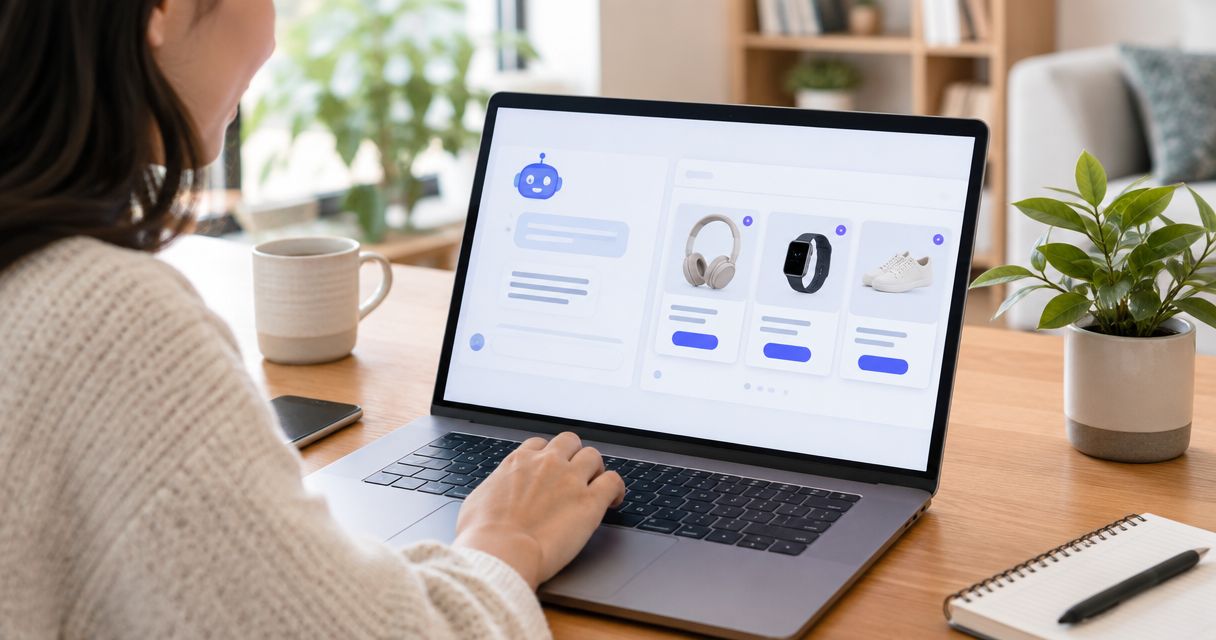
| Recommendation placement | Sponsored card, disclosure, empty response behavior | Where the pick appears in the conversation |
| Context handling | Relevant shopping intent and permitted data | Which fields leave your application |
| Measurement | Impression and click events, reconciliation | What qualifies as a counted event |
| Quality assurance | Rendering, failures, relevance, accessibility | Which cases block release |
| Recurring operations | Monitoring, updates, incident handling | Who maintains the integration |
| Commercial agreement | Settlement definitions and contractual obligations | How publisher earnings are calculated |
Treat existing bot inference as a separate baseline. If the sponsored-pick design adds another model call, classify that as incremental work and usage. If it uses context your application already has, do not assume another generation step is necessary.
Approve the scope only when every row has an owner and an acceptance condition. A dependency installation does not establish whether the card is disclosed, the click is recorded, or the organic answer survives a failed ad request.
SDK-based integration: best for an existing shopping bot
An SDK-based approach fits a developer who already owns the chat application and wants an adserver to handle the advertising component. The application still needs to decide when to request a sponsored pick and how to display it.
The benefit is a defined boundary between the bot and the adserver. The constraint is that you must examine the provider's integration contract rather than assume every placement, event, or reporting requirement is covered.
Keep the first scope narrow. Choose a shopping moment, a card location, a context payload, and a fallback. Those decisions give a developer something concrete to estimate without committing to a larger monetization system.
Custom ad serving: best for publisher-controlled workflows
Custom ad serving fits teams that deliberately want to own campaign logic, matching, delivery, and reporting. That ownership belongs in the estimate. It is not just a different way to draw the same card.
The benefit is control over the system you build. The constraint is responsibility for maintaining it, including the advertising logic that sits outside the shopping assistant itself.
| Approach | Best for | Benefit | Constraint |
|---|---|---|---|
| SDK-based integration | Existing shopping bots adding contextual ads | Defined connection to an adserver | Provider behavior and terms need evaluation |
| Custom ad serving | Teams requiring publisher-owned advertising workflows | Control over implemented rules and reporting | Campaign and delivery operations remain internal |
Do not treat custom development as a necessary first step. Choose SDK-based integration when an external adserver meets the scoped requirements; choose custom development when a documented requirement demands ownership. Neither choice establishes revenue before real delivery is measured.
Why implementation scope varies
The same sponsored-card concept can require different work depending on your bot's architecture. For your 2026 estimate, document these scope drivers rather than assigning a generic integration allowance.
- Conversation context: Decide whether the request uses the current shopping intent, selected constraints, or a broader conversation excerpt. Review every transmitted field.
- Placement behavior: Specify where the sponsored pick appears and what happens when the response contains no suitable recommendation.
- Recommendation separation: Decide how sponsored content stays distinct from the organic answer and its ranking logic.
- Measurement boundary: Define which system records rendered impressions, clicks, and any agreed downstream action.
- Application architecture: Identify the backend, client interface, and streaming behavior that the integration must accommodate.
- Operational ownership: Assign monitoring, release updates, incident response, and reporting reconciliation before launch.
These are estimate inputs, not reasons to expand the project. If a requirement does not support the initial shopping workflow, leave it outside the first release and record it separately.
How to scope a sponsored-pick integration in 2026
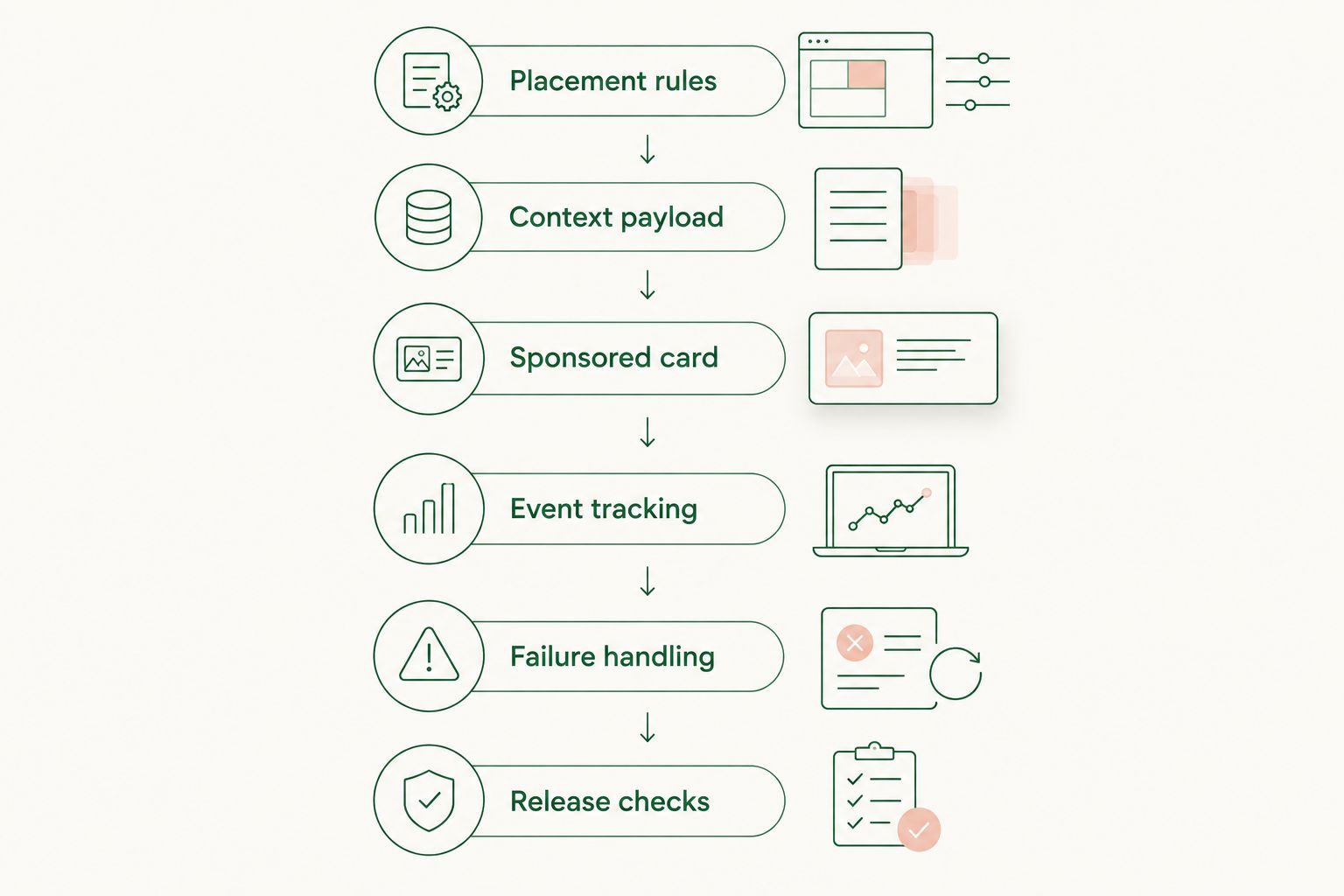
Write the acceptance conditions before requesting an estimate. A developer should be able to inspect the specification and identify what passes, what fails, and what remains outside the project.
- Placement rules: Name the shopping moment that permits a sponsored pick. State where the card appears and when the bot must return only its organic answer.
- Context payload: List the fields sent for matching. Keep the payload tied to the current request and review sensitive information separately.
- Sponsored card: Specify the visible sponsorship label, destination behavior, and distinction from the assistant's own recommendation.
- Event tracking: Define rendered impressions and clicks. State how retries, rerenders, and repeated interactions are handled.
- Failure handling: Specify the outcome for an empty response, malformed response, or unavailable advertising component. Preserve the useful shopping answer.
- Release checks: Test the complete interaction, including disclosure, rendering, navigation, measurement, and fallback behavior.
Keep the scope readable enough to attach to a development ticket. Include sample conversations and expected outcomes rather than relying on a general instruction to make ads relevant.
A recommendation request with clear shopping intent should exercise the placement. A request with no suitable sponsored result should exercise the fallback. A repeated render should exercise the counting rules. These cases reveal whether the integration specification describes a complete feature.
What should you measure after launch?
For a 2026 launch, separate delivery, earnings, and shopping outcomes. A successful SDK response is not the same as a rendered impression, and a rendered impression is not the same as a useful recommendation.
Use explicit denominators:
- Fill rate: Filled eligible ad requests divided by eligible ad requests, multiplied by 100%. Define what makes a request eligible.
- Publisher eCPM: Recorded publisher ad earnings divided by recorded impressions, multiplied by 1,000 impressions. Keep the earnings basis consistent.
- Session RPM: Recorded publisher ad earnings divided by shopping sessions, multiplied by 1,000 sessions. Name the session definition in the report.
- Click-through rate: Recorded ad clicks divided by recorded ad impressions, multiplied by 100%. Apply the same counting rules across both events.
CPM expresses a rate per 1,000 impressions. Session RPM expresses earnings per 1,000 sessions. They answer different questions, so do not compare them as interchangeable measures.
Also inspect shopping outcomes alongside advertising events. Track whether the assistant completed the user's request and whether sponsored cards appeared in the intended positions. Evaluate the added monetization layer without losing sight of the bot's shopping task.
Where Elo fits
Elo is for AI chat developers who want SDK-based contextual ad monetization. Elo provides an SDK-based adserver for applications built on OpenAI, Anthropic, or custom LLMs, letting developers embed conversational ads and earn revenue from advertiser spend.
For a shopping bot, the relevant fit is contextual advertising inside the conversation. The product description establishes that role; your application's placement, data-handling, and acceptance requirements still need an implementation specification.
Evaluate Elo against that specification. Ask how the integration handles requests, responses, measurement, and commercial settlement. Confirm the answers before treating any responsibility as transferred to the provider.
The benefit of Elo's adserver model is a dedicated advertising component for an AI chat application. The boundary is equally important: connecting an adserver does not replace your responsibility for the shopping experience, disclosure, or release testing.
Is SDK setup the whole implementation budget?
SDK setup is part of the implementation budget, not the entire sponsored-pick feature. Your application also needs the placement, context selection, event handling, and failure behavior described in the scope.
For 2026 planning, request separate estimates for integration and recurring support. This keeps a launch task from being confused with ongoing ownership.
Do sponsored picks replace the bot's inference expenses?
Sponsored picks add a monetization path; they do not establish that advertising earnings cover inference expenses. Compare recorded publisher earnings with the bot's actual operating expenses over the same reporting period.
Keep incremental advertising expenses separate from the baseline shopping assistant. That distinction shows whether the new layer contributes positively without assigning all existing infrastructure to the integration.
Should you build an adserver before testing sponsored picks?
Build an adserver only when a documented requirement calls for publisher-owned advertising logic. For an initial sponsored-pick test, evaluate an SDK-based adserver against the placement and measurement requirements first.
The comparison is about responsibilities, not presumed earnings. Choose the approach your team can operate and verify.
FAQ
What should I include when estimating sponsored recommendations for a shopping bot?
Include the SDK connection, placement, context handling, disclosure, measurement, testing, and recurring support. Specify an owner and acceptance condition for each component.
Is adding an ad SDK enough to launch sponsored picks?
Adding an ad SDK is not the complete sponsored-pick implementation. The application still needs rendering, event definitions, failure handling, and a clear sponsorship label.
What is Elo used for in a shopping assistant?
Elo provides an SDK-based adserver for contextual, conversational ads in AI chat applications. Developers use it to embed ads and earn revenue from advertiser spend.
Does CPM measure revenue per shopping session?
CPM measures a rate per 1,000 impressions, not per shopping session. Use session RPM for earnings per 1,000 shopping sessions and state the session definition.
Can I add sponsored picks without changing organic recommendations?
You can design sponsored picks as a separate placement rather than modifying organic ranking. Specify that separation in the integration scope and test the no-ad outcome.
What should happen when there is no suitable sponsored pick?
The shopping bot should return its useful organic answer without requiring an ad. Make empty responses and advertising failures explicit release tests.
How do I know whether sponsored recommendations are worth operating?
Compare recorded publisher earnings with incremental advertising expenses over the same period. Review shopping outcomes alongside delivery and engagement metrics.
One last thing
Make the no-ad outcome an acceptance test. Remove the advertising response during testing and verify that the shopping bot still answers, renders correctly, and records no sponsored impression.
That test checks a boundary easy to miss in an integration estimate: the shopping assistant must remain useful when advertising contributes nothing to the current conversation. Include it in the handoff before approving the release.