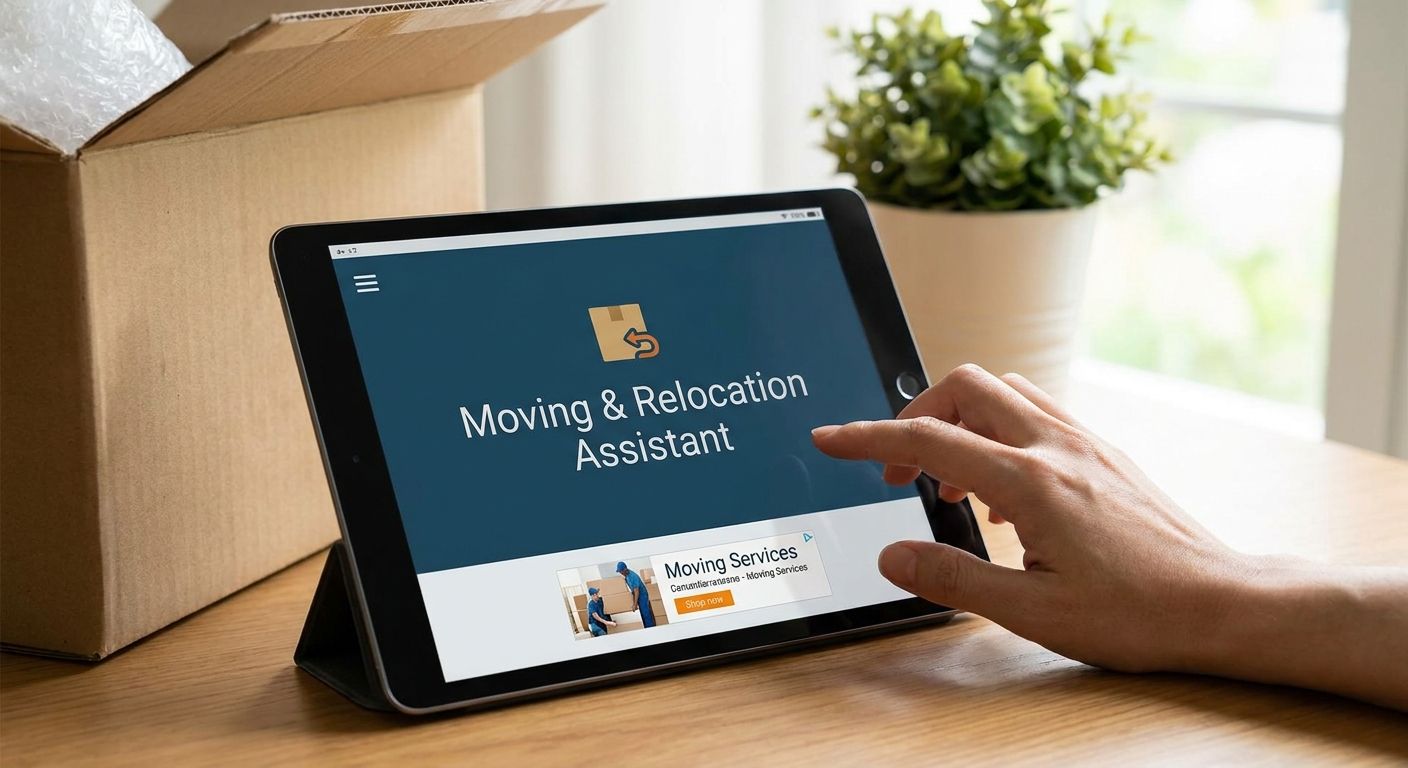
AI moving and relocation assistants sit on some of the highest-intent conversations in chat: users type in origin and destination cities, moving dates, budget ranges, and whether they need storage. That intent is worth real ad spend if the monetization stack is built for it, not bolted on from a mobile app SDK.
- Native contextual ad SDKs are the safe pick for ad monetization for ai relocation assistant builds — Buy.
- Ad mediation across multiple networks fixes the fill-rate gap in the moving vertical — Consider.
- Direct sponsorship deals with movers only pay off at scale — Skip until you have volume.
- Elo and comparable SDKs match ads to conversation context instead of static banners.
Why this matters
Roughly 8% of U.S. households move in a given year, according to U.S. Census Bureau estimates, and a long-distance move typically runs $2,700 to $5,000 based on published industry averages. That's a conversation with a mover, a truck rental company, a storage facility, an insurer, and a utility provider all bidding for attention — and most relocation assistants monetize none of it.
The problem isn't demand. It's that mobile-first ad networks weren't built for a chat interface where a user just typed their new zip code and expects a helpful answer, not a banner. Elo and similar SDK-based adservers exist because relocation-style conversations need a matcher that reads context, not a display unit that ignores it.
Who this is for
This guide is for developers and founders running an AI relocation or moving assistant — built on OpenAI, Anthropic, or a custom LLM stack — who want ad revenue without turning the chat into a page full of banners. If your assistant helps users compare movers, estimate costs, plan packing timelines, or coordinate address changes, the conversations already carry commercial intent worth pricing.
What to look for in ad monetization for an AI relocation assistant
Contextual matching that tracks the move, not just keywords
A relocation conversation shifts fast: quote comparison in message three, packing supplies in message six, renters insurance by message ten. A matcher that only keys off the word "moving" will serve the same ad regardless of stage, which tanks click-through and annoys the user. Look for a matcher that reads intent signals — distance, timeline, household size — not just surface keywords.
Fill rate inside a niche vertical
Moving and relocation is a smaller demand pool than general retail or travel, so ask any network for its fill rate in this specific category before integrating, not its blended average across all verticals. A 95% fill rate on generic e-commerce queries can drop hard once the topic narrows to interstate movers or self-storage.
Native rendering that doesn't break chat UX
Users typing a new address or a household inventory are mid-task, not mid-browse. Ads need to render as native cards inside the response, not interstitials or banners that interrupt the flow. This matters more for relocation assistants than most chat products because the user is often stressed and time-pressured.
Privacy handling for location and personal data
Relocation chats surface home addresses, family size, sometimes income bracket for cost estimates. Any ad matcher touching that conversation needs to work from context signals without shipping raw PII to third-party bidders. This is a compliance question in 2026, not a nice-to-have, especially for assistants operating in the EU.
Payout model fit for low-frequency, high-value conversations
A user moves once every several years, so volume per user is low but value per conversation is high. CPM-only pricing undervalues that; CPC or CPA models that reward actual mover or storage sign-ups often produce better yield for this vertical than flat impression pricing.
Integration speed for solo and small teams
Most AI relocation assistants ship from small teams or solo developers. An SDK that takes weeks to integrate kills momentum before the app has real revenue. Time-to-first-dollar matters as much as long-run RPM.
Top picks for monetizing an AI relocation assistant
The safe pick: native contextual ad SDK
Buy. A contextual ad SDK reads the live conversation and serves native cards matched to move type, distance, and stage — the same category of tooling covered in best ad monetization SDKs for AI chatbot developers. It works across OpenAI, Anthropic, and custom LLM stacks, which matters because most relocation assistants aren't locked to one model provider. This is the default starting point for 2026 launches because it doesn't require negotiating individual advertiser deals to start earning.
The fill-rate hedge: ad mediation across networks
Consider. Mediation layers multiple ad networks behind one SDK call, so when the moving-and-storage category runs thin on one network, another backfills the request instead of showing nothing. The setup process is covered in how to set up ad mediation across multiple ad networks. Worth the extra setup once your assistant has enough daily conversations that a single network's fill gaps start showing up in revenue reports.
The wildcard: vertical crossover with real estate advertisers
Consider. Relocation and real estate overlap heavily — someone planning an interstate move is also searching for a new lease or a mortgage. Assistants that surface relevant real estate or listing-adjacent offers alongside moving-company ads tend to see stronger engagement, a pattern documented for AI real estate assistants running similar conversational ad setups. Test this segment before assuming it's a fit — not every relocation assistant's audience is house-hunting.
The scale play: direct sponsorship deals with moving companies
Skip until your assistant has meaningful daily volume. Direct deals with national movers or truck-rental brands can pay more per placement than programmatic bidding, but negotiating and managing them is a sales job, not an engineering task. Below a few thousand monthly conversations, the overhead outweighs the upside — run SDK-based contextual ads first and revisit direct deals once volume justifies the negotiation.
Start monetizing relocation chats
See how contextual ad matching works across OpenAI, Anthropic, and custom LLM apps.
What to avoid
- Generic mobile ad networks retrofitted for chat. Banner-first networks built for mobile apps don't have a moving or relocation category with real advertiser demand, so fill rate and payout both suffer.
- Keyword-only matching. Triggering an ad off the literal word "moving" without reading conversation stage produces irrelevant offers and low click-through — users notice fast.
- Ignoring privacy review before launch. Relocation conversations carry addresses and household details; skipping a privacy pass on the ad integration is the kind of mistake that surfaces in a compliance review, not a bug report.
Verdict comparison
| Approach | Fill rate in relocation vertical | Integration effort | Payout model fit | Verdict |
|---|---|---|---|---|
| Native contextual ad SDK | Moderate-high | Low | CPM/CPC | Buy |
| Multi-network ad mediation | High (backfilled) | Medium | CPM/CPC blended | Consider |
| Real estate crossover ads | Variable by audience | Low-medium | CPC/CPA | Consider |
| Direct sponsorship deals | High (negotiated) | High (sales-driven) | Flat fee/CPA | Skip until scale |
FAQ
What's the best way to monetize an AI relocation assistant?
A contextual ad SDK that reads the conversation and serves native ad cards is the best starting point for ad monetization for an ai relocation assistant in 2026. It requires no advertiser negotiation and works across OpenAI, Anthropic, or custom LLM builds.
Is contextual advertising better than banner ads for moving chatbots?
Yes, contextual ads outperform banners in chat interfaces because they render as native cards matched to conversation stage instead of interrupting the flow. Users mid-task on a relocation timeline respond better to relevant native offers than static display units.
Do relocation assistants need ad mediation across multiple networks?
Only once conversation volume is high enough that a single network's fill rate gaps start showing up in revenue reports. Mediation backfills unfilled requests from a secondary network, which matters more in a niche vertical like moving than in general retail.
Is ad monetization for AI relocation assistants GDPR compliant?
It can be, but only if the ad matcher works from conversation context rather than passing raw addresses or household data to third-party bidders. Compliance depends on how the specific SDK handles personal data, not on the ad format itself.
What ad formats work best inside a moving or relocation chatbot?
Native cards embedded in the assistant's response outperform banners or interstitials because they don't break the chat flow. Formats that match a mover, storage facility, or insurer to the current conversation stage see better engagement than generic display units.
Should indie developers negotiate direct deals with moving companies?
Not before reaching meaningful daily conversation volume. Direct deals can pay more per placement, but the sales overhead outweighs the return for a small or solo team still building traffic.
How much can an AI relocation assistant earn from ads?
Earnings depend on conversation volume, fill rate, and payout model, and no universal figure applies across assistants. A CPC or CPA model tends to fit the low-frequency, high-value nature of relocation conversations better than flat CPM alone.
How fast can an ad SDK be integrated into a relocation assistant?
Integration speed varies by SDK and stack, but native contextual ad SDKs are built to install faster than full mediation setups. Small teams should prioritize the fastest path to first revenue before adding mediation layers.
One last thing
The relocation conversations most developers ignore — packing supplies, address-change services, renters insurance — often carry more advertiser demand than the moving-quote request everyone optimizes for first. Widen the matcher past "movers near me" before assuming the vertical is thin.