OTT and streaming platform ad monetization is selling advertising within internet-delivered viewing experiences to earn revenue from audiences and content. This 2026 guide separates video inventory from conversational inventory, then explains how to choose delivery methods, measure revenue, and protect playback.
- Ad monetization for OTT and streaming platforms starts with playback reliability, measurable inventory, and clear viewer entitlements.
- Use video ad infrastructure for playback inventory; use conversational advertising only inside an actual chat interface.
- Elo is best for developers monetizing AI chat applications with contextual, conversational ads.
- Compare revenue per viewing session with playback failures, viewing time, and retention—not CPM alone.
Why ad monetization matters for OTT and streaming platforms
Streaming platforms have distinct advertising surfaces: the video player, the discovery interface, and any conversational assistant. Treat each surface as separate inventory. A mid-roll video impression and a sponsored recommendation inside chat need different delivery logic and measurement.
Advertising also intersects with content rights and viewer entitlements. Your implementation must distinguish an ad-supported viewer from a subscriber entitled to an ad-free experience, including across devices.
For platforms with a discovery assistant, contextual advertising for custom LLM chatbots addresses the conversational layer. It does not replace the infrastructure that inserts ads into video streams.
In 2026, build your monetization plan around the experience you can actually deliver. A forecast based on every possible ad slot ignores unfilled requests, failed playback, ineligible viewers, and sessions that end before the break.
Build your streaming ad monetization plan
1. Map your inventory and viewer entitlements
Start with a spreadsheet. List each advertising surface, the viewer action that creates an opportunity, and the conditions that make that opportunity eligible for advertising. Separate live channels from on-demand content because their break schedules and operational controls differ.
Do not count a discovery page visit as a video impression. Similarly, a chat message is not automatically a conversational ad opportunity; the conversation needs a suitable context and an approved placement.
Document the ad-supported experience before choosing vendors. Your product, engineering, and ad operations teams need the same definition of an eligible impression, including what happens when a user changes plans or resumes playback on another device.
- Inventory map: Separate pre-roll, mid-roll, discovery, and chat placements.
- Entitlement rules: Identify which viewers receive which advertising experiences.
- Rights checks: Confirm advertising permissions by title, territory, and distribution agreement.
- Device coverage: Record the environments where each placement must work.
- Exclusion rules: Document sensitive content and restricted audience contexts.
2. Choose insertion around playback requirements
Compare client-side ad insertion with server-side ad insertion using your actual devices and player behavior. Client-side insertion lets the player request and play ads separately. Server-side insertion combines advertising and content into a delivered stream.
Neither approach removes the need for testing. Client-side delivery requires reliable transitions between content and ads. Server-side delivery requires careful handling of measurement, stream transitions, and interactions that the viewer's device must support.
For your 2026 rollout, select a representative title and a controlled test environment before expanding coverage. Test seeking, resuming, and leaving during an ad break, not just uninterrupted playback. Live testing also needs a defined response when a break ends or content resumes unexpectedly.
- Playback transitions: Check entry into and exit from each break.
- Seek behavior: Define how skipped or replayed breaks behave.
- Failure handling: Specify what happens when an ad cannot play.
- Live timing: Validate how breaks align with the live stream.
- Device testing: Verify behavior on every supported device class.
3. Separate conversational ads from video ads
If your streaming app includes an AI discovery assistant, design its advertising policy manually first. Review example conversations, identify eligible commercial contexts, and mark conversations where advertising should remain off. A request for help fixing playback should not become a sales opportunity by default.
Elo provides an SDK-based adserver for developers embedding contextual, conversational ads in AI chat applications built on OpenAI, Anthropic, or custom LLMs. The SDK is the product path for that chat inventory; it is not a prerequisite for monetizing video playback.
Keep the assistant's answer separate from the advertising decision. A sponsored placement should be identifiable as advertising, not presented as an independent editorial recommendation. Review data handling before sending conversation context to any advertising service.
- Chat eligibility: Define which discovery conversations permit sponsored placements.
- Answer integrity: Keep unpaid recommendations distinguishable from advertisements.
- Disclosure: Label commercial placements where the user encounters them.
- Context controls: Send only the information the approved integration requires.
- Surface boundaries: Maintain separate reporting for chat and video inventory.
4. Set break rules and demand controls
Write your break policy before adding demand sources. Define where interruptions belong, which viewers qualify, and which advertisers can appear next to each content category. Make those rules explicit rather than leaving them to whatever inventory receives a response.
Direct-sold campaigns give you a negotiated relationship with an advertiser and specific delivery obligations. Programmatic demand introduces automated buying, but you still need controls over eligibility, creative suitability, and reporting. Neither option guarantees that an eligible request becomes a paid impression.
Use a simple campaign register initially. Record the advertiser, approved creative, targeting conditions, exclusions, and reporting obligations. Then select tooling that can enforce the rules you have documented. This prevents implementation choices from silently becoming commercial policy.
- Break placement: Choose interruption points that respect the content structure.
- Frequency rules: Limit repeated exposure within the viewer experience.
- Creative approval: Review duration, format, destination, and suitability.
- Demand separation: Distinguish reserved delivery from other eligible demand.
- Fallback behavior: Define the viewer experience when demand does not fill.
5. Measure delivered revenue, not requested inventory
Start with event logs and a reconciliation sheet. Trace the sequence from eligible opportunity to request, response, playback, and recorded revenue. An ad response proves that demand answered; it does not prove that a viewer saw an ad.
CPM expresses advertising cost per 1,000 impressions. For publisher decisions, define whether your reported revenue uses gross advertiser spend or the amount retained after deductions. Compare like with like across partners and placements.
Standard video measurement includes quartile events at 25%, 50%, and 75% of playback, plus completion. These events describe playback progress, not revenue by themselves. Your 2026 dashboard should pair monetization events with content starts, playback errors, and viewing time so revenue gains remain visible alongside experience changes.
- Event definitions: Document the exact trigger for each recorded event.
- Revenue basis: Label gross and net revenue consistently.
- Session RPM: Calculate net ad revenue per 1,000 viewing sessions.
- Playback health: Track errors and content-start failures alongside revenue.
- Reconciliation: Investigate differences between your logs and partner reports.
6. Test the complete failure path
Build a manual test script before automating checks. Include an eligible viewer, an excluded viewer, an ad-free entitlement, an unanswered ad request, and a creative that fails to play. Verify what the viewer sees in each case.
A successful integration does more than show an advertisement. It preserves content access when advertising fails, avoids duplicate impressions, and keeps entitlement decisions consistent. State the intended behavior before calling a test successful.
For chat placements, test whether the assistant still answers when no advertisement is returned. For video placements, test whether content resumes correctly after the ad path fails. Keep those test results separate because they describe different systems and different user experiences.
- No-demand tests: Confirm the app handles an unanswered opportunity.
- Timeout tests: Check that failed ad requests do not block content indefinitely.
- Entitlement tests: Verify ad-free viewers remain excluded where promised.
- Duplicate checks: Inspect repeated requests and repeated event submissions.
- Resume tests: Validate recovery after backgrounding or connection loss.
7. Expand only after comparing revenue and viewing behavior
Use a controlled experiment rather than changing every placement simultaneously. Define the treatment, eligible audience, primary revenue measure, and playback guardrails before launch. Keep an unchanged comparison group where your implementation supports it.
Do not interpret a higher CPM as proof of a better monetization policy. A configuration that produces fewer completed viewing sessions needs a different assessment from one that preserves viewing while increasing retained revenue.
In 2026, evaluate the whole experience: advertising income, viewing time, repeat viewing, support complaints, and subscription behavior. Make the decision at the placement level before applying it platform-wide. A successful discovery placement does not establish that another mid-roll interruption will work.
- Experiment scope: Change a clearly defined placement or rule.
- Primary measure: Choose retained revenue per eligible session.
- Experience guardrails: Monitor playback health and viewing behavior.
- Audience splits: Compare equivalent entitlement and device groups.
- Rollback rules: Specify the conditions that stop the treatment.
The operating sequence is straightforward: define inventory, choose delivery, verify measurement, then test expansion. Moving demand integration ahead of those decisions makes failures harder to locate.
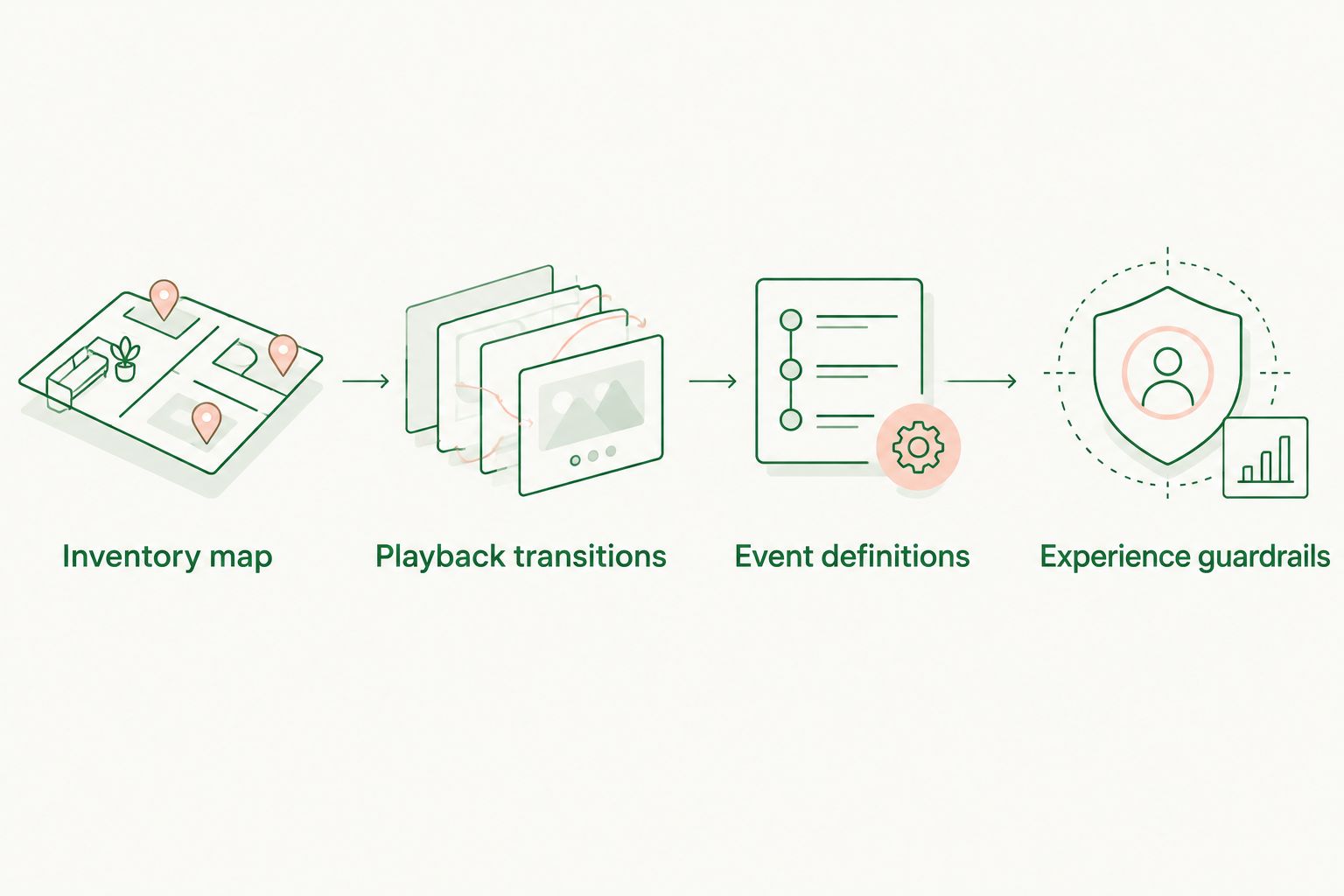
Compare the options by inventory type
Choose the delivery method first, then choose how to sell the inventory. Insertion methods and demand sources are not interchangeable products. Your architecture can combine server-side insertion with direct campaigns or programmatic demand, provided the selected systems support the required workflow.
Conversational advertising sits beside that video architecture. It belongs in an assistant, not inside a video ad break.
| Option | Best for | Main advantage | Key limitation |
|---|---|---|---|
| Client-side ad insertion | Players needing direct control over ad playback behavior | Exposes ad interactions to the player implementation | Requires reliable content-to-ad transitions across devices |
| Server-side ad insertion | Stream-based delivery workflows | Combines advertising and content in the delivered stream | Requires careful measurement and interaction handling |
| Direct-sold advertising | Publishers managing negotiated advertiser relationships | Gives the publisher control over agreed campaign terms | Creates sales, trafficking, and delivery obligations |
| Programmatic demand | Publishers adding automated buying to eligible inventory | Supports automated transactions | Demand responses do not guarantee paid impressions |
| Elo conversational ads | Developers monetizing AI chat applications | Provides an SDK-based path to contextual chat advertising | Addresses conversational inventory, not video insertion |
Build your selection brief from those limitations. Ask each provider to demonstrate the exact workflow you need, including failures, exclusions, and report reconciliation. A successful demonstration on a browser does not establish support across your connected-TV device estate.
Keep commercial expectations tied to measured inventory. Neither an SDK nor an insertion method creates viewer demand, content rights, or an advertiser commitment.
Common mistakes OTT and streaming platforms make
Treating every viewing minute as sellable inventory
Viewing time is not an impression count. Break rules, rights, entitlements, and actual session behavior determine which opportunities exist. Forecast from eligible opportunities and observed delivery, not total viewing minutes multiplied by an assumed ad load.
Optimizing CPM while ignoring content starts
A placement can report an attractive CPM while introducing failures before viewers reach the content. Compare revenue per session with content-start success and viewing behavior. Keep the denominators consistent so a smaller surviving audience does not disguise a weaker experience.
Reusing video assumptions inside chat
A conversational discovery request is not a scheduled commercial break. Do not interrupt every answer or treat every message as commercial intent. Conversational inventory needs its own eligibility rules, disclosure, and response behavior when no appropriate ad returns.
Applying the same rules to every device
A television remote, mobile touchscreen, and browser support different interactions. Test disclosure visibility, focus handling, and destination behavior in each environment. Do not approve an interactive placement solely because it works with a mouse.
Combining subscriptions and advertising without entitlement checks
Ad-supported access and subscription access need explicit product rules. Enforce those rules at the advertising decision point, not just in interface copy. Test plan changes, sign-in transitions, and cross-device playback before expanding the rollout.
FAQ
What's the best approach to ad monetization for OTT and streaming platforms?
The best approach starts with eligible inventory, reliable playback, and revenue measurement tied to the viewing experience. Choose video insertion separately from advertiser demand, and treat any conversational assistant as a distinct advertising surface.
Is server-side ad insertion better than client-side insertion?
Neither insertion method is universally better. Server-side insertion combines ads and content into the delivered stream, while client-side insertion gives the player responsibility for requesting and playing ads; test both against your device and measurement requirements.
Can Elo insert video ads into an OTT stream?
Elo provides an SDK-based adserver for contextual, conversational ads inside AI chat applications. Its stated role is chat monetization, not inserting pre-roll or mid-roll advertisements into video streams.
Can a streaming platform use subscriptions and advertising together?
A streaming platform can combine subscriptions and advertising through clearly defined viewer entitlements. Your implementation must enforce the advertising experience promised for each plan across sign-in states and devices.
How do I calculate ad revenue per viewing session?
Divide retained advertising revenue by viewing sessions, then multiply by 1,000 to express session RPM. Use the same revenue basis and session definition across comparisons.
What should happen when a streaming ad fails to load?
Your implementation should follow a documented fallback that preserves the intended content experience. Test unanswered requests, timeouts, playback failures, and content resumption rather than testing only successful ad delivery.
Can contextual chat ads replace an OTT video advertising stack?
Contextual chat ads do not replace video advertising infrastructure. They monetize conversations inside an assistant, while video inventory requires its own insertion, playback, and measurement systems.
One last thing
An unfilled advertising opportunity is not automatically a product failure. A viewer who reaches the content without an unsuitable or broken advertisement still receives the service they opened. Preserve that path deliberately.
Before expanding your 2026 monetization rollout, inspect a complete session from entitlement check through content resumption. Reconcile the events with recorded revenue. If the journey includes a conversational assistant, evaluate Elo conversational ads as a separate inventory decision rather than an extension of the video player.