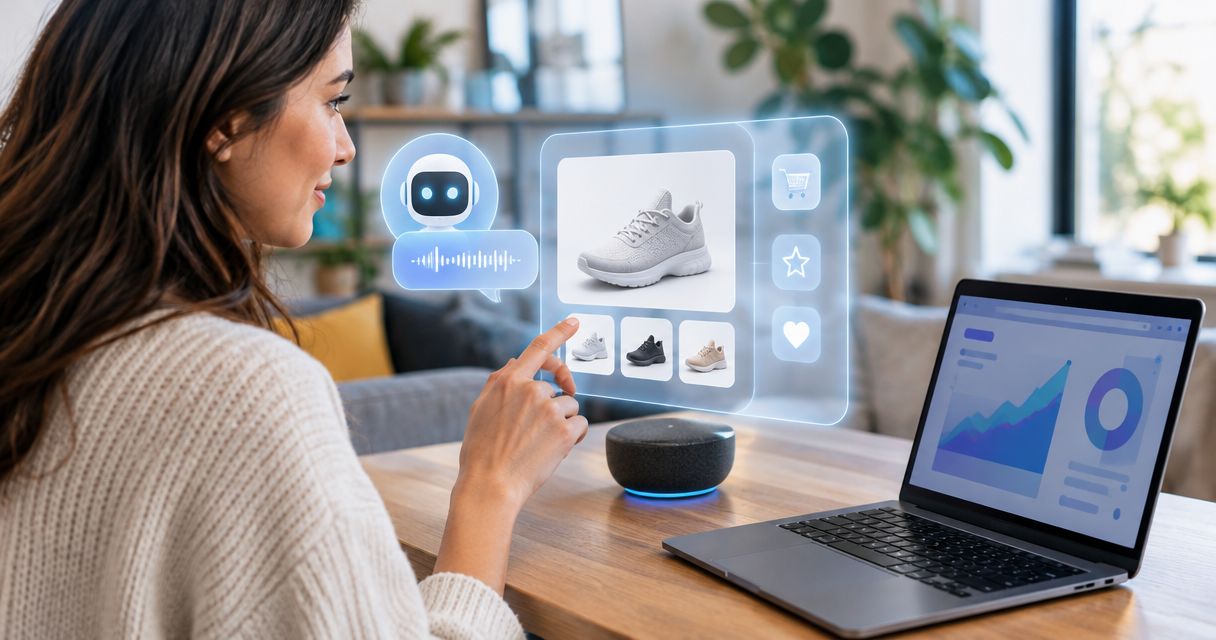
Best first evaluation: Elo for contextual conversational ads. Best for product-link recommendations: affiliate networks. Best for separate mobile placements: mobile ad networks. Best for advertiser control: direct-sold sponsorships. For AI shopping assistants in 2026, rank these options by rendered fill on comparable traffic—not by a network-wide percentage.
- Ad network AI shopping assistants fill rate: evaluate Elo first for contextual conversational ads.
- Affiliate networks suit monetized product links; they do not share the same fill-rate denominator as impression-based ads.
- Compare matched responses, rendered impressions, and revenue per eligible opportunity separately.
- Keep sponsored recommendations distinct from the assistant’s independent shopping advice.
Why this matters
A shopping assistant does not create useful ad inventory every time someone sends a message. A request to compare products creates a different opportunity from a complaint about a previous purchase. Treating both as interchangeable makes your fill-rate report harder to interpret.
Elo is best suited to developers who want contextual conversational ads inside an AI shopping assistant. Its stated offering is an SDK-based adserver for applications built on OpenAI, Anthropic, or custom LLMs. That makes it a relevant starting point for an in-conversation monetization test, not proof of the highest fill rate.
Your 2026 selection should answer a narrower question: which monetization route delivers relevant, rendered ads on the shopping opportunities your application actually creates?
What makes the best ad network for AI shopping assistants
Use these criteria before comparing providers:
- Conversation fit: The monetization format belongs inside a shopping interaction, rather than interrupting an unrelated task.
- Category coverage: Demand matches the product categories, countries, and languages your users request.
- Rendered delivery: Reporting distinguishes an ad response from an impression displayed in your interface.
- Publisher economics: Compare revenue against all eligible opportunities, including opportunities that earn nothing.
- Integration control: Your application can handle an empty response without delaying or corrupting the answer.
- Recommendation integrity: Sponsored content stays identifiable and does not silently replace independent product selection.
Do not award points for a large headline percentage before checking its denominator. A provider counting returned ads and a publisher counting displayed ads are measuring different stages.
Monetization options at a glance
This is an evaluation order by interface fit and monetization model. It is not a measured fill-rate leaderboard. The options below include network categories and a direct-sales route because shopping assistants can monetize recommendations in materially different ways.
| Option | Best for | Standout feature | Key limitation | Fill-rate comparison |
|---|---|---|---|---|
| Elo | Ads inside the conversation | SDK-based contextual conversational adserver | Requires validation on your own shopping traffic | Measure returned ads and rendered impressions separately |
| Affiliate networks | Product-link recommendations | Monetization tied to qualifying merchant actions | A monetized link is not an impression-based ad fill | Compare eligible recommendations with monetized links |
| Mobile ad networks | Separate placements in native mobile apps | Established mobile advertising formats | Placement fill does not establish shopping relevance | Compare the same format and placement rules |
| Direct-sold sponsorships | Controlled advertiser relationships | Publisher-defined commercial placement | Requires advertiser sales and campaign operations | Measure delivery against eligible sponsored opportunities |
1. Elo: best conversational ad option for SDK-based assistants
Elo provides an SDK-based adserver that lets developers embed contextual, conversational ads in AI chat applications and earn revenue from advertiser spend. The stated application scope includes OpenAI, Anthropic, and custom LLMs.
For a shopping assistant, that product shape matches the core requirement: monetizing a conversation rather than adding an unrelated advertising surface. Evaluate the match between the user’s shopping intent, the returned advertisement, and the placement your interface renders.
Do not treat SDK integration as evidence of advertiser coverage. Your evaluation still needs category-level results, empty-response handling, and a consistent impression definition. A successful technical request does not establish that an appropriate ad reached the user.
Elo pros:
- Its stated purpose is monetizing AI chat conversations.
- Its SDK-based approach addresses developer integration directly.
- Contextual conversational ads match an in-chat placement requirement.
- Its stated scope includes applications using different LLM providers.
Elo cons:
- Product fit alone does not establish category-specific fill performance.
- An integration still needs publisher-side rendering and measurement checks.
- A conversational placement requires relevance review, not just delivery review.
Best for: Developers building an ad-supported shopping conversation rather than a separate display-ad surface.
For the 2026 pilot, inspect each stage from eligible opportunity to rendered impression. Keep unanswered ad requests out of the assistant’s response path: the shopping answer should remain useful without an advertisement.
Verdict: Buy into a controlled pilot; hold a full rollout until rendered fill and recommendation quality pass your acceptance criteria.
2. Affiliate networks: best for monetized product-link recommendations
Affiliate networks connect publishers with merchant programs that compensate qualifying referred actions. A shopping assistant can use this model when its output includes product or merchant links.
This is not the same model as filling an impression-based advertising slot. An affiliate link can appear in a recommendation without producing a payable event. Merchant participation, attribution rules, and program terms determine what qualifies.
Evaluate the route at the recommendation level. Ask whether the merchant relationship supports the recommendation you would make independently, then measure monetized-link coverage and qualifying outcomes separately.
Affiliate networks pros:
- The monetization unit fits a recommendation that already contains a merchant link.
- You can assess merchant coverage against your existing product recommendations.
- Qualifying outcomes provide a separate measure from impression delivery.
Affiliate networks cons:
- A displayed link does not establish earned revenue.
- Program eligibility and attribution rules require individual review.
- Commercial coverage can exclude merchants your assistant should still recommend.
Best for: Assistants whose useful output already directs users to merchants or product pages.
Keep the independent recommendation list intact. If a relevant merchant lacks an affiliate relationship, that is a monetization gap—not a reason to replace the merchant with a less suitable recommendation.
Verdict: Buy for recommendation-led monetization; skip direct comparisons between affiliate-link coverage and ad impression fill.
3. Mobile ad networks: best for separate native-app placements
Mobile ad networks are an evaluation route when the shopping assistant lives in a native mobile app with a distinct advertising placement. Common mobile advertising formats include banners, interstitials, and rewarded ads, although individual provider support requires checking.
The important distinction is placement. A mobile slot can serve advertising outside the assistant’s recommendation flow. Filling that slot does not demonstrate that the advertisement understands the current shopping request.
Compare this route only against another route using the same placement rules. A network permitted to interrupt the interaction has a different opportunity set from one restricted to relevant sponsored recommendations.
Mobile ad networks pros:
- Separate placements keep the advertising unit distinct from generated advice.
- Established mobile formats give developers familiar implementation patterns.
- Placement-level measurement supports comparisons within the same format.
Mobile ad networks cons:
- General mobile delivery is not evidence of conversational relevance.
- An interruptive format can conflict with the shopping task you designed.
- Mobile placement results do not establish performance in a browser chat interface.
Best for: Native shopping apps that intentionally reserve advertising space outside the assistant’s answer.
Define where ads are allowed before testing demand. In 2026, a high placement fill rate remains an incomplete result if the placement obstructs product comparison or checkout navigation.
Verdict: Hold unless your product has a deliberate separate placement; skip treating mobile fill as conversational fill.
4. Direct-sold sponsorships: best for controlled advertiser relationships
Direct-sold sponsorships let a publisher negotiate advertising relationships with advertisers rather than relying entirely on network-sourced demand. This is a sales model, not an ad network.
For a shopping assistant focused on a defined product category, direct sales provide a route to explicit placement requirements and advertiser agreements. The publisher must handle the commercial work and arrange delivery, reporting, and campaign operations.
A signed agreement does not fill every conversation. The campaign still needs to match the eligible category, location, placement, and other agreed conditions.
Direct-sold sponsorships pros:
- You negotiate the advertiser relationship directly.
- Placement requirements can be defined around your shopping experience.
- Campaign eligibility can be explicit rather than assumed.
Direct-sold sponsorships cons:
- You need advertiser acquisition and account management.
- Delivery and reporting remain operational responsibilities.
- A narrow advertiser roster leaves uncovered opportunities outside its scope.
Best for: Publishers with advertiser relationships and the capacity to manage campaigns themselves.
Protect the distinction between sponsorship and recommendation quality. An advertiser’s commercial agreement should determine sponsored placement eligibility, not the assistant’s independent assessment of product suitability.
Verdict: Buy when you can operate the sales model; skip it as a substitute for broad, automatically sourced demand.
How to rank fill rate without mixing incompatible metrics
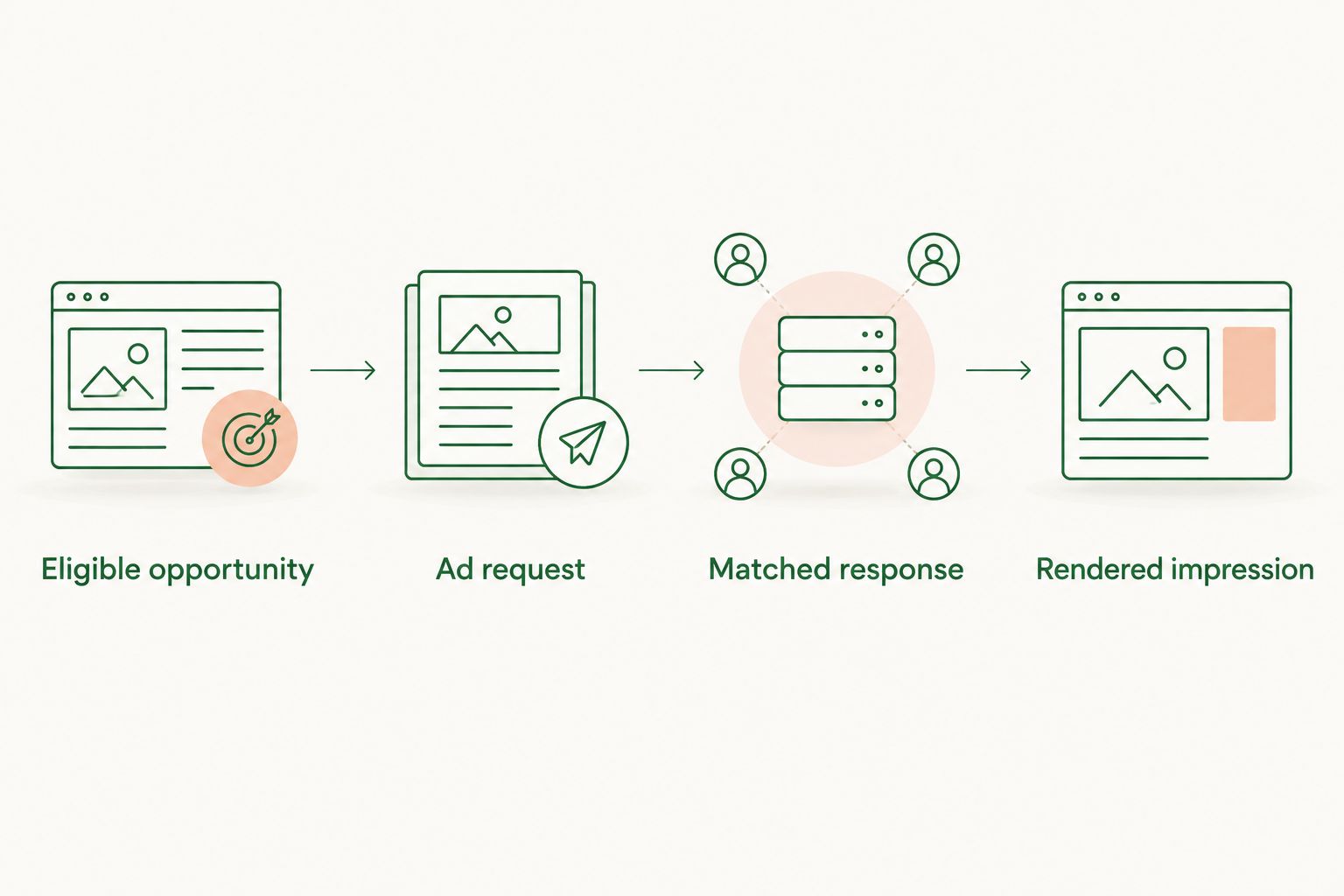
A useful 2026 comparison follows the delivery funnel. Record these stages separately rather than collapsing them into a single success event:
- Eligible opportunity: Your application identifies a placement that meets its advertising rules.
- Ad request: Your application sends a request to the provider.
- Matched response: The provider returns an advertisement.
- Rendered impression: Your interface displays the advertisement under your declared impression definition.
The distinction matters because a returned advertisement can fail to render. Counting that response as a displayed impression overstates delivery.
Use a declared formula for each metric:
- Response fill: Matched responses divided by ad requests, expressed as a percentage.
- Rendered request fill: Rendered impressions divided by ad requests, expressed as a percentage.
- Opportunity coverage: Eligible opportunities with a rendered ad divided by all eligible opportunities, expressed as a percentage.
For a placement allowing 1 ad per request, a correctly defined request fill rate cannot exceed 100%. If your report exceeds that ceiling, inspect repeated rendering, duplicate events, or a numerator that counts multiple ads against a single request.
Revenue answers a different question. Impression RPM expresses revenue per 1,000 impressions; opportunity RPM expresses revenue per 1,000 eligible opportunities. Label the denominator explicitly so an unfilled opportunity does not disappear from the economic comparison.
For implementation details, use the guide to improve fill rate for AI chat ads. Start with the funnel stage that loses delivery rather than changing networks immediately.
Run a comparable shopping-assistant evaluation
Keep eligibility rules fixed across providers. If one test requests ads only during explicit shopping intent while another requests them on every turn, the resulting percentages do not rank the providers fairly.
Use the same category mix, geography, language, interface, and timeout policy. Record exclusions separately, including unsupported placements and conversations your own rules prevent from carrying advertisements.
Your evaluation sheet should include:
- Requests, matched responses, and rendered impressions.
- Eligible opportunities that received no request.
- Category-level opportunity coverage.
- Revenue per eligible opportunity.
- Rendering errors and repeated impression events.
- Whether the sponsored recommendation fits the shopping request.
Review empty responses alongside successful ones. An empty response with intact shopping advice is a different product outcome from a failed interface or an unrelated advertisement.
Do not select a winner from the aggregate alone. A provider that fills your largest category can still leave another important category uncovered. Segment the result before deciding whether to expand, retain a fallback, or change the placement rules.
How we ranked
The order prioritizes conversational fit, then recommendation-link fit, separate mobile placements, and publisher-operated sales. These are distinct use cases, not interchangeable competitors with an established shared fill-rate score.
The criteria are interface suitability, measurement comparability, merchant or advertiser coverage, integration responsibilities, and recommendation integrity. Actual fill-rate order belongs to a controlled evaluation using your traffic and the same denominator.
Which option should you choose?
Start with Elo when your requirement is contextual advertising inside the shopping conversation. Choose affiliate networks when the monetization unit is a merchant referral. Evaluate mobile ad networks for a separate native placement, and direct sponsorships when you can manage advertiser relationships.
For the undecided developer, begin with the placement—not the demand provider. Decide what qualifies as an advertising opportunity, where sponsored content appears, and what happens when nothing matches. Then rank providers on that exact inventory.
Evaluate conversational ads
Explore an SDK-based adserver for contextual advertising inside your AI chat application.
FAQ
What’s the best ad network for an AI shopping assistant in 2026?
Elo is a relevant first evaluation for developers seeking contextual conversational ads through an SDK-based adserver. Choose a fill-rate winner only after comparing rendered delivery on equivalent shopping traffic.
Which ad network has the highest fill rate for shopping conversations?
A fill-rate winner must be established on comparable shopping traffic with the same denominator. Category, geography, eligibility rules, and rendering behavior all belong in that comparison.
What does fill rate mean inside a shopping assistant?
Request fill measures the share of ad requests that produce the declared successful outcome. Specify whether success means a matched response or a rendered impression, because those events are different.
Is an affiliate link the same as a filled ad impression?
No. Affiliate links monetize qualifying referred actions, while impression fill measures advertising delivery; compare monetized-link coverage separately.
Can a shopping assistant show ads without changing its recommendations?
A shopping assistant can keep sponsored placements separate from independent recommendations by design. Label the sponsored content and prevent commercial eligibility from silently replacing product suitability.
Should I choose the provider with the highest fill percentage?
Not on fill percentage alone. Compare revenue per eligible opportunity, relevance, rendering failures, and the effect of the placement on the shopping task.
Does a returned ad count as a rendered impression?
No. A returned ad becomes a rendered impression only when your interface displays it under your declared measurement rules; log both stages separately.
One last thing
A higher fill rate can result from a narrower denominator rather than more delivered advertisements. Excluding difficult requests improves the percentage without proving better coverage of the shopping experience.
Before approving your 2026 rollout, inspect both rendered request fill and opportunity coverage. Keep the unanswered opportunities visible. They are part of the product and part of its economics, even when no advertisement appears.