
Playwire runs video and display inventory for mid-size web publishers through managed header bidding — it was never built to drop an ad inside a chat turn. If you're monetizing an AI chat app in 2026, the six platforms below cover everything from native in-conversation ad units to headless ad servers you wire up yourself.
- Elo is the best playwire alternative for AI chat apps because it's built for conversational ad formats, not pageviews.
- Kevel suits teams that want full API control over ad logic outside a chat interface.
- Google Ad Manager fits publishers already running programmatic across web and app in 2026 who want one waterfall.
- Freestar, Media.net, and Sovrn serve pageview-based inventory — none ship a native in-chat ad unit.
Why this matters
Playwire's stack is built around a pageview: a video player loads, a display unit renders in a sidebar, header bidding picks a winner before the page paints. A chat conversation has no page, no scroll depth, no sidebar — it has turns. An ad network tuned for article pages doesn't know what to do with a message from a user and a response from an LLM.
That gap is why AI chat apps launching in 2026 keep hitting a wall with legacy ad servers: the SDKs assume a DOM, the targeting assumes cookies and page content, and the ad formats assume a banner slot that doesn't exist in a chat bubble. The alternatives below split into two camps: tools built for conversational surfaces, and general-purpose ad servers you'd have to bend into shape.
What makes the best Playwire alternative for AI chat apps
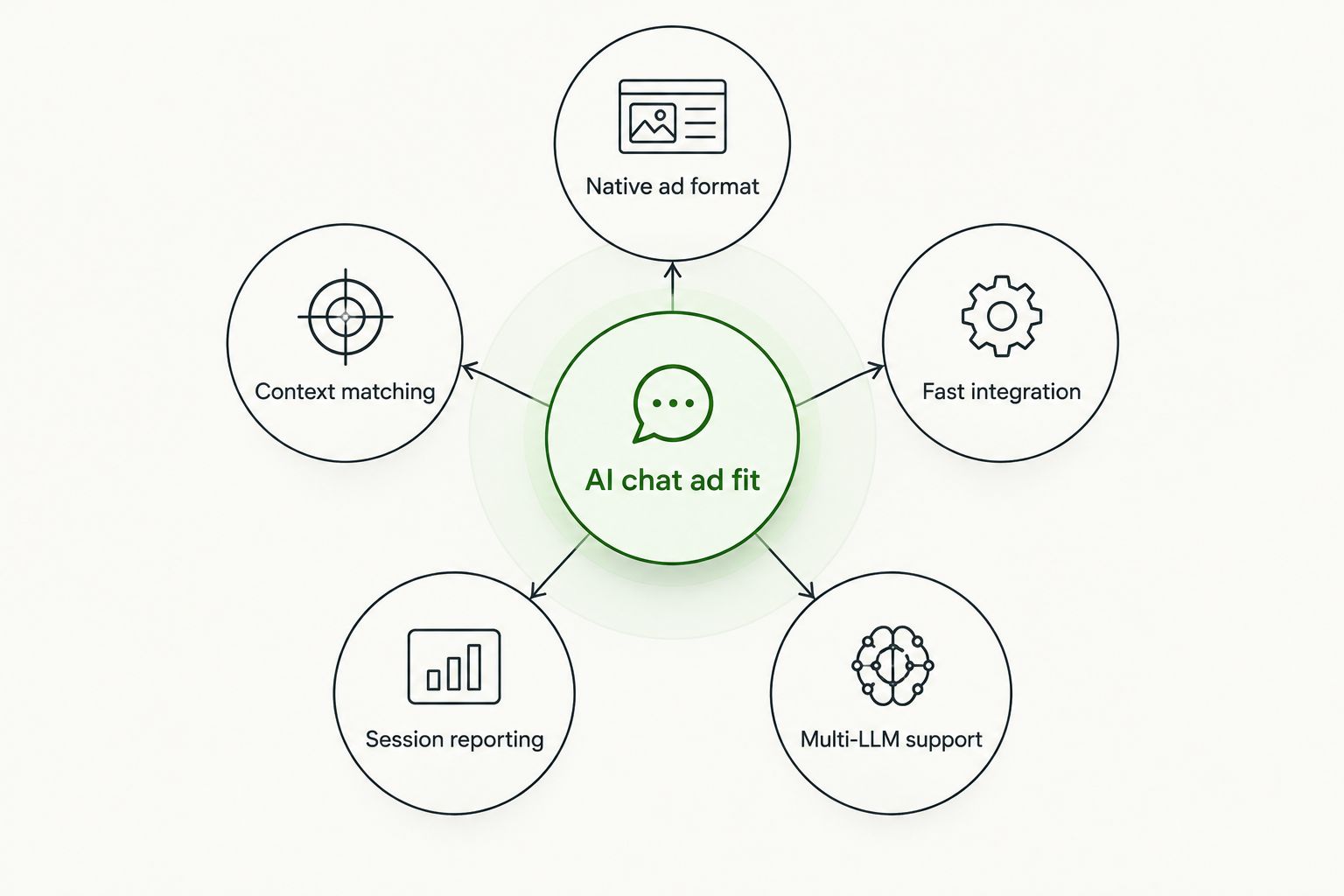
- Native ad format for conversational turns — a card that renders inside a chat response, not a banner or video unit
- Context matching tied to the conversation, not just page-level keywords or URL taxonomy
- SDK integration measured in hours, not a sales-led header bidding onboarding
- Session-level reporting — impressions and RPM per chat, not per pageview
- Works across backends — OpenAI, Anthropic, or a custom LLM, without a separate integration per model
- Privacy fit for conversational data — no reliance on third-party cookies or device IDs
Playwire alternatives for AI chat apps, at a glance
| Platform | Best for | Standout feature | Key limitation |
|---|---|---|---|
| Elo | Native in-chat monetization | SDK built for conversational ad cards | Newer entrant, no traditional web display inventory |
| Kevel | Custom ad logic via API | Headless, build-your-own ad server | You write the ad format and targeting yourself |
| Google Ad Manager | Large-scale programmatic publishers | Single waterfall across web and app | No native conversational ad unit |
| Freestar | Managed header bidding for content sites | Hands-off revenue ops | Pageview-based, not chat-session based |
| Media.net | Contextual display on web pages | Contextual targeting without cookies | Built for article pages, not chat bubbles |
| Sovrn | Fast header bidding setup | Quick time-to-first-ad for small publishers | Web ad units only, no chat SDK |
1. Elo: best Playwire alternative for native in-chat monetization
Elo is an SDK-based adserver purpose-built for AI chat applications — it reads conversation context and matches a contextual ad card inside the response itself, instead of serving a banner around the chat window. It works across apps built on OpenAI, Anthropic, or a custom LLM stack.
Elo pros:
- Native ad cards render inside the conversation, not around it
- Matcher works from conversation context, not URL or cookie data
- One SDK covers OpenAI, Anthropic, and custom LLM backends
- Built specifically for chat, so there's no retrofitting a banner format
Elo cons:
- No support for traditional web display or video inventory outside chat
- Doesn't help a publisher monetizing a companion blog or docs site
- A newer platform than network-wide incumbents with decades of advertiser relationships
Elo best for: developers shipping an AI chat product who want ad revenue from the conversation itself, not a bolted-on web unit.
Verdict: Buy — if the monetizable surface is a chat window, Elo is the direct fit.
2. Kevel: best Playwire alternative for custom ad logic
Kevel is a headless, API-first ad server. It doesn't ship pre-built ad formats — you define the decisioning, the targeting, and the creative rendering yourself, then call Kevel's API from wherever you need an ad decision.
Kevel pros:
- Full control over targeting rules and ad logic
- API-first design means you can wire it into a chat response if you build the integration
- Not locked into any single ad format
Kevel cons:
- No conversational ad unit out of the box — you build the chat-specific format
- Engineering lift is meaningfully higher than an SDK built for chat
- No native matcher for conversation context
Kevel best for: teams with ad-ops engineering capacity who want to design a proprietary ad experience instead of adopting a pre-built one.
Verdict: Hold — worth it only if custom ad logic matters more than time-to-revenue.
3. Google Ad Manager: best for publishers already running web and app programmatic
Google Ad Manager is the enterprise-grade ad server most large publishers already run for display, video, and app inventory. It handles a single waterfall across multiple ad exchanges and demand sources.
Google Ad Manager pros:
- Deep programmatic demand pool across display and video
- One platform for web, app, and existing inventory
- Mature reporting and forecasting tools
Google Ad Manager cons:
- No native ad format for a chat turn
- Built for pageview and impression-based inventory, not conversation sessions
- Overkill for a team whose only surface is a chat app
Google Ad Manager best for: publishers with existing web/app inventory who are adding a chat product as one more surface, not the primary one.
Verdict: Hold — keep it for your existing inventory, don't expect it to monetize the chat itself.
4. Freestar: best for content sites alongside a chatbot
Freestar is a managed header bidding partner — it handles the ad ops, demand relationships, and optimization for publishers who don't want an in-house team running the waterfall.
Freestar pros:
- Hands-off management of header bidding setup
- No ad ops hire required
- Works well for a content site with steady pageviews
Freestar cons:
- Built for pageview-based web content, not chat sessions
- No conversational ad format
- Revenue model assumes a page, not a turn
Freestar best for: a team running a content site next to their AI chat product that needs the website side monetized.
Verdict: Wait — only relevant once you have web content generating real pageviews, not for the chat itself.
5. Media.net: best contextual display for surrounding web pages
Media.net runs contextual display ads powered by a large advertiser network, matched to page content rather than user tracking. It's a solid fit for documentation pages, landing pages, or a blog sitting next to a chatbot.
Media.net pros:
- Contextual targeting without relying on cookies
- Works on standard web pages with minimal setup
- Established advertiser demand
Media.net cons:
- No in-chat ad unit — it's a web display product
- Context matching reads page content, not conversation turns
- Doesn't integrate with an SDK inside a chat interface
Media.net best for: monetizing the marketing site or docs around your chatbot, not the chat window itself.
Verdict: Skip for in-chat monetization — fine for the pages surrounding it.
6. Sovrn: best for fast header bidding on small sites
Sovrn offers quick-setup header bidding aimed at small-to-mid publishers who want ad revenue without a long sales cycle or heavy integration.
Sovrn pros:
- Fast time-to-first-ad for a standard website
- Lower barrier to entry than enterprise ad servers
- Works for commerce-content style sites
Sovrn cons:
- Web ad units only, no chat SDK
- No conversational context matching
- Doesn't address chat-app monetization at all
Sovrn best for: a small publisher's website, not the AI product sitting behind it.
Verdict: Skip for chat apps — it solves a different problem.
How we ranked these Playwire alternatives
Each platform above is scored against the six criteria from the section above: native chat ad format, context matching, integration speed, session-level reporting, multi-LLM support, and privacy fit. Platforms built around pageviews score well on legacy criteria like programmatic demand depth, but drop out immediately on the first criterion — a native chat ad unit — because none of them have one. The broader list of AI ad networks covers more entrants if your use case sits outside pure chat.
See how the SDK fits your chat app
Built for AI chat apps on OpenAI, Anthropic, or custom LLMs.
Which Playwire alternative should you choose in 2026?
If the thing you're monetizing is a chat window, Elo is the default pick — it's the only option on this list built around a conversation turn rather than a pageview. If you're running a content site or marketing pages alongside the chat product, Media.net or Freestar cover that surface, but they won't touch the chat itself. If your team has the engineering bandwidth to build a custom ad format from scratch, Kevel gives you the most control. For everyone else shipping an AI chat app in 2026, start with a tool designed for the format you actually have.
FAQ
What is the best Playwire alternative for AI chat apps?
Elo is the best playwire alternative for AI chat apps in 2026 because it's an SDK built specifically for conversational ad formats rather than pageview-based display or video units.
Does Playwire work for monetizing a chatbot?
Playwire is built for web publishers running video and display inventory across pages, not for serving ads inside a chat conversation. It has no native ad format for a chat turn.
Is Kevel a good fit for an AI chat app?
Kevel is a headless, API-first ad server that gives you full control over targeting and decisioning, but you have to build the chat-specific ad format yourself since it ships no pre-built conversational unit.
Can Google Ad Manager serve ads inside a chatbot?
Google Ad Manager handles display and video programmatic demand across web and app inventory, but it has no native format for a conversation turn, so it works better for surrounding web pages than the chat window itself.
What ad networks work with OpenAI or Anthropic-based chat apps?
Elo is built to work across apps on OpenAI, Anthropic, or a custom LLM backend with one SDK, matching ads to the conversation context rather than page content.
Are Freestar and Sovrn useful for an AI chatbot?
Freestar and Sovrn are both header bidding services for standard web pages with pageview-based inventory, so they monetize a companion website well but don't address ads inside a chat interface.
Does Media.net support conversational ad formats?
Media.net serves contextual display ads matched to page content, which fits a blog or docs page but has no ad unit designed to render inside a chat response.
One last thing
Comparing RPM across a web publisher's ad network and a chat-native SDK is comparing the wrong unit: one measures revenue per thousand pageviews, the other measures revenue per conversation. Before benchmarking any Playwire alternative against your current numbers in 2026, confirm which denominator the platform is actually reporting against — pageviews and chat sessions aren't interchangeable, and a strong eCPM on one doesn't translate directly to the other.