
Ads inside an AI chatbot don't come with a universal off switch. Whether a user can opt out depends entirely on what the developer built into the app, not on any platform-wide setting from OpenAI, Anthropic, or anyone else running the underlying model.
- No default opt-out exists for ads in an AI chatbot in 2026 — it's a developer decision, not a platform setting.
- GDPR and CCPA require a personalization opt-out for targeted ads, not removal of the ad itself.
- Elo's ad SDK gives publishers frequency caps and consent controls instead of forcing an all-or-nothing ad-free tier.
- Native ad cards embedded in a chat thread bypass most ad blockers built to detect banner-style DOM elements.
Why this matters
Founders building on chat interfaces keep asking the same question in a different order: will adding ads wreck retention if users can't turn them off? The honest answer in 2026 is that opt-out is a product decision, not a legal requirement in most cases, and the decision shapes both revenue and churn.
Elo runs the ad server layer for AI chat apps, and the opt-out question comes up in nearly every integration call. Developers who ignore it end up bolting on a workaround after users complain. Developers who design for it upfront ship an ad-supported product that doesn't feel like one.
Can users opt out of ads in an AI chatbot?
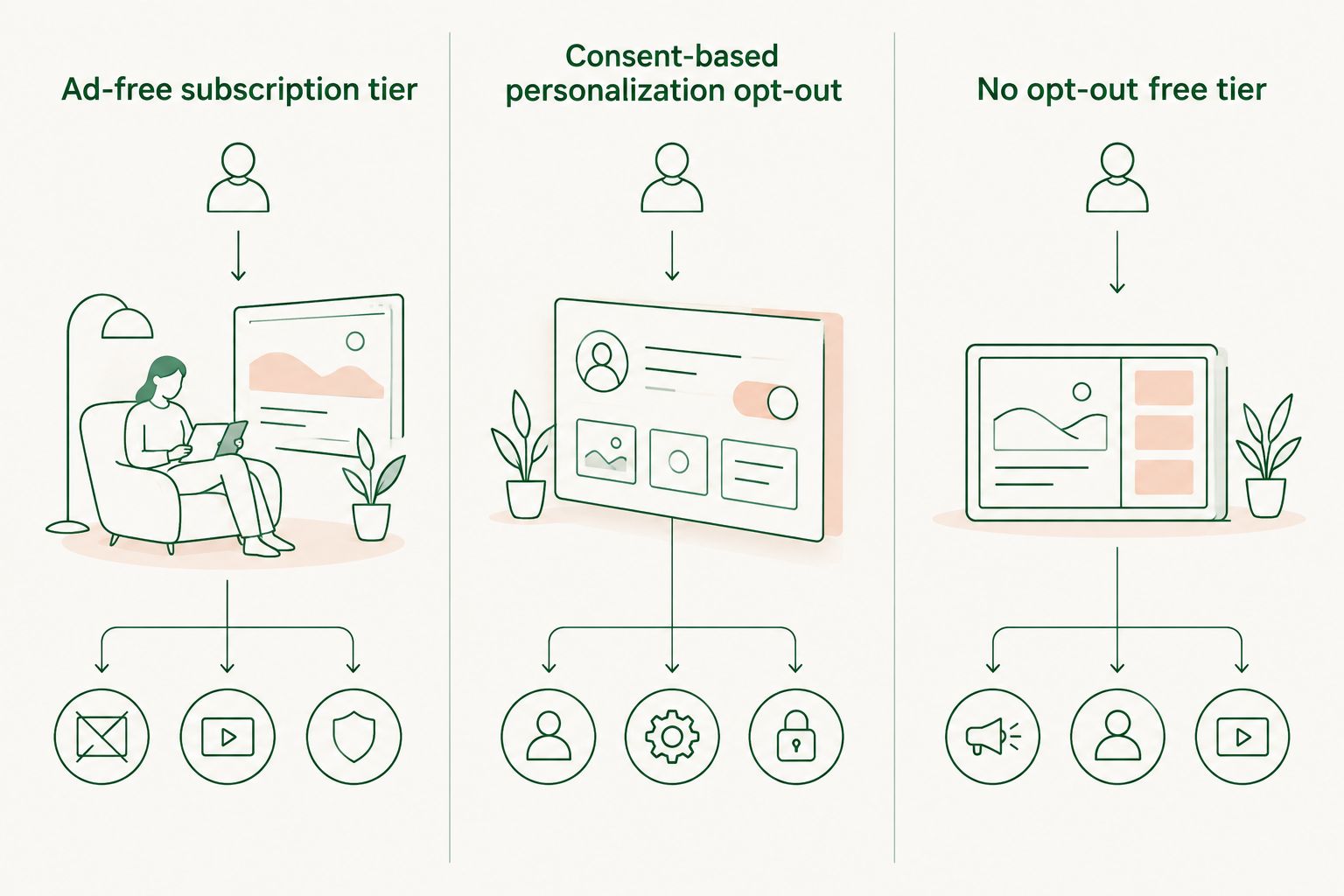
Three models cover almost every AI chatbot running ads in 2026. Which one a given app uses depends on its revenue structure, not on user demand.
| Opt-out model | How it works | Best for |
|---|---|---|
| Ad-free subscription tier | User pays to remove ads entirely; free tier keeps ads | Apps with an established paying user base |
| Consent-based personalization opt-out | User can disable targeted/personalized ads; contextual ads may still show | Apps serving EU or California users under GDPR/CCPA |
| No opt-out (ad-supported free tier) | Ads run for every free user with no removal path | Apps where ad revenue is the only funding for the free plan |
Notice the middle row. GDPR and CCPA both require a way to decline personalized advertising — using someone's data to target them — but neither law requires an app to stop showing ads altogether. That distinction gets misread constantly. A consent toggle and an ad-removal toggle are two different features solving two different problems.
Why opt-out availability varies
- Business model. A free tier funded entirely by ad revenue rarely offers an opt-out, because removing ads removes the only revenue source for that user.
- Ad format. Native contextual cards rendered inline in a chat response don't match the DOM patterns traditional ad blockers scan for, so "opting out" via browser extension often does nothing at all.
- Regulatory exposure. GDPR and CCPA mandate an opt-out for personalized targeting specifically, not for advertising itself — apps outside those jurisdictions may have zero legal obligation either way.
- Frequency caps. Many chat apps skip a full opt-out and instead cap how often an ad card can appear per session, which softens the experience without removing ads.
- Platform policy vs. app policy. OpenAI and Anthropic don't set ad opt-out rules for third-party apps built on their APIs — that decision sits entirely with the app developer.
- Publisher choice at integration time. Whether an opt-out mechanism exists at all gets decided when the ad SDK goes in, not after launch when users start asking.
“A frequency cap does more for the user experience than an opt-out toggle nobody actually builds.”
Elo's SDK lets a publisher set frequency caps, exclude ad categories, and manage consent state at the point of integration — decided once, not patched in after a complaint thread. Getting the GDPR-compliant consent flow right at that stage avoids rebuilding the whole ad layer six months later. The same applies to how the ad shows up in the first place: apps that disclose sponsored content clearly get fewer opt-out requests than apps that don't, because users aren't surprised by what they're seeing.
Do ad blockers work on AI chatbot ads?
Traditional ad blockers rarely catch conversational ad cards in 2026 because they're built to detect banner-style DOM elements, not native cards rendered inline as part of a chat response. The ad looks like part of the conversation, not a separate ad slot a blocker knows to strip out.
Is it legal to run ads without an opt-out in a free AI chatbot?
Running ads without an opt-out is legal in most cases as long as the ads aren't personalized using data that triggers consent requirements under GDPR or CCPA. Most privacy law mandates an opt-out for targeting, not for the presence of advertising itself — a contextual ad based on the current conversation, not stored user data, typically falls outside that requirement.
Can users turn off personalized ads in ChatGPT-based apps?
It depends on the third-party app built on top of the OpenAI API, not on OpenAI itself. OpenAI doesn't dictate ad opt-out mechanics for apps running on its models — that toggle, if it exists, is a decision the app's developer made when integrating an ad SDK.
FAQ
Can users opt out of ads in an AI chatbot?
Only if the developer built an opt-out path — no platform-wide setting removes ads by default in 2026. The most common opt-out is a consent toggle for personalized targeting, not full ad removal.
Is there a way to block ads in ChatGPT-based apps?
Native ad cards embedded in a chat response usually bypass browser ad blockers because they don't match banner-style DOM patterns. The only reliable removal method is a paid ad-free tier if the app offers one.
Do all AI chatbots have to offer an ad opt-out under GDPR?
No. GDPR requires an opt-out for personalized ad targeting using user data, not for advertising in general. A contextual ad matched to the current conversation can run without a targeting-specific consent toggle.
What's the difference between an ad-free tier and a personalization opt-out?
An ad-free tier removes ads entirely, usually behind a paid subscription. A personalization opt-out stops targeted ads but contextual ads based on the conversation can still show.
How do frequency caps relate to opting out of ads?
A frequency cap limits how often an ad card appears per session instead of removing ads entirely. Many chatbot developers use caps as a middle ground when a full opt-out isn't built.
Does OpenAI or Anthropic control whether users can opt out of ads?
No. Ad opt-out mechanics are set by the app developer at the SDK integration layer, not by the underlying model provider. OpenAI and Anthropic don't enforce ad policy for third-party apps built on their APIs.
Why don't more free AI chatbots offer an ad opt-out?
Because the free tier is usually funded entirely by ad revenue — removing ads for a user removes the only revenue source tied to that user's usage.
One last thing
The apps getting the fewest opt-out complaints in 2026 aren't the ones with a toggle — they're the ones running fewer, clearer ads per session with obvious sponsored labeling. Frequency caps and disclosure solve the problem that opt-out toggles are usually built to fix, without giving up the ad revenue on every free user.
Add ads without hurting chat UX
See how frequency caps and disclosure design keep opt-out requests low.