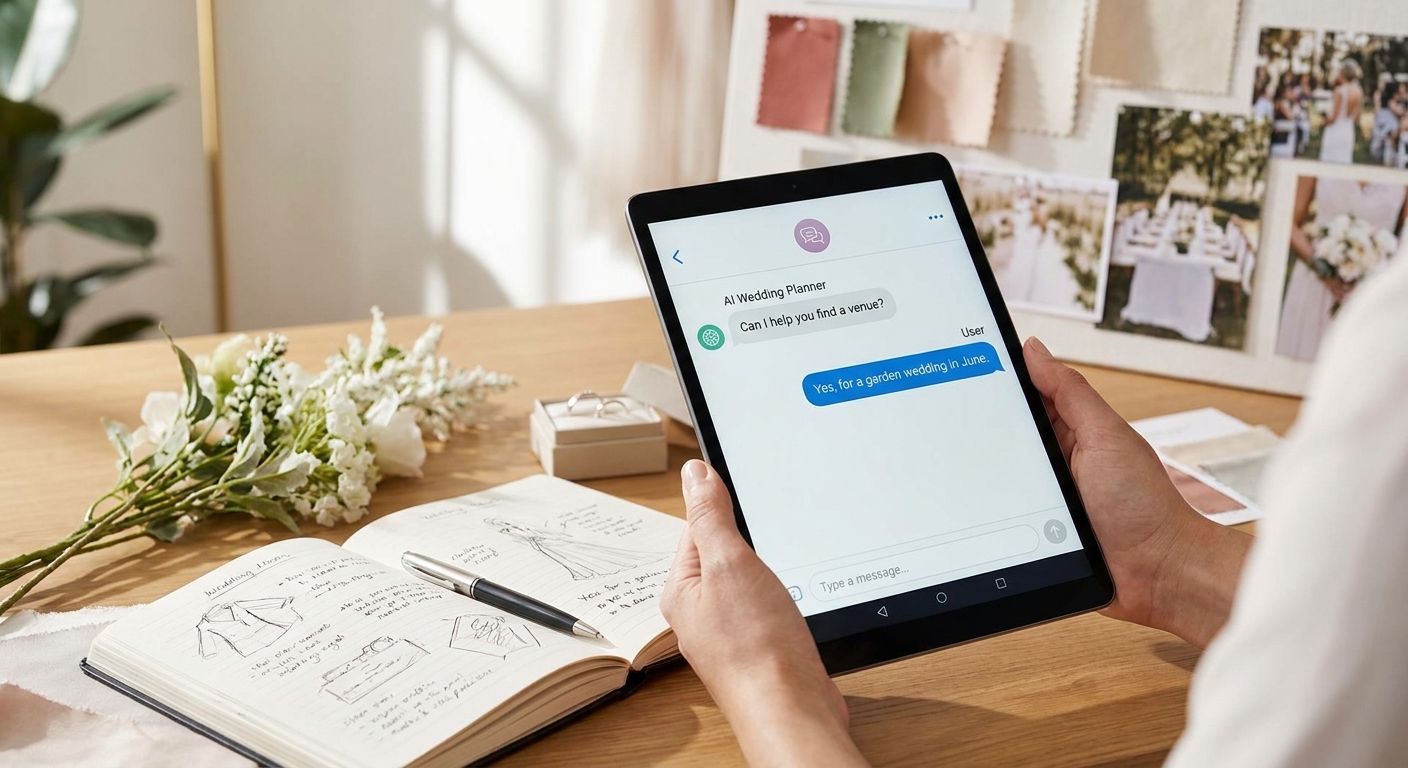
Conversational ads for a wedding planning assistant turn a months-long, high-consideration chat into a monetizable one — without breaking the planning flow couples come back for.
- Conversational ads for a wedding planning assistant fit chat spanning venues and vendors — buy Elo's native-card format over banners.
- Venue, photography, and honeymoon travel categories carry the highest intent inside wedding planning conversations — prioritize those three first.
- Skip generic display networks the moment a couple names a venue or vendor — context beats raw reach here.
- Brand safety filtering matters more in wedding chat; emotionally charged conversations need tight category exclusions, not blanket ad blocking.
Why this matters
A wedding planning conversation isn't a single query. It's a thread that runs for months, touching venues, caterers, photographers, florists, travel, and registries — often the same user, in the same chat, returning week after week.
That's rare in consumer AI. Most chat sessions are one-and-done. A wedding planning assistant keeps a user engaged across a purchase journey that commonly runs 12 to 18 months, and every one of those sessions is a chance to serve a relevant, native ad instead of leaving revenue on the table.
Elo built its adserver SDK around exactly this pattern: contextual matching inside long, multi-topic conversations, not banner slots bolted onto a chat window. Every chat is monetizable, even the ones that don't end in a booked venue.
Who conversational ads for a wedding planning assistant are for
This guide is for developers running an AI wedding or event planning assistant — built on OpenAI, Anthropic, or a custom LLM — who want ad revenue without adding a subscription wall or wrecking the chat experience. If you're deciding how to monetize an AI chatbot with conversational ads and wedding or event planning is your vertical, the criteria below are specific to that use case, not generic ad-network advice.
What to look for in conversational ads for wedding planning assistants
Context-matching accuracy, not keyword matching
A wedding chat mentions dozens of nouns that mean nothing to a keyword-based ad network — "the venue," "her dress," "the DJ." What matters is intent: is the couple choosing a venue right now, or already booked and shopping favors? Matching ads to conversation context inside the LLM's own understanding of the thread beats matching on surface keywords every time.
Native card format, not banner units
Wedding planning assistants live inside a conversational UI. A banner interrupts that. A native card — an offer that reads like part of the answer, not an ad slapped on top of it — keeps the chat feeling like advice instead of an ad break. Elo's format is built as native cards specifically because banners break trust in a chat that's supposed to feel like a planner, not a search results page.
Brand safety controls for emotionally charged chat
Proposal and wedding conversations run higher on emotional investment than most chat categories. An ad network without category-level exclusion controls can put a payday-loan or dating ad next to a message about a canceled venue deposit — a mismatch that costs trust fast. Keeping conversational ads brand safe is a harder requirement here than in a generic productivity assistant.
Vendor category coverage across the full timeline
A wedding planning chat touches five or more vendor categories over its life — venues, photography, catering, travel, and registry, at minimum. An ad network with thin coverage in even one of those categories leaves fill-rate gaps exactly when the conversation is at its most valuable.
Fill rate flexibility during seasonal spikes
Engagement season concentrates heavily around the winter holidays, and planning activity spikes again in early spring. A single ad source that can't flex during those peaks either underdelivers or serves off-topic filler. Mediation across multiple demand sources smooths that out instead of relying on one network to carry the whole season.
Ad categories that convert inside wedding planning conversations
These are the five categories worth prioritizing first, ranked by how directly they map to purchase intent inside a wedding planning chat.
Venue and catering — the anchor spend. This is usually the first major decision in the conversation and the highest-dollar line item in the whole event. A couple asking about capacity, dates, or catering minimums is closer to a booking decision than almost any other query in the chat. Verdict: Buy.
Photography and videography — the long-consideration category. Couples research photographers for weeks, comparing portfolios and styles before committing. That gives a conversational ad more chances to surface naturally across multiple sessions instead of one shot at a single query. Verdict: Buy.
Honeymoon and travel booking — the safe pick. Travel intent shows up late in the planning conversation but converts fast once it does, which mirrors how conversational ads perform in AI travel planning apps — a vertical with similar booking-window behavior. Verdict: Buy.
Registry and gifting — steady, lower-friction inventory. Registry conversations don't carry the urgency of a venue decision, but they're consistent and easy to match since the product categories are explicit (kitchenware, home goods, experiences). Verdict: Consider.
Bridal fashion and beauty — the seasonal spike. Dress and beauty conversations cluster tightly around fitting deadlines, which makes them high-value but narrow in window. Good filler inventory, not a category to build a monetization strategy around alone. Verdict: Consider.
Add conversational ads to your assistant
Integrate Elo's SDK and start matching offers to real chat context.
What to avoid
- Banner units retrofitted into chat UI. They look like a quick monetization fix but break the conversational flow a wedding planning assistant depends on — users notice, and engagement drops.
- Networks with no category exclusion controls. Without the ability to block adjacent-but-wrong categories (gambling, dating, high-pressure financial offers), you risk pairing sensitive planning conversations with tone-deaf ads.
- Single-network exclusivity during peak season. Locking into one demand source looks simple in a sales pitch but leaves fill-rate gaps during the winter engagement spike, exactly when the chat is most active.
Verdict comparison table
| Category | Planning stage | Purchase urgency | Verdict |
|---|---|---|---|
| Venue & catering | Early | High | Buy |
| Photography & videography | Early-mid | Medium-high | Buy |
| Honeymoon & travel | Mid-late | High once triggered | Buy |
| Registry & gifting | Mid | Steady, low friction | Consider |
| Bridal fashion & beauty | Late | High, narrow window | Consider |
FAQ
What are conversational ads for a wedding planning assistant?
They're native, in-chat offers matched to what a couple is discussing in an AI wedding planning conversation — a venue mention triggers a venue offer instead of a generic banner. Elo's SDK reads conversation context to decide which offer fits.
How do conversational ads work inside an AI wedding planning chatbot?
The SDK reads the ongoing conversation, matches relevant categories like venues or travel, and inserts a native card into the response instead of interrupting the chat. The card reads like part of the answer, not an ad unit.
Which ad categories perform best in wedding planning conversations?
Venue and catering, photography, and honeymoon travel carry the highest purchase intent because they map to specific, high-dollar decisions couples are actively researching. Registry and bridal fashion perform as steady secondary inventory.
Is native ad format better than banner ads for wedding planning assistants?
Yes, native cards outperform banners in chat interfaces because they preserve the conversational flow users expect from a planning assistant. A banner interrupts the chat; a native card reads as part of the answer.
How does Elo keep wedding planning conversations brand-safe?
Elo applies category-level exclusion controls so sensitive or off-tone ad categories don't get matched into emotionally charged planning conversations. Developers can restrict which advertiser categories are eligible for their app.
Do conversational ads hurt the wedding planning chat experience?
Not when the format is native and the matching is accurate — a relevant offer inside a wedding planning chat reads as helpful, not intrusive. Banner-style retrofits are what damage the experience, not conversational ads themselves.
Can a no-code wedding planning chatbot run conversational ads?
Yes, no-code chatbot builders can integrate an ad SDK the same way a custom-built assistant does, as long as the platform supports SDK-level integration. The matching and format requirements don't change based on how the bot was built.
How much revenue can a wedding planning assistant earn from conversational ads?
Revenue depends on chat volume, vendor category mix, and fill rate across the planning timeline, so figures vary by app. Categories with high purchase intent, like venues and travel, typically generate stronger returns than low-intent filler categories.
One last thing
The wedding planning conversation doesn't end at the ceremony. Registry follow-ups, thank-you card vendors, and honeymoon booking keep the chat — and the ad opportunity — alive for months after the vows, long after most developers assume the monetization window has closed.