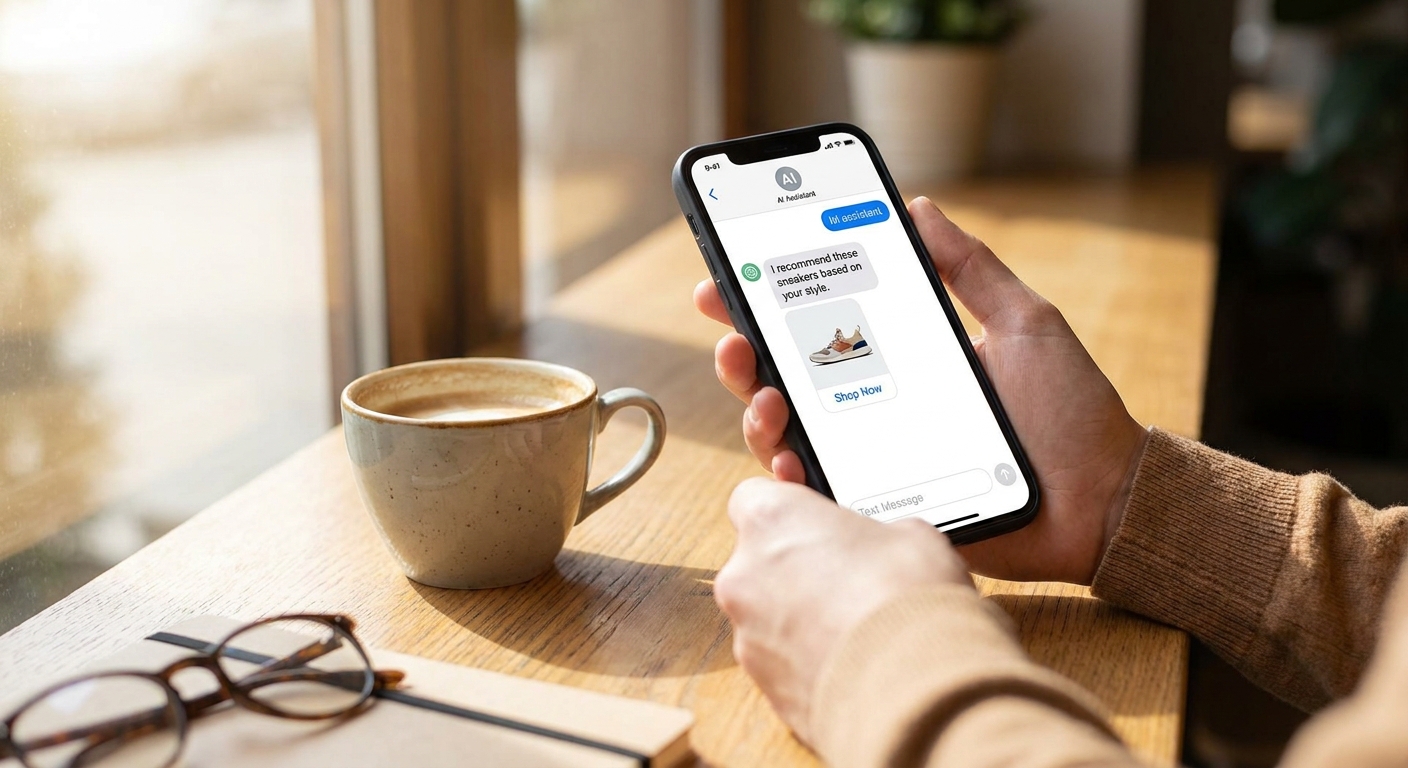
Shopping assistants built on GPT-4, Claude, or a custom LLM sit between product discovery and checkout in 2026 — the highest-intent chat surface most companies still aren't monetizing.
- Conversational ads for AI shopping assistants work as native cards matched to intent, not banners — Elo's SDK does this in about twelve lines of code.
- Match the ad path to your stack: OpenAI GPT apps, Anthropic Claude apps, and custom LLM chatbots each need different mediation logic.
- Skip interstitial pop-ups and unlabeled sponsored placements in shopping chat — both erode trust and tank conversion in 2026.
- RAG-based product search assistants need context-aware ad matching, not keyword bidding built for search engines.
- CPM, CPC, and CPA all exist as pricing models for in-chat ads — the right one depends on whether your assistant drives clicks or purchases.
Why this matters
An AI shopping assistant answers a product question, compares two SKUs, or talks someone out of a return — and most of those chats end without a sale. That's still a monetizable event if the ad sits inside the conversation instead of bolted onto the page around it.
Elo runs an SDK-based adserver that plugs into chat apps built on OpenAI, Anthropic, or a custom LLM, and turns those non-converting chats into ad revenue. The pitch is simple: every chat is monetizable, even ones that don't convert.
“Every chat is monetizable, even ones that don't convert.”
Who this is for
This guide is for developers and product leads shipping an AI shopping assistant — a product-finder bot, a comparison tool, a retail chatbot embedded in an app or storefront — who want a second revenue line beyond conversion rate. If your assistant already answers hundreds of product questions a day and you're leaving that traffic unmonetized, the criteria below apply directly to you.
What to look for in conversational ads for AI shopping assistants
Contextual relevance over keyword matching
A shopping assistant ad has to match the actual intent in the message, not a keyword pulled out of it. "Best running shoes for flat feet" needs a shoe brand relevant to arch support, not any shoe brand that bid highest. Get this wrong and users stop trusting the assistant's recommendations entirely.
Native card format, not banners
Ads inside a chat window need to look like part of the conversation — a card with a product name, a reason, and a link — not a banner stripped from a webpage. Users tolerate a native suggestion; they close the tab on a pop-up.
Model and framework compatibility
Your shopping assistant is built on something specific: OpenAI's API, Anthropic's Claude, a custom LLM, or a retrieval-augmented generation (RAG) pipeline pulling from a product catalog. The ad layer has to plug into that exact architecture, not a generic wrapper that assumes one model.
Integration effort measured in lines of code
If adding a monetization layer means weeks of engineering time, it competes with product roadmap and loses. Elo's SDK integrates in about twelve lines of code across supported stacks — that's the bar to measure any option against.
Revenue model transparency
CPM, CPC, and CPA are three different pricing models, and each pays out differently depending on whether your assistant drives impressions, clicks, or purchases. You need visibility into which model is running and what it's paying, not a black-box revenue share.
Disclosure and compliance
Sponsored recommendations inside a shopping assistant need to be labeled as ads. Users who feel misled by an unlabeled placement stop trusting every recommendation the assistant makes afterward — that costs more than the ad revenue is worth.
Top picks by stack
The default pick: OpenAI GPT-based shopping assistants
If your assistant runs on GPT-4 or GPT-4o through OpenAI's API, this is the largest install base for in-chat ad tooling in 2026, and conversational ads for OpenAI GPT chat apps is built specifically for that path. The integration targets that twelve-line SDK footprint mentioned above, and matching runs against the same context window your assistant already uses. Buy — this is the most-supported path if OpenAI is your backend.
The mediation angle: Claude-based shopping assistants
Anthropic's Claude models handle longer product comparisons well, and ad mediation SDK for Anthropic Claude apps is built around that use case rather than treated as an afterthought to an OpenAI integration. Mediation here means the SDK routes the ad decision without disrupting Claude's response structure. Buy if Claude is your model layer and you want a path built for it, not adapted to it.
The flexible pick: custom LLM shopping assistants
Some shopping assistants run on a fine-tuned or self-hosted model instead of a major API — contextual advertising for custom LLM chatbots covers that path. It requires more setup than the OpenAI or Claude routes since there's no standard API contract to hook into. Consider this if you control the full model stack and can handle a slightly heavier integration.
What to avoid
- Interstitial pop-ups mid-conversation. They break the flow of a shopping chat and read as a hard sell, not a suggestion — conversion drops the moment the chat feels interrupted.
- Unlabeled sponsored recommendations. A product suggestion that looks organic but is paid placement is a compliance risk and a trust risk in 2026, not a minor styling choice.
- Generic ad networks retrofitted for chat. Display-ad networks adapted to conversational UI usually carry keyword-matching logic built for search results pages, not intent extracted from a multi-turn conversation.
Verdict comparison
| Stack | Integration path | Best for | Verdict |
|---|---|---|---|
| OpenAI GPT-4 / GPT-4o | Conversational ads for OpenAI GPT chat apps | Highest install base in 2026 | Buy |
| Anthropic Claude | Ad mediation SDK for Claude apps | Long-form product comparisons | Buy |
| Custom / self-hosted LLM | Contextual advertising for custom LLM chatbots | Teams controlling the full model stack | Consider |
| RAG-based product search | Context-aware matching against catalog data | Retrieval-driven shopping assistants | Consider |
FAQ
What are conversational ads for AI shopping assistants?
Conversational ads for AI shopping assistants are native, in-chat product recommendations matched to a user's intent inside the conversation itself, rather than banners placed around the chat window. Elo's SDK renders these as cards inside the chat, labeled as sponsored, tied to CPM, CPC, or CPA pricing.
Do in-chat ads hurt conversion on a shopping assistant?
Poorly matched or interstitial ads hurt conversion; contextually relevant native cards generally don't, because they're presented as a suggestion within an answer the user already asked for. The format matters more than the fact that an ad appears at all.
Is OpenAI or Anthropic better supported for in-chat ad monetization in 2026?
Both are directly supported paths — conversational ads for OpenAI GPT chat apps and ad mediation SDK for Anthropic Claude apps are each built for their respective model, so the better fit depends on which model your assistant already runs on, not on one platform having broader support.
How much code does it take to add ads to a shopping assistant?
Elo's SDK integrates in about twelve lines of code across supported stacks in 2026. That figure covers initiating the ad request and rendering the native card, not custom UI styling.
Can a custom LLM shopping assistant run conversational ads?
Yes — contextual advertising for custom LLM chatbots covers self-hosted or fine-tuned models that don't sit behind a major provider's API. The setup takes more configuration than the OpenAI or Claude paths since there's no standard API contract to hook into.
What pricing models exist for conversational ads?
CPM, CPC, and CPA are the three pricing models available for in-chat ads in 2026. CPM pays per impression, CPC per click, and CPA per completed action, so the right model depends on whether your assistant's value is in reach, engagement, or purchases.
Do sponsored recommendations need to be labeled in a shopping assistant?
Yes — a sponsored product recommendation inside a chat needs a visible label distinguishing it from the assistant's own suggestion. Skipping this erodes trust in every recommendation the assistant makes afterward, paid or not.
One last thing
The chats that don't convert are usually the majority of a shopping assistant's traffic in 2026 — someone comparing options, asking a follow-up, or abandoning before checkout. That volume is exactly what conversational ads for AI shopping assistants are built to capture, and it's revenue most teams are currently leaving on the table because they treat ad monetization as a display-web problem instead of a chat problem.